
Nutrient Density vs. Caloric Density: The Difference That Changes How You Think About Food

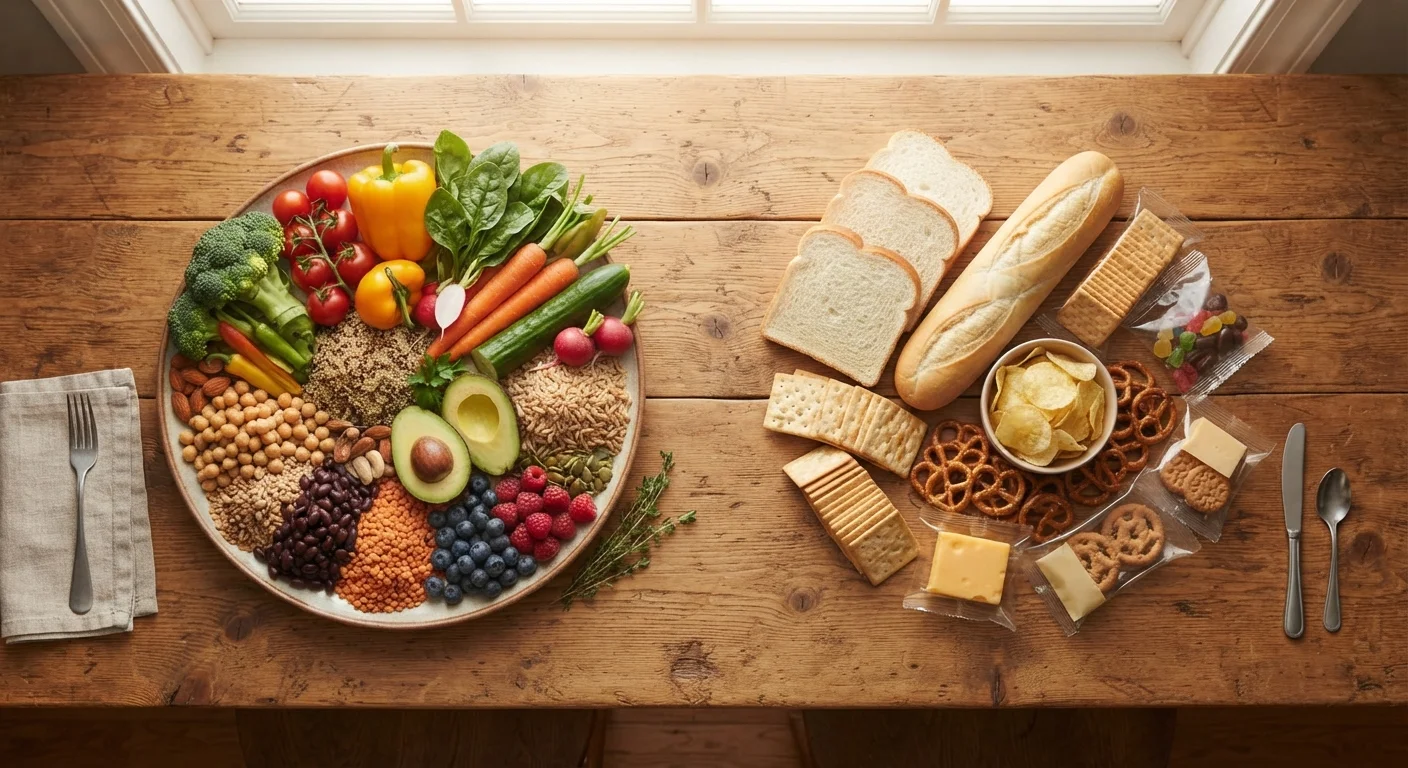
Photo: InsightsVilla.com | Quick Search. Right Info editorial
Key Takeaways
- Nutrient density measures how much nutritional value a food delivers per calorie, not just its total calorie count.
- Caloric density refers to how many calories are in a given weight or volume of food - a separate concept entirely.
- Two foods can have identical calorie counts while delivering vastly different amounts of vitamins, minerals, and fiber.
- High-calorie foods are not automatically low in nutrients, and low-calorie foods are not automatically nutritious.
- Using both concepts together gives a more complete picture of a food's role in everyday eating.
Why These Two Terms Get Confused
Calories and nutrition aren't the same thing, but it's easy to blur the line between them. When people talk about eating "well," they often default to calorie counts as a shorthand for food quality. The problem: a calorie is just a unit of energy. It says nothing about what else is - or isn't - in that food.
That's where nutrient density and caloric density come in. They're related concepts, but they measure fundamentally different things. Nutrient density asks: how much nutritional value does this food deliver per calorie? Caloric density asks: how many calories are packed into a given amount of food?
A handful of almonds and a small bag of pretzels might have nearly identical calorie counts. But the almonds bring protein, healthy fats, magnesium, and vitamin E to the table. The pretzels bring mostly refined starch and sodium. That gap - same calories, very different nutrition - is nutrient density in action. For a closer look at how these distinctions show up on packaging, our guide to reading a Nutrition Facts label walks through every line in plain language.
Breaking Down Each Concept
Nutrient density is essentially a quality measure. Foods like leafy greens, legumes, eggs, whole grains, and fatty fish tend to score high because they deliver a meaningful range of micronutrients - vitamins, minerals, fiber, and/or protein - relative to the calories they contain. Nutrition scientists and public health bodies use nutrient density as a framework for thinking about diet quality, though there's no single universally agreed-upon scoring formula. As explored in where nutrition science gets genuinely complicated, different research approaches can produce different rankings for the same foods.
Caloric density, by contrast, is a volume-and-weight measure. Foods with high water content - cucumbers, strawberries, broth-based soups - tend to be low in caloric density; you can eat a substantial amount without consuming many calories. Foods like nuts, oils, cheese, and dried fruit are high in caloric density; a small serving contains a lot of energy. Neither high nor low caloric density is inherently good or bad - context matters enormously.
| Criterion | Nutrient Density | Caloric Density |
|---|---|---|
| What it measures | Nutritional value per calorie | Calories per unit of weight or volume |
| Primary question it answers | How nutritious is this food? | How energy-concentrated is this food? |
| High example | Spinach, lentils, salmon | Nuts, oils, dried fruit |
| Low example | Soda, plain crackers | Lettuce, cucumbers, broth |
| Useful for understanding | Diet quality and micronutrient intake | Satiety and portion size |
| Can a food score high on both? | Yes - e.g. avocados, walnuts | Yes - e.g. avocados, walnuts |
It's worth noting that a food can be both nutrient-dense and calorically dense. Avocados and walnuts are textbook examples: high in healthy fats (and therefore calories), but also rich in fiber, potassium, and other micronutrients. The two concepts aren't opposites - they're independent axes.
How to Use Both Lenses Together
Neither concept alone tells the full story. Thinking only about nutrient density might lead someone to undervalue calorie-rich foods that genuinely support health. Thinking only about caloric density might lead someone to fill up on low-calorie foods that don't actually deliver much nutrition.
~90%
Americans falling short on vegetables and fruits
According to the U.S. Dietary Guidelines Advisory Committee, roughly nine in ten Americans don't meet recommended intake levels for vegetables and fruits - two of the most nutrient-dense food groups.
~58%
Calories from ultra-processed foods in U.S. diets
Research published in the BMJ found that ultra-processed foods - typically high in caloric density but low in nutrient density - account for a substantial share of daily energy intake among American adults.
A more practical approach is to use both as context clues rather than strict rules. When choosing between two similar foods, it's reasonable to ask: does this give me useful nutrition for the energy it costs? That question naturally incorporates both ideas without requiring a calculator.
For instance, understanding that sodium hides in many processed foods helps explain why calorie-controlled processed options aren't always the nutritious choice they appear to be. And because nutrient needs genuinely shift across life stages - as covered in our piece on nutrition across different life stages - what counts as a nutrient-dense choice for one person may look different for another.
No Single "Density Score" Is Official
Finally, it's worth pushing back on the myth that eating healthy means eating less. Many highly nutritious foods - think lentils, oats, salmon - are also quite satisfying and energy-sustaining. If you've encountered other common misconceptions about food quality, nutrition myths that refuse to die is a good read. And for a thorough primer on the micronutrients that underpin nutrient density, see vitamins vs. minerals explained.
This article is for general informational purposes only and is not a substitute for personalized nutrition or medical advice. Consult a qualified healthcare professional for guidance specific to your health needs.
The content on this site is for informational purposes only and is not a substitute for professional advice. Always consult a qualified professional for guidance specific to your situation.