
Vitamins vs. Minerals: Understanding the Two Major Classes of Micronutrients

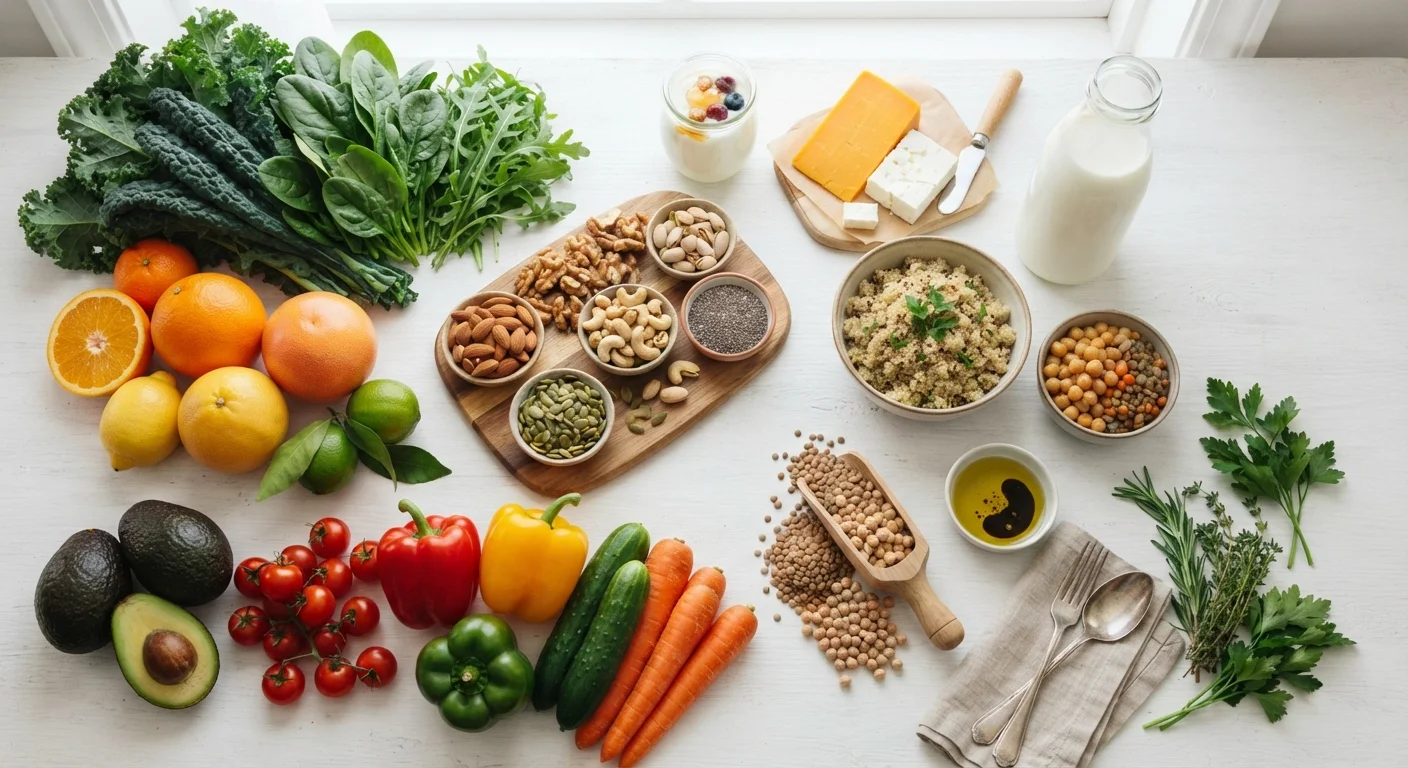
Photo: InsightsVilla.com | Quick Search. Right Info editorial
Key Takeaways
- Vitamins are organic (carbon-containing) compounds; minerals are inorganic elements originating from soil and water.
- Both are called micronutrients because the body needs them in relatively small amounts compared to carbs, fats, and protein.
- Fat-soluble vitamins (A, D, E, K) store in body tissue; water-soluble vitamins (B-complex, C) are excreted more readily.
- Minerals are grouped as macrominerals (like calcium) or trace minerals (like iron), based on how much the body requires.
- Cooking and storage can degrade some vitamins but generally don't affect mineral content in food.
What Makes Something a Micronutrient?
The word micronutrient simply means a nutrient the body needs in small quantities - milligrams or micrograms rather than the grams we track for carbohydrates, protein, and fat. If you've ever wondered how vitamins and minerals actually differ from each other (beyond just being two things on a supplement label), the answer comes down to chemistry and origin.
Vitamins are organic compounds, meaning they contain carbon atoms and are produced by living organisms - plants, animals, or bacteria. Minerals, by contrast, are inorganic elements that originate in soil and water. Plants absorb them through roots; we get them by eating those plants (or animals that ate them). For more on how micronutrients fit into the broader nutrition picture alongside carbs, proteins, and fats, see our macronutrients explainer.
| Criterion | Vitamins | Minerals |
|---|---|---|
| Chemical nature | Organic (carbon-containing) | Inorganic elements |
| Origin | Produced by living organisms | Derived from soil and water |
| How many are essential | 13 | 16+ (macrominerals & trace) |
| Storage in body | Fat-soluble stored; water-soluble excreted | Varies by mineral |
| Affected by cooking heat | Yes - especially water-soluble types | No - structurally stable |
| Can leach into cooking water | Yes (water-soluble vitamins) | Yes, if cooking liquid is discarded |
| Key functions | Enzyme reactions, immunity, vision | Bone structure, fluid balance, nerve signaling |
A Closer Look at Vitamins
There are 13 essential vitamins, and they split into two meaningful groups based on how the body handles them:
- Fat-soluble vitamins (A, D, E, and K) dissolve in fat and can be stored in liver and fatty tissue. Because they accumulate, getting too much over time - typically through high-dose supplements rather than food - can become a concern. Your body draws on these stores when dietary intake dips.
- Water-soluble vitamins (the eight B vitamins and vitamin C) dissolve in water and aren't stored in meaningful quantities. Excess is generally excreted in urine, which is why these need more consistent daily replenishment through food.
One practical implication: water-soluble vitamins are more vulnerable to cooking losses. Boiling vegetables, for instance, can leach B vitamins and vitamin C into the cooking water. Steaming or roasting tends to preserve more.
13
Essential vitamins recognized by nutrition science
According to established nutritional guidelines, the human body requires 13 vitamins to maintain normal physiological function.
~40%
Vitamin C potentially lost during boiling
Research published in nutritional chemistry literature suggests boiling can reduce vitamin C content in vegetables by roughly 40% or more depending on duration.
A Closer Look at Minerals
Minerals are divided by quantity into two groups:
- Macrominerals - calcium, phosphorus, magnesium, sodium, potassium, chloride, and sulfur - are needed in larger amounts (generally 100 mg or more per day).
- Trace minerals - iron, zinc, copper, manganese, iodine, selenium, and a few others - are needed in much smaller amounts, sometimes just a few micrograms.
Unlike vitamins, minerals aren't degraded by cooking heat; however, they can still be lost if they leach into cooking liquid that gets discarded. A notable difference from vitamins is that minerals interact with each other in absorption - for example, calcium and iron compete for absorption when consumed together, which is worth knowing if you're trying to optimize intake from whole foods.
For a handy lookup of specific vitamins and minerals - what each does, where to find it in food, and signs of common shortfalls - our micronutrients quick reference guide is a useful companion read.
Mineral Absorption Isn't Always Straightforward
How They Work Together
Vitamins and minerals rarely act alone. Vitamin D, for instance, is critical for the body to absorb calcium properly - a classic example of the two classes working in tandem. Similarly, vitamin C enhances the absorption of non-heme iron (the type found in plant foods). This interdependence is one of the strongest arguments for getting your micronutrients from a varied whole-food diet rather than isolated supplements whenever possible.
If you're wondering whether fortified foods or supplements should fill any gaps in your diet, that's a nuanced question - our article on fortified foods and supplements walks through when each approach makes sense. And for a deeper dive into how nutrient quality stacks up across different foods, the concept of nutrient density vs. caloric density is worth exploring.
This article is for general informational purposes only and does not constitute medical or dietary advice. For guidance specific to your health needs, consult a qualified healthcare professional or registered dietitian.
The content on this site is for informational purposes only and is not a substitute for professional advice. Always consult a qualified professional for guidance specific to your situation.