
Car Maintenance Myths That Are Costing American Drivers Money

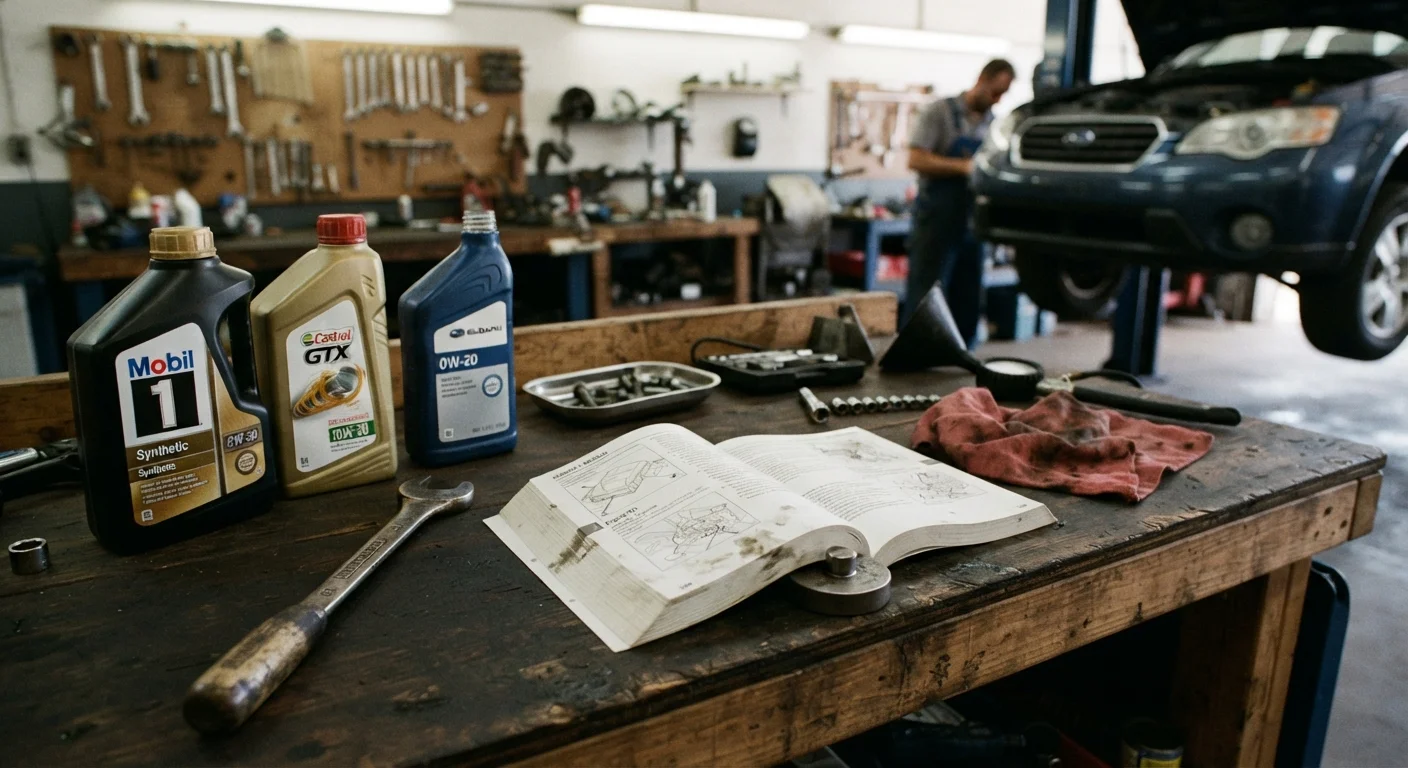
Photo: InsightsVilla.com | Quick Search. Right Info editorial
Key Takeaways
- Most modern vehicles don't need an oil change every 3,000 miles - check your owner's manual instead.
- Premium fuel only benefits engines specifically designed to require it; it won't improve a standard engine.
- Warming up your car for several minutes before driving is unnecessary for modern fuel-injected engines.
- Neglecting tire pressure costs drivers real money through reduced fuel economy and faster tread wear.
- Your owner's manual, not a quick-lube shop's sticker, should dictate your maintenance schedule.
Why Car Maintenance Myths Persist - and What They Cost You
Car maintenance advice gets passed down like family recipes - confidently shared, rarely questioned, and sometimes completely wrong. The problem is that outdated or inaccurate guidance doesn't just fail to help your vehicle; it can actively drain your wallet. American drivers collectively spend billions on unnecessary services and preventable repairs every year, and a significant portion traces back to myths that haven't kept pace with how modern vehicles actually work.
The good news: your car's owner's manual contains manufacturer-tested, model-specific guidance that outperforms any generalized rule of thumb. Reading it - even just the maintenance schedule section - is one of the most cost-effective things you can do as a vehicle owner. For a broader look at managing what you spend over a vehicle's lifetime, see our guide to keeping car ownership costs manageable.
Myth
You must change your engine oil every 3,000 miles, no exceptions.
Fact
Most modern vehicles with conventional oil can go 5,000-7,500 miles between changes; those using full synthetic oil may go 10,000-15,000 miles, depending on the manufacturer's specification.
The 3,000-mile rule was reasonable for older engine technology and lower-quality oils, but it hasn't reflected reality for decades. Today's engines are engineered to tighter tolerances, and modern motor oils - particularly full synthetics - are formulated to last significantly longer. The only authoritative source for your vehicle's actual interval is the manufacturer's recommendation found in your owner's manual. Changing oil more often than necessary is simply money out of your pocket. For a deeper look at oil types, see our synthetic vs. conventional motor oil explainer.
Myth
Premium fuel makes any car run better and improves fuel economy.
Fact
Premium fuel only benefits engines engineered to require or recommend it. Putting premium in a standard engine produces no measurable performance or efficiency gain.
Premium gasoline has a higher octane rating, which resists premature ignition (known as engine knock) in high-compression or turbocharged engines. If your owner's manual says "premium recommended" or "premium required," that guidance matters. If it says "regular unleaded," spending extra on premium is wasted money - your engine's computer is not calibrated to take advantage of it. Check the inside of your fuel door or your owner's manual to know exactly what your car needs.
Myth
You should warm up your car for several minutes before driving in cold weather.
Fact
Modern fuel-injected engines reach operating temperature faster by being driven gently than by idling in a driveway.
Extended idling made sense for carbureted engines that needed time to stabilize fuel delivery in cold temperatures. Fuel injection, which has been standard on new vehicles for decades, doesn't have that limitation. Prolonged cold idling can actually wash cylinder walls with unburned fuel, which degrades oil and increases wear. A brief 30-second idle is sufficient for oil to circulate; after that, driving at moderate speeds warms the engine, transmission, and tires far more effectively. In genuinely extreme cold, consult your owner's manual for any model-specific guidance.
Myth
As long as your car is running fine, you don't need to check fluid levels.
Fact
Fluid degradation and low levels often produce no noticeable symptoms until significant damage has already occurred.
Engine oil, coolant, brake fluid, and transmission fluid all degrade over time and with heat cycling - often without any warning light or obvious symptom. By the time a problem becomes noticeable, the cost of repair is typically far higher than routine fluid maintenance would have been. Our article on what happens when you neglect car fluids explains what each fluid does and what neglect actually looks like inside your engine.
Myth
Tires only need attention when they look flat or a warning light comes on.
Fact
A tire can be significantly under-inflated - enough to affect safety, fuel economy, and tread wear - without appearing visibly low.
The human eye cannot reliably detect a tire that is 10-15 PSI below its recommended pressure, yet that deficit measurably reduces fuel efficiency and accelerates uneven tread wear. The correct inflation pressure is listed on the sticker inside your driver's door jamb - not on the tire's sidewall, which shows maximum pressure. Checking pressure monthly with an inexpensive gauge is one of the simplest, highest-return maintenance habits any driver can adopt. Decoding your oil viscosity ratings follows similar logic: the right spec is on the label, not in folklore.
What the Data Says About Maintenance Spending
Beyond individual myths, it helps to understand the scale of the problem. Unnecessary oil changes, unneeded fuel additives, and skipped tire pressure checks all add up. Proper tire inflation alone is one of the simplest, least expensive habits a driver can maintain - yet many vehicles on the road are operating on significantly under-inflated tires. Our article on why getting tire pressure wrong costs more than you think breaks down exactly what that negligence costs in fuel and tread life.
~$400
Average annual overspend on unnecessary oil changes
Industry analysts estimate that drivers following outdated 3,000-mile intervals on vehicles rated for 7,500+ miles are paying for roughly twice as many oil changes as their cars actually require each year.
0.5%-3%
Fuel economy loss per PSI of under-inflation
The U.S. Department of Energy has indicated that tire pressure below the recommended level reduces fuel economy, with greater deficits producing proportionally larger losses.
If you're uncertain which maintenance tasks are safe to handle yourself and which genuinely require a professional, our DIY vs. shop guide offers a clear breakdown. And if you're new to car ownership, the maintenance primer for new drivers is a practical starting point for building sound habits from day one.
Don't Let a Service Sticker Override Your Owner's Manual
The content on this site is for informational purposes only and is not a substitute for professional advice. Always consult a qualified professional for guidance specific to your situation.