
Nutrition for Every Stage of Life: How Needs Shift from Childhood to Old Age

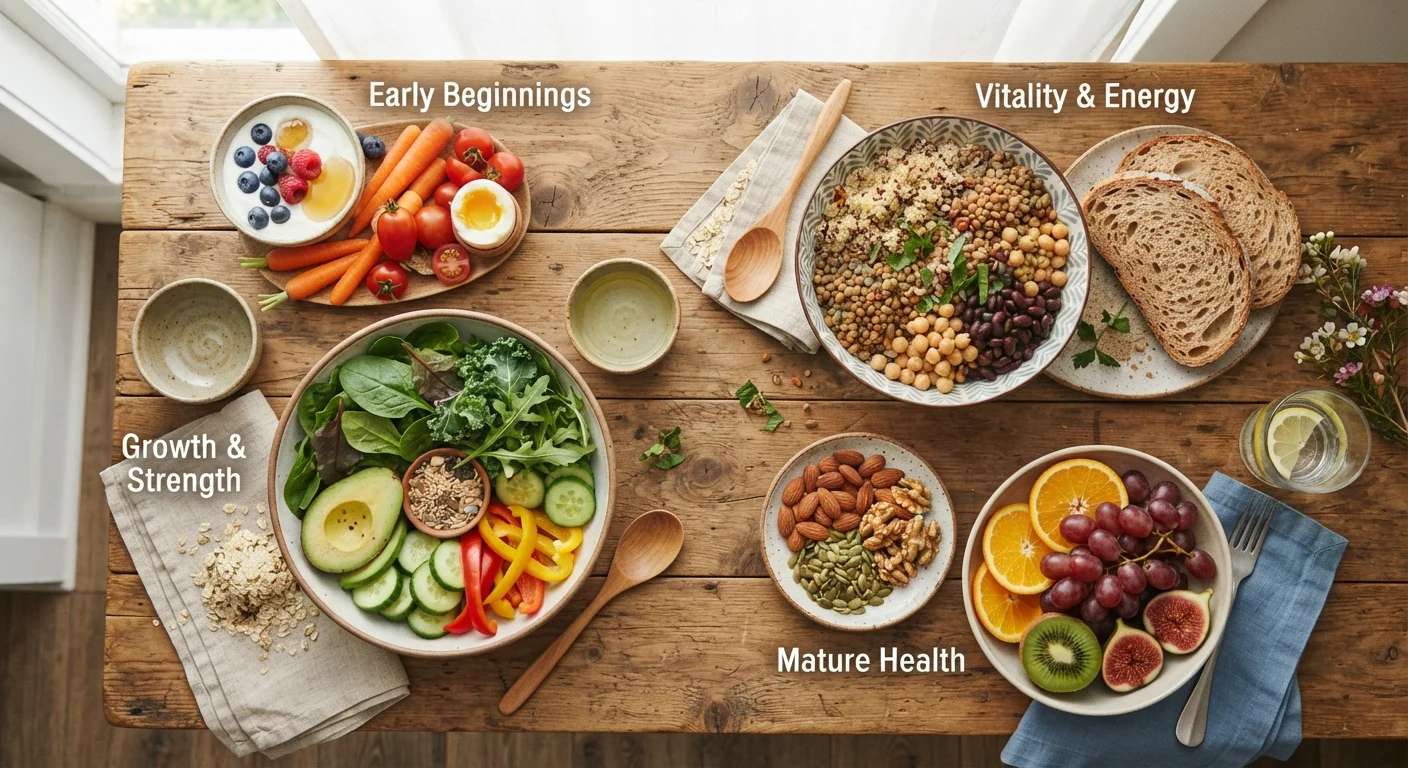
Photo: InsightsVilla.com | Quick Search. Right Info editorial
Key Takeaways
- Caloric needs generally peak during adolescence and young adulthood, then gradually decline.
- Protein, calcium, and iron requirements vary significantly across life stages.
- Older adults often need more of certain nutrients even as total calorie needs decrease.
- Pregnancy and breastfeeding create some of the highest nutrient demands of any life stage.
- Whole foods, hydration, and dietary variety remain important at every age.
- Always consult a qualified healthcare professional for personalized nutrition guidance.
Why Nutrition Needs Change Over a Lifetime
Your body is a moving target - literally. From the rapid growth spurts of childhood to the gradual muscle loss that can come with aging, physiology shifts in ways that meaningfully affect how much you need to eat and which nutrients deserve the most attention. Understanding these shifts at a broad level can help you make more informed everyday choices, whether you're feeding a toddler, fueling yourself through a demanding decade at work, or thinking about how your diet might need to evolve as you get older.
It's worth noting upfront: nutrition science is genuinely complex, and individual variation is enormous. The patterns described here reflect general population-level evidence. For decisions about your own health or a family member's, a registered dietitian or physician is the right resource. See our overview of nutrition science's real complexities for more on why general guidance has its limits.
~1,000 mg
Daily calcium recommended for teens aged 9-18
According to the National Institutes of Health Office of Dietary Supplements, adolescents have higher calcium needs than most other age groups.
~600 IU
Vitamin D daily value for adults up to age 70
The NIH recommends 600 IU of vitamin D daily for most adults, rising to 800 IU for those over 70.
~90%
Americans not meeting fiber intake recommendations
Research published in the American Journal of Lifestyle Medicine suggests the vast majority of Americans fall short of recommended daily fiber intake.
Childhood and Adolescence: Building Blocks Matter Most
Children and teenagers are in a phase of remarkable biological construction - bones are mineralizing, muscles are developing, and the brain is undergoing significant structural changes. This makes certain nutrients especially critical during these years.
- Calcium and Vitamin D: Bone density is largely established during childhood and the teen years. Adequate calcium (found in dairy, fortified plant milks, and leafy greens) and vitamin D (from sunlight exposure and fortified foods) supports skeletal development.
- Iron: Particularly important for adolescent girls after menstruation begins, iron supports healthy red blood cell production. Sources include lean meats, beans, and fortified cereals.
- Protein: Growth demands more protein relative to body weight during childhood and adolescence than at most other life stages.
Caloric needs rise steeply during growth spurts - a teenage boy in a growth phase may have calorie requirements that rival or exceed those of a physically active adult man. Getting kids comfortable with a variety of whole foods during these years tends to pay dividends for long-term eating habits.
When it comes to feeding kids, repeated exposure matters more than pressure. Offering a new food 10-15 times without forcing it is far more effective than making meals a battleground.
For older adults especially, eating protein-rich foods spread across all meals - rather than concentrated in one - may support better muscle maintenance throughout the day.
Adulthood: Maintaining What You've Built
For most adults in their 20s through 40s, the focus shifts from building to maintaining. Growth has slowed, but lifestyle demands - careers, families, stress - can significantly affect nutritional status. Caloric needs stabilize and, for many people, begin a slow decline through the 40s as metabolic rate gradually drops.
Key considerations during adulthood include:
- Fiber: Associated with heart health and digestive function, fiber is chronically under-consumed by most American adults. Beans, whole grains, fruits, and vegetables are reliable sources.
- Healthy fats: Unsaturated fats from sources like olive oil, nuts, seeds, and fatty fish play a role in cardiovascular health.
- Consistent meal patterns: Adults who eat regularly throughout the day tend to manage energy levels and appetite more effectively than those who skip meals frequently.
This is also the stage where habits formed around grocery shopping and meal planning can have an outsized long-term impact. Our guide to grocery shopping habits that support better nutrition explores practical strategies that work for busy adults.
Pregnancy and Breastfeeding: Elevated Demands
Pregnancy and lactation represent some of the highest nutrient demands the human body will ever face. This isn't a stage to navigate on general guidelines alone - individualized guidance from an OB-GYN or registered dietitian is strongly recommended.
Pregnancy Nutrition Requires Personalized Guidance
That said, some broad patterns are well established. Folate (or folic acid in its supplemental form) is critical in the early weeks of pregnancy for neural tube development. Iron needs increase substantially to support expanded blood volume. Calcium and vitamin D continue to matter for fetal bone development, and omega-3 fatty acids - particularly DHA - are associated with fetal brain development.
During breastfeeding, caloric needs are typically higher than during pregnancy itself, and staying well-hydrated becomes especially important. Again, individual circumstances vary widely, and what's appropriate depends heavily on a person's baseline health, pregnancy history, and other factors a qualified provider can assess.
Older Adults: Quality Over Quantity
Here's one of nutrition's more counterintuitive realities: as we age, we generally need fewer calories - but our need for many specific nutrients either holds steady or increases. That means the quality of every bite matters more than it did in earlier decades.
Several changes drive this dynamic. Muscle mass tends to decline with age (a process called sarcopenia), digestion slows, and the body's ability to absorb certain nutrients - including vitamin B12 and calcium - can decrease. Some older adults also experience reduced appetite or difficulty eating due to dental issues, medications, or social isolation.
- Protein: Many nutrition researchers suggest older adults may benefit from somewhat higher protein intake to help preserve muscle mass, though recommendations vary.
- Vitamin B12: Absorption often declines with age due to reduced stomach acid; fortified foods or supplements are commonly recommended, but discuss this with a doctor.
- Calcium and Vitamin D: Bone loss accelerates after midlife, making these nutrients especially relevant for older adults.
- Hydration: Thirst sensation diminishes with age, making intentional fluid intake more important.
Staying physically active also plays a meaningful role in how the body uses nutrients at this stage. Our article on staying active in your 50s, 60s, and beyond covers how movement recommendations evolve later in life.
Watch for Unintentional Weight Loss in Older Adults
Nutrition Across All Stages: What Stays the Same
Amid all this variation, a few principles hold up across every decade of life. Vegetables and fruit in variety, whole grains over refined ones, adequate protein from a range of sources, and enough water - these pillars show up consistently in nutrition research regardless of age group. Minimizing heavily processed foods and added sugars is also broadly supported by evidence at every life stage.
What changes is the emphasis - which nutrients deserve more attention, how many calories are appropriate, and what physical or biological circumstances are shaping your needs. No single eating pattern works for everyone at every age, which is exactly why broad nutrition literacy matters more than memorizing specific rules.
For a deeper look at eating well within the context of your everyday life, explore our Nutrition & Diet hub - it covers practical food choices, everyday eating habits, and a lot more.
This article is for general informational and educational purposes only and is not a substitute for professional medical or dietary advice. Please consult a qualified healthcare provider or registered dietitian for guidance specific to your health situation.
The content on this site is for informational purposes only and is not a substitute for professional advice. Always consult a qualified professional for guidance specific to your situation.