
Weeknight Meal Prep: A Realistic Framework for Busy Households

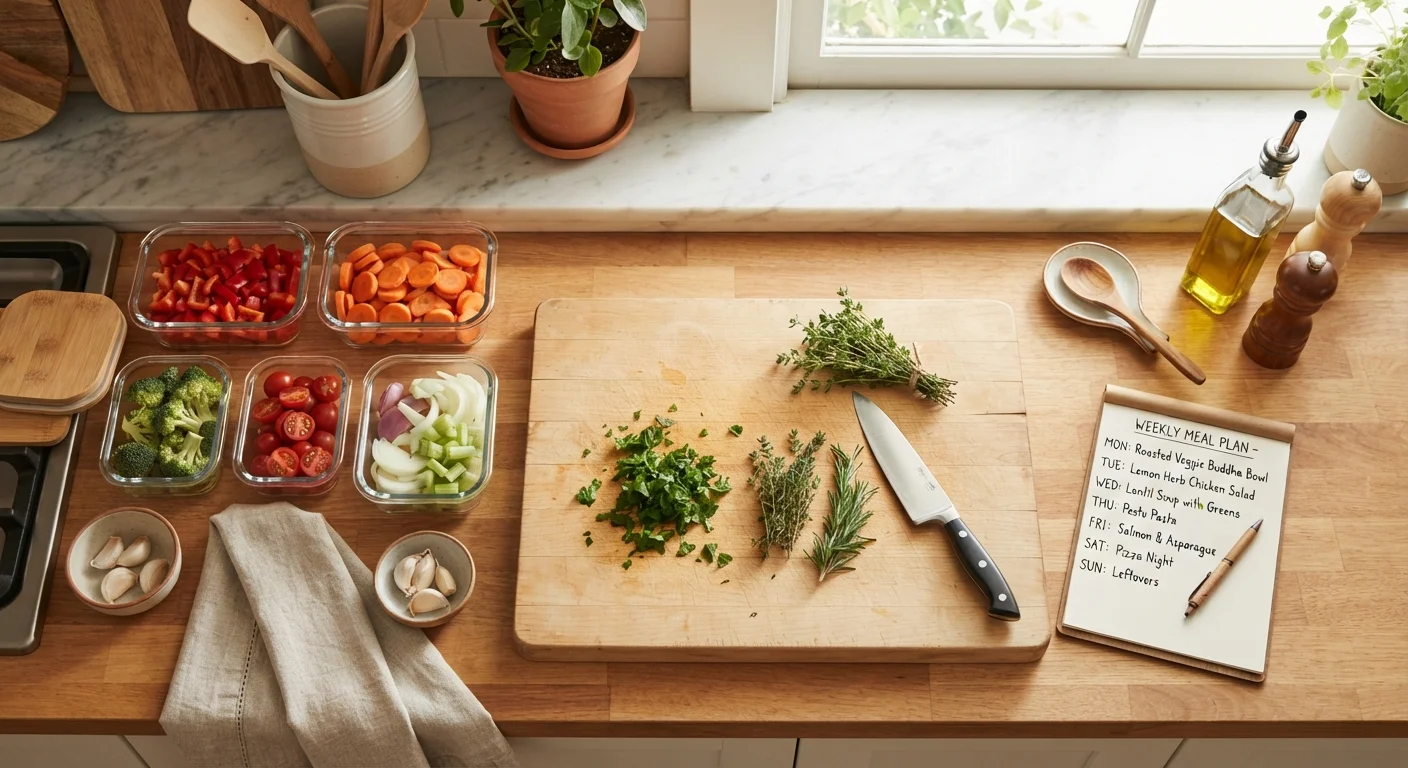
Photo: InsightsVilla.com | Quick Search. Right Info editorial
Key Takeaways
- Effective meal prep doesn't require cooking every meal in advance - prepping components is enough.
- A short planning session at the start of the week dramatically reduces daily decision fatigue.
- Batch-cooking a few versatile proteins and grains gives you building blocks for multiple meals.
- Storing prepped ingredients properly keeps food safe and extends its useful fridge life.
- Starting small and building gradually is the most reliable way to make meal prep a lasting habit.
Why Most Meal Prep Advice Sets You Up to Fail
The classic image of meal prep - twelve matching containers stacked in the fridge, every meal portioned for the week - looks satisfying online, but it doesn't reflect how most households actually work. Life shifts. Appetite shifts. By Thursday, that portioned chicken and rice starts feeling like a punishment rather than a gift to your future self.
The good news: you don't need to pre-cook every meal to get real value out of meal prep. What actually moves the needle is having the right components ready - cooked grains, prepped vegetables, a protein or two - so that putting dinner together on a weeknight takes 15 minutes instead of 45. That's the realistic version of this habit, and it's the one that tends to stick.
Overambitious planning is consistently the top reason people abandon meal prep. This guide takes a deliberately low-pressure approach instead.
What you will need
What You'll Need Before You Start
Before you dive into chopping and cooking, a small amount of setup makes the whole process smoother. The professional kitchen concept of mise en place - getting everything in its place before you cook - applies just as much to home meal prep as it does to a restaurant line.
Airtight storage containers
Keep prepped ingredients fresh in the fridge and prevent cross-contamination between foods.
Sheet pan
Roast vegetables or proteins in large batches with minimal cleanup.
Sharp chef's knife and cutting board
Efficient chopping and slicing is the backbone of fast prep work.
Large pot or rice cooker
Cook a big batch of grains - rice, farro, lentils - hands-off while you work on other things.
Marker and masking tape (or container labels)
Label prepped containers with contents and date so nothing gets forgotten in the back of the fridge.
The Step-by-Step Framework
This process is designed to take between 30 and 90 minutes once a week, depending on how ambitious your plan is. You can do it on Sunday, or split it across two shorter sessions - say, Sunday for planning and Monday evening for a quick prep cook. Do whatever matches your actual schedule.
Plan three to four dinners (not seven)
Pick three or four meals for the week, not a full seven. Leave intentional gaps for leftovers, a flexible night, or takeout - that breathing room is what makes the plan sustainable. Write your meals down somewhere visible: a whiteboard, a sticky note on the fridge, or a notes app. You don't need a fancy system.
Build a focused grocery list
Based on your planned meals, write a grocery list organized by store section (produce, protein, dry goods) to minimize backtracking. Check your pantry and fridge first so you're not buying duplicates. Keeping a running list on your phone throughout the week - as you run out of things - makes this step faster every time.
Cook one batch of grains
Put a large pot of rice, farro, quinoa, or lentils on the stove or in a rice cooker at the start of your prep session. Grains keep well in the fridge for four to five days and work in grain bowls, soups, wraps, and as a side dish. Getting this going first means it's cooking hands-off while you work on everything else.
Roast or prep one or two proteins
Roasting a sheet pan of chicken thighs, hard-boiling a batch of eggs, or cooking a pound of ground meat gives you fast protein to pull from all week. You don't need to decide exactly how you'll use it yet - that flexibility is the point. Slice or shred after cooking and store in a labeled container.
Wash and chop vegetables
Wash and cut whatever vegetables you'll use this week: bell peppers, broccoli, carrots, leafy greens, onions. Store them raw in containers - most will hold well for three to five days. This single step often saves the most time on weeknights, since it eliminates the chopping that makes cooking feel slow after a long day.
Label everything and organize your fridge
Label containers with the contents and the date you prepped them. Organize your fridge so the prepped items are front and center - not buried behind leftovers. Out of sight really does mean out of mind. A quick kitchen setup check before you start cooking each night takes less than two minutes and prevents mid-recipe scrambles.
Start Smaller Than You Think You Should
Troubleshooting and Common Pitfalls
Even with a solid plan, things go sideways. Here's how to handle the most common stumbles:
- You prepped too much and things went bad. Scale back - one protein, one grain, and two or three vegetables is plenty for most households. If you routinely end up throwing things out, that's a signal to prep less, not more.
- Your family won't eat the same thing twice. Lean on flexible components instead of finished dishes. A pot of farro or brown rice can go into grain bowls, soups, stir-fries, or stuffed peppers without feeling repetitive.
- You ran out of time this week. A well-stocked pantry is your backup plan. Pantry staples that support last-minute cooking can carry you through a skipped prep week without resorting to takeout every night.
- You want to cook more in bulk for the freezer. Not everything freezes well - a plain-language guide to freezer cooking can help you figure out what's worth stashing and what isn't.
Don't Let Prepped Food Sit Too Long
If budget is also a concern, pairing a smart meal prep routine with intentional shopping habits can stretch your grocery dollars considerably. Eating well on a tight budget is easier when you're not scrambling for ideas at 6 p.m. and defaulting to expensive convenience options.
The content on this site is for informational purposes only and is not a substitute for professional advice. Always consult a qualified professional for guidance specific to your situation.