
Mise en Place Isn't Just for Restaurants

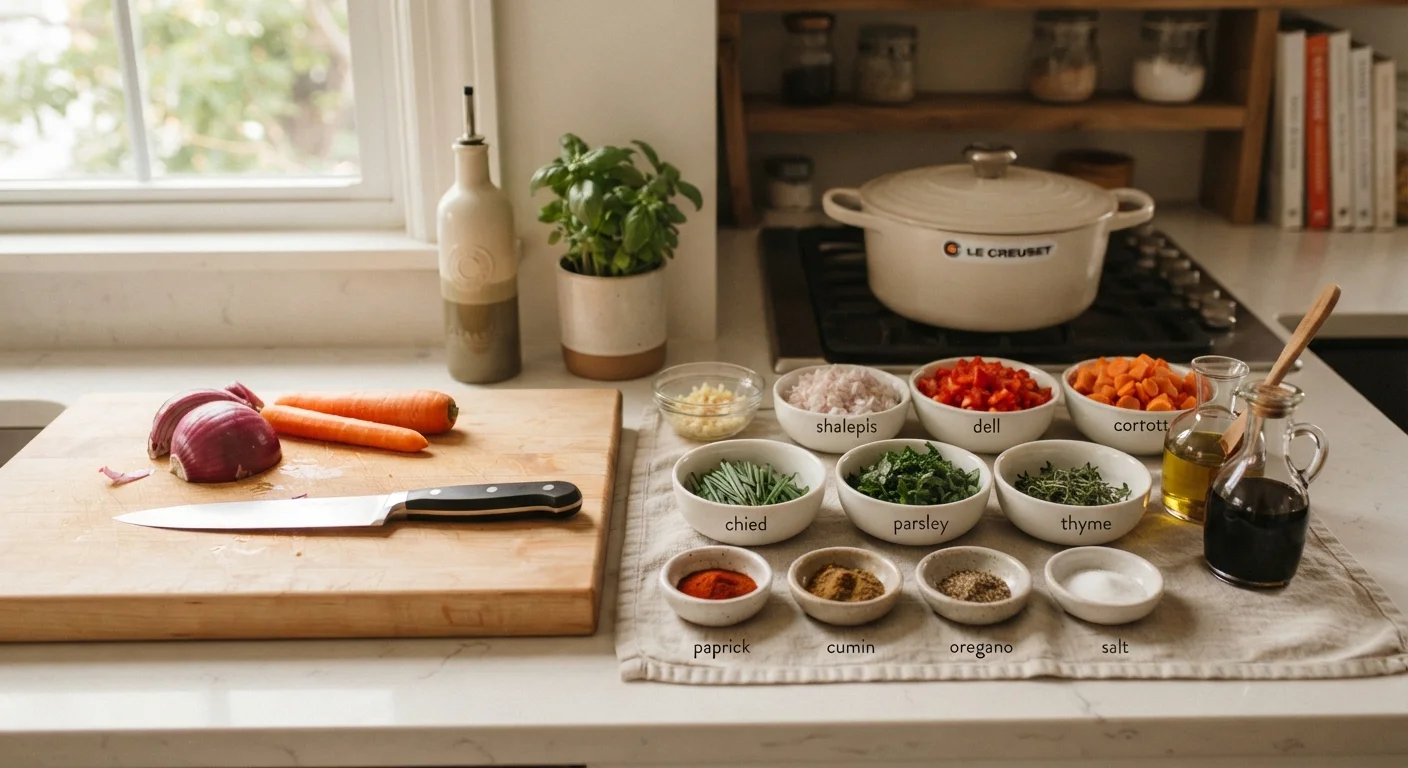
Photo: InsightsVilla.com | Quick Search. Right Info editorial
Key Takeaways
- Mise en place means preparing and organizing every ingredient before heat touches the pan.
- The habit reduces mid-cook mistakes, forgotten steps, and last-minute scrambles.
- Small prep bowls and a clear workspace are the only tools you really need.
- Reading your recipe fully before starting is the foundation of the entire system.
- Even five minutes of upfront prep pays off in calmer, more consistent home cooking.
What Mise en Place Actually Means
Mise en place (pronounced roughly "meez ahn plahss") is a French culinary phrase that translates to "everything in its place." In professional kitchens, cooks spend significant time before service prepping, measuring, and organizing every ingredient they'll need - so that when the rush hits, nothing is left to improvise. The actual cooking becomes almost mechanical, because all the thinking was done in advance.
At home, we tend to do the opposite. We start heating the pan, then realize we haven't chopped the onion. We're halfway through a stir-fry when we remember the sauce needs garlic that's still in its skin. The result is unevenly cooked food, stressed cooks, and dinners that are technically edible but nowhere near their potential.
Adopting even a simplified version of mise en place changes the rhythm of home cooking entirely. You don't need professional speed or a brigade of prep cooks - just a commitment to getting organized before the burner goes on. Pair this habit with a well-stocked pantry and weeknight dinners start to feel genuinely manageable.
What You'll Need
The gear requirements here are refreshingly minimal. Most of what you need is already in your kitchen.
Small prep bowls or ramekins
Hold measured and prepped ingredients separately so they're ready to add at the right moment.
Cutting board
Provides a stable, clean surface for chopping and prepping all vegetables, herbs, and proteins.
Chef's knife
The primary tool for chopping, slicing, and mincing ingredients during prep.
Measuring spoons and cups
Ensure spices, liquids, and dry ingredients are accurately measured before cooking begins.
Trash bowl
A bowl kept on the counter for scraps keeps your workspace clear throughout prep.
What you will need
How to Apply Mise en Place at Home
Follow these steps before you turn on any heat. The sequence matters - each stage builds on the last.
Read the entire recipe before touching anything
This step is non-negotiable and chronically skipped. Read the recipe from start to finish - including the ingredient list and every instruction. Note any steps that require simultaneous actions, long cook times, or techniques you're less familiar with. This is where you catch the "marinate overnight" instruction before it's too late.
Gather all your ingredients
Pull everything the recipe calls for out of the pantry, refrigerator, and freezer before you start prepping. Line them up on the counter. This confirms you actually have what you need - and reveals any missing items before you're mid-cook and stuck.
Wash, chop, and measure everything
Work through each ingredient methodically: wash produce, chop vegetables to the size the recipe specifies, mince garlic and herbs, and measure out spices and liquids. Place each prepped item into its own small bowl or into a group bowl if they're added to the pan at the same time.
Arrange your prep in the order you'll use it
Line your prepped bowls up left to right (or in whatever order makes visual sense) following the recipe's sequence. The first ingredient you'll add sits closest to the stove; the last sits furthest away. Now your counter tells the story of the recipe at a glance.
Set up your equipment and clear the clutter
Get out the pots, pans, lids, and any utensils you'll need. Give yourself a clean workspace by moving anything that isn't part of tonight's cook. A clutter-free counter reduces the risk of knocking things over mid-cook and makes the whole experience calmer. Now you're ready - turn on the heat.
Start Small if It Feels Like a Lot
Why It Works - and How to Make It Stick
The psychological benefit of mise en place is just as real as the practical one. When your ingredients are prepped and lined up, cooking shifts from reactive to intentional. You're not chasing the recipe - you're executing it. That mental calm tends to produce better seasoning decisions, better timing, and fewer burnt garlic situations.
Don't Prep Proteins Too Far Ahead
If you're trying to build a broader cooking routine, mise en place pairs naturally with a simple weeknight meal prep framework - doing some ingredient prep on a less busy evening means your mise en place on a Tuesday night takes half the time. And if knife work slows you down during prep, building a few core knife skills is worth the small investment. For a broader pre-cook checklist, this kitchen setup guide walks through everything worth doing before the first ingredient hits the pan.
The content on this site is for informational purposes only and is not a substitute for professional advice. Always consult a qualified professional for guidance specific to your situation.