
Before You Start Cooking: A Kitchen Setup Checklist

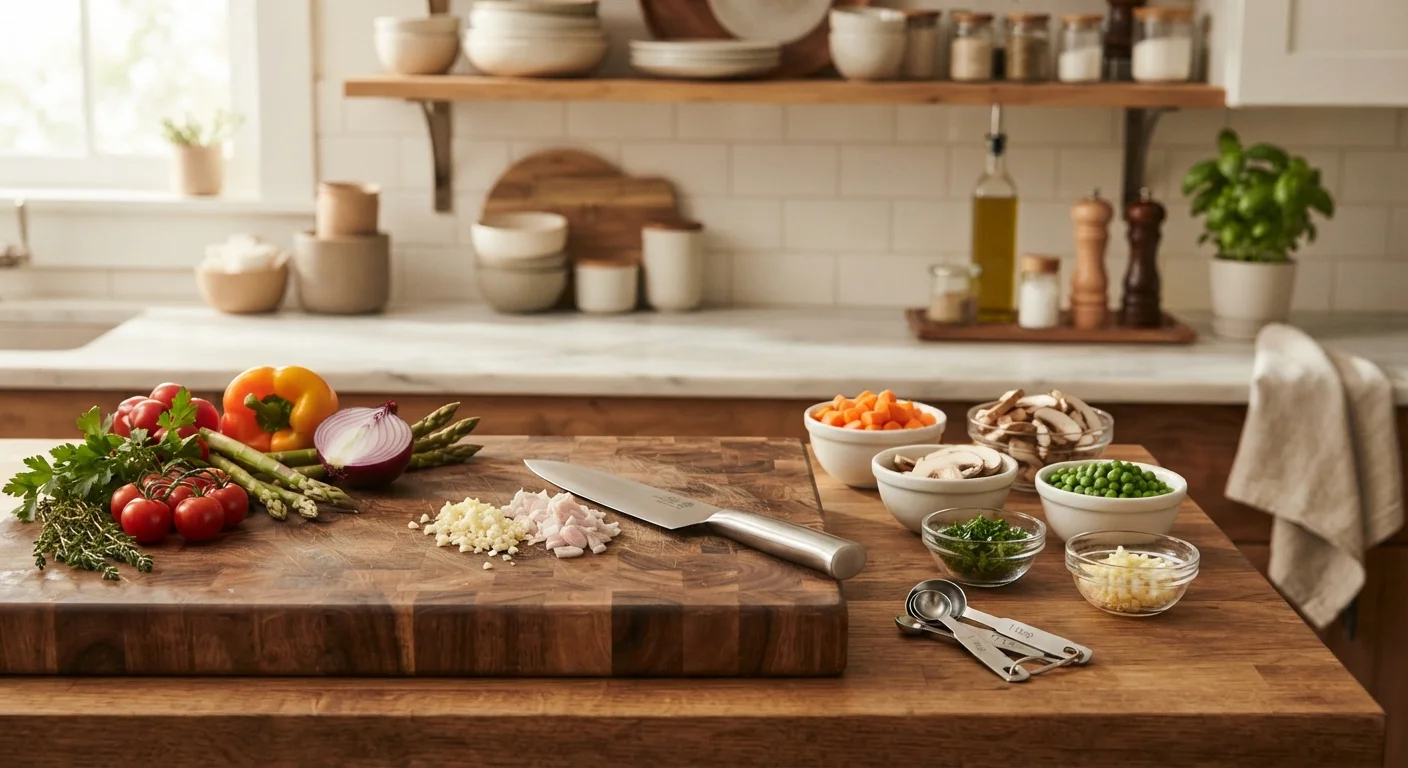
Photo: InsightsVilla.com | Quick Search. Right Info editorial
Key Takeaways
- Reading your recipe fully before you start prevents costly mid-cook surprises.
- A clean, organized workspace reduces mistakes and keeps food preparation safe.
- Prepping all ingredients before you heat anything makes cooking faster and calmer.
- Having the right tools out in advance means you're never scrambling for a pan.
- Food safety checks - like hand washing and proper thawing - belong at the very start.
Why a Pre-Cook Checklist Is Worth Your Time
Most cooking stress doesn't happen at the stove - it happens in the five minutes before dinner is supposed to be on the table, when you realize you forgot to thaw the chicken, can't find a lid for the pot, or discover you're out of an ingredient you were counting on. A quick setup routine before you start eliminates almost all of that.
This is the same principle that professional kitchens call mise en place - having everything in its place before you cook. It works just as well at home, even if your kitchen is small and your schedule is packed. This checklist walks you through every layer of that preparation, from food safety basics to tool setup to ingredient prep.
Read and Plan
Food Safety Basics
Workspace Setup
Ingredient Prep
Equipment Check
Tools, Safety, and What to Do Right Before You Cook
Beyond ingredients, it's worth giving your workspace and equipment a quick once-over. A dull knife, a cold pan, or a missing thermometer can derail a recipe just as easily as a missing ingredient. Our guide to knife skills has a quick tip: if your knife feels like it's tearing rather than slicing, it's time to hone before you start.
Chef's Knife
Your primary cutting tool for almost every prep task - keep it sharp and honed before you start.
Cutting Board
Provides a stable, sanitary surface for chopping; ideally use separate boards for produce and raw proteins.
Instant-Read Thermometer
Confirms that meat, poultry, and fish reach a safe internal temperature before serving.
Measuring Cups and Spoons
Essential for accurate portioning of both dry and liquid ingredients, especially in baking.
Prep Bowls (Mise en Place Bowls)
Small bowls for pre-measuring and organizing ingredients so everything is ready when you need it.
Oven Thermometer
Helps verify your oven's actual temperature, which often differs from the dial setting.
Kitchen Timer
Keeps you on track across multiple steps or components cooking simultaneously.
Food safety is the other piece that belongs at the start of every cook session, not as an afterthought. That means clean hands, a sanitized cutting board, and making sure raw proteins are stored or handled in a way that won't contaminate other ingredients. For proteins, knowing when they're actually done is critical - bookmark our internal temperature guide as a handy reference.
Never Guess When It Comes to Meat Temperatures
Finally, think about what's on your counter and in your pantry. If you cook regularly and find yourself scrambling on weeknights, a well-stocked pantry is one of the best investments you can make - you'll almost always have a fallback option when a recipe doesn't come together as planned.
Don't Skip the Recipe Read-Through
The content on this site is for informational purposes only and is not a substitute for professional advice. Always consult a qualified professional for guidance specific to your situation.