
The Home Cook's Guide to Knife Skills

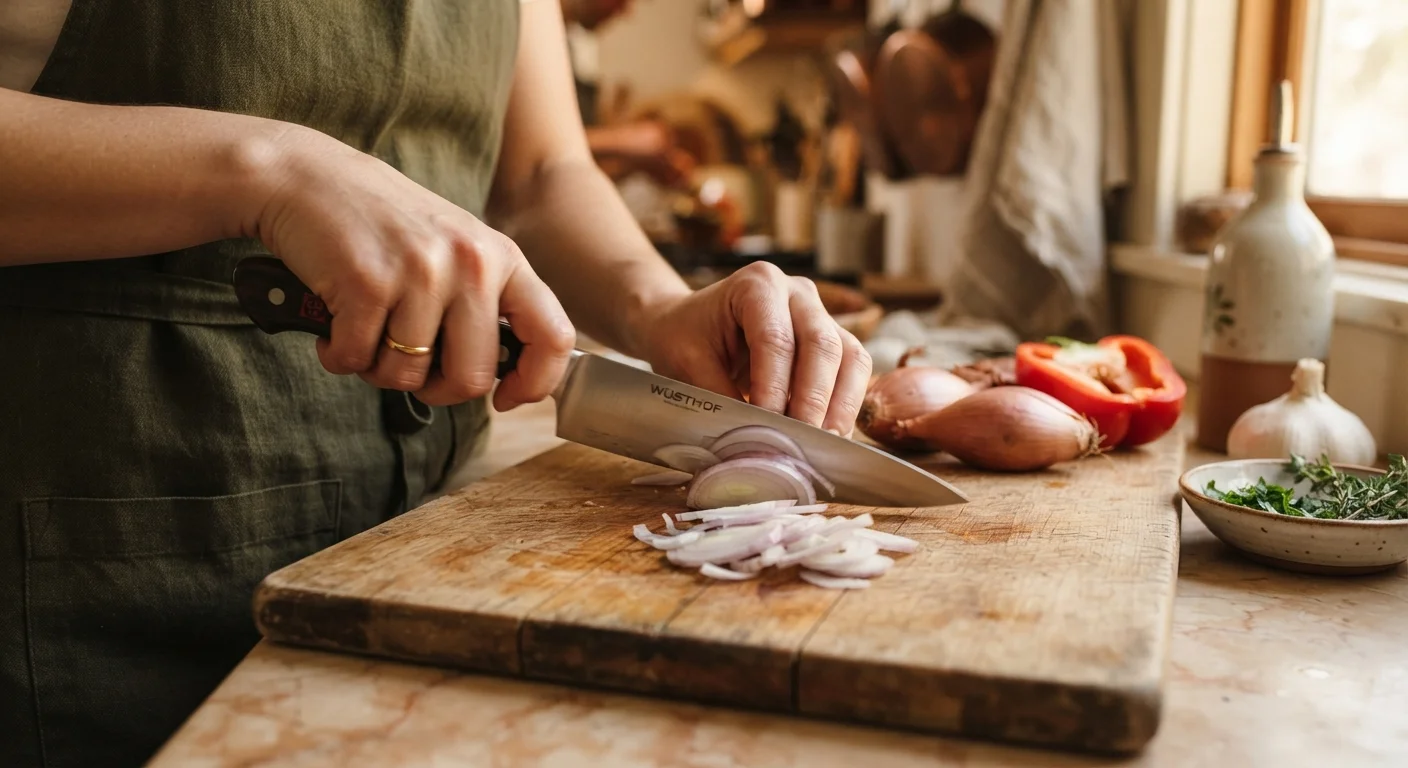
Photo: InsightsVilla.com | Quick Search. Right Info editorial
Key Takeaways
- A sharp knife is safer than a dull one - it requires less force and is more predictable.
- The pinch grip and the claw technique are the two habits that prevent most cutting injuries.
- Consistent knife cuts aren't just about looks - uniform pieces cook evenly.
- You don't need a full knife block; one good chef's knife handles most kitchen tasks.
- Regular honing keeps an edge performing well between professional sharpenings.
Why Knife Skills Matter More Than You'd Think
Most home cooks underestimate how much knife work shapes the cooking experience. Clunky, uneven cuts slow down prep, cause food to cook inconsistently, and - counterintuitively - increase the chance of an accident. A cook struggling with a dull blade or an uncertain grip uses more force and less control, which is exactly when knives slip.
Good knife skills aren't a professional luxury. They're the practical foundation that makes everything else in the kitchen smoother. Once you internalize a few core habits, prep time drops noticeably and cooking starts feeling less like a chore. Paired with smart prep habits - like those covered in mise en place at home - solid knife work transforms how efficiently you cook on busy weeknights.
Pinch grip
A knife-holding technique where you pinch the blade itself - between your thumb and bent index finger - rather than gripping only the handle. It provides better control and reduces fatigue.
Claw technique
A hand position for the non-knife hand where fingertips curl inward and knuckles face the blade, acting as a guide and keeping fingertips safely out of the knife's path.
Honing
Realigning the microscopic edge of a knife blade using a honing steel or rod. It doesn't remove metal but keeps a sharp edge performing consistently between sharpenings.
Dice
A cutting method that produces uniform cubes from a vegetable or other food. The process involves slicing into planks, cutting into sticks, then cross-cutting into cubes of a consistent size.
Chiffonade
A technique for cutting leafy herbs or greens into thin ribbons by stacking, rolling, and slicing across the roll. Common with basil, mint, and leafy greens.
Julienne
A cut that produces thin, uniform matchstick-shaped pieces, typically about 2 inches long. Often used in stir-fries and salads for even cooking and appealing presentation.
The Knife Grip and the Claw: Your Two Foundations
Before any particular cut, two body mechanics need to become automatic: the pinch grip and the claw.
The pinch grip means holding the blade - not just the handle - between your thumb and the bent side of your index finger, right where the blade meets the handle. The other three fingers wrap the handle naturally. This grip gives you far more control than a full-handle hold because you're actually directing the blade rather than just the handle attached to it. It may feel strange for the first few minutes, then it clicks.
The claw is what your other hand does. Curl your fingertips inward so your knuckles face the blade and act as a guide rail. The flat side of the blade rests lightly against your knuckles as you move through a cut, keeping your fingertips safely tucked. Your knuckles move backward with each slice, naturally controlling portion size.
Start with a Forgiving Vegetable
Practice these two techniques with something forgiving - a large zucchini or a block of cheese - before moving on to round or slippery produce.
The Core Cuts Every Home Cook Should Know
Most recipes call for a handful of cuts. Here are the ones worth learning first:
- Slice: A smooth, forward-and-down motion. Used for bread, proteins, and most vegetables. The tip of the knife stays close to the board while the heel does the work.
- Chop: A decisive downward motion with the knife tip anchored. Great for herbs, garlic, and rough vegetable prep where precision isn't critical.
- Dice: A three-step process - slice into planks, cut into sticks, then cross-cut into cubes. Small (¼ inch), medium (½ inch), and large (¾ inch) dice are the standard sizes most recipes reference.
- Julienne: Thin matchstick cuts, typically about 2 inches long. Common in stir-fry prep and slaws. Requires squaring off the vegetable first for stability.
- Chiffonade: Used for leafy herbs and greens. Stack the leaves, roll them tightly, then slice across the roll into thin ribbons.
Uniform cuts matter beyond aesthetics - when pieces are the same size, they finish cooking at the same time. Uneven chunks lead to some pieces overdone while others are still underdone. That principle connects directly to how heat works in cooking.
Keeping Your Knife Sharp (and Why It's a Safety Issue)
A dull knife is the most common hazard in the home kitchen. When a blade won't bite into food cleanly, you apply pressure - and pressure reduces control. Sharp knives do the work themselves.
Honing (using a honing steel or ceramic rod) should happen regularly - many cooks do it before each session. Honing doesn't remove metal; it straightens the microscopic edge that bends through regular use. Sharpening, which grinds away metal to create a fresh edge, is needed less often - typically a couple of times a year for regular home cooks, though frequency depends on your usage and the surfaces you cut on.
Avoid Hard Cutting Surfaces
Cutting boards also matter: wood and plastic are knife-friendly. Glass, ceramic, and marble cutting surfaces are hard on edges and should be avoided for prep work.
Store knives on a magnetic strip, in a knife block, or with blade guards - loose in a drawer damages both the edge and your fingers when you reach in.
Putting It All Together
Knife skills compound. Once the pinch grip and claw become automatic, cuts get faster and more consistent. Once cuts are consistent, cooking results improve. It's one of those foundational investments - a few hours of deliberate practice - that pays off every single time you cook.
A great next step: before your next meal prep, set up your workspace intentionally so your board is stable, your knife is honed, and everything you need is within reach before the first cut. Small habits like that are exactly what separates a stressful cooking experience from a satisfying one.
And remember: you don't need a professional knife collection to cook well. One reliable chef's knife - kept sharp and used with good technique - handles the overwhelming majority of what any home kitchen asks of you.
Mise en Place at Home
Learning to prep ingredients before you cook - the way professional kitchens do - pairs perfectly with strong knife skills. This guide explains how to bring the habit into a home kitchen.
Before You Start Cooking: A Kitchen Setup Checklist
A practical checklist to help you organize your workspace, stabilize your cutting board, and gather tools before the first cut - so prep flows smoothly from start to finish.
Reading a Recipe Like a Cook
Understanding what a recipe is really asking before you pick up a knife saves time, reduces waste, and helps you anticipate which cuts and techniques you'll need.
Frequently Asked Questions
The content on this site is for informational purposes only and is not a substitute for professional advice. Always consult a qualified professional for guidance specific to your situation.