
Driving in Rain, Snow, Ice, and Fog: One Guide for Every Condition

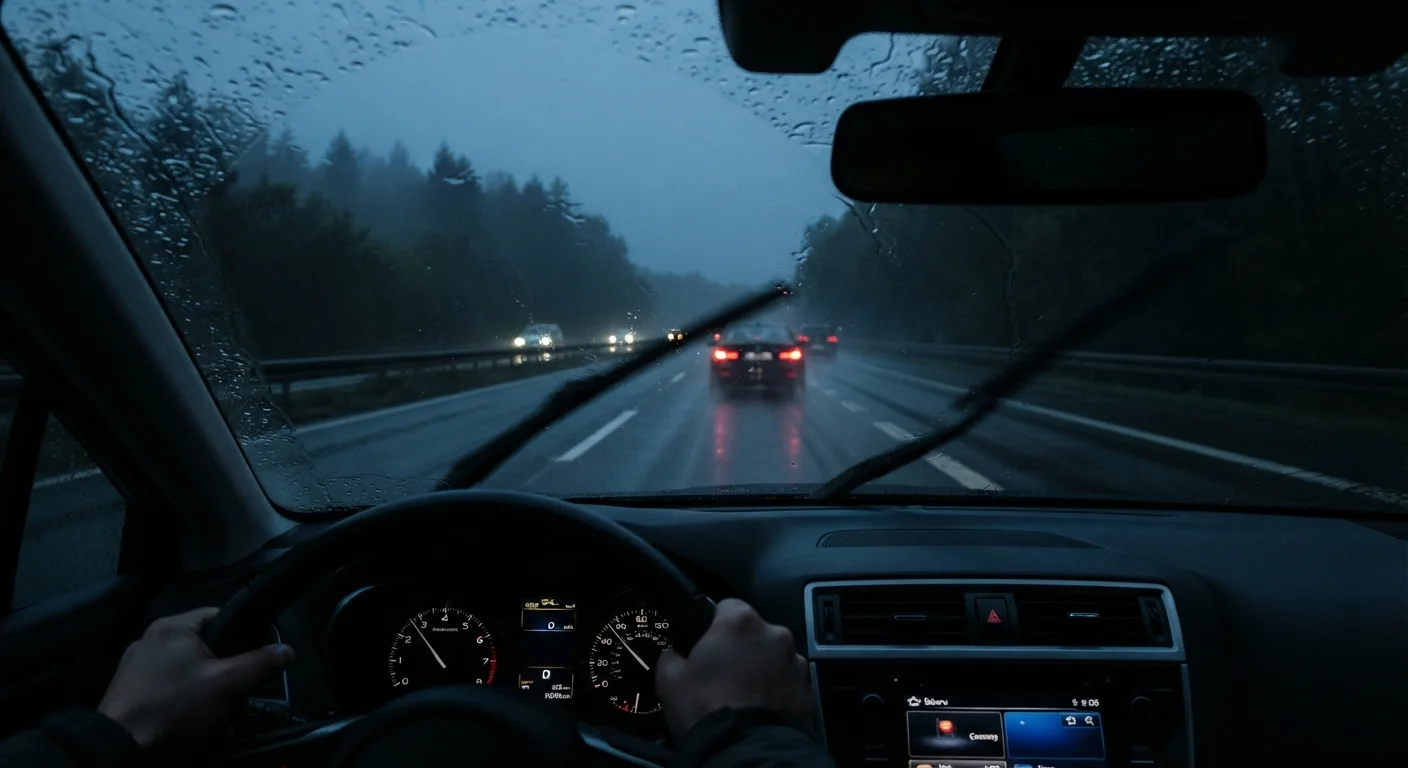
Photo: InsightsVilla.com | Quick Search. Right Info editorial
Key Takeaways
- Slowing down is the single most effective adjustment across every adverse condition.
- Hydroplaning can occur at speeds as low as 35 mph on standing water.
- Black ice is nearly invisible - treat any shiny or dark pavement with extreme caution.
- High beams in fog reduce your own visibility by reflecting light back at you.
- Vehicle preparation before a trip is just as important as in-the-moment driving choices.
Why Weather Demands a Different Driving Mindset
Most crashes in adverse weather aren't caused by the weather itself - they're caused by drivers who don't adjust to it. Rain, snow, ice, and fog each change the physical relationship between your tires and the road, and between your eyes and what's ahead. The rules that work on a clear, dry highway simply don't apply.
Understanding what each condition actually does to your vehicle's handling and stopping distance puts you in a position to respond - not just react. This guide walks through each condition with specific, practical adjustments you can apply immediately. For the habits that complement these condition-specific tactics, see safe driving fundamentals that hold up in any condition.
21%
U.S. crashes linked to adverse weather
According to the Federal Highway Administration, roughly 21% of all vehicle crashes in the U.S. are weather-related on average each year.
10x
Stopping distance increase on ice vs. dry road
Engineering and safety research consistently shows stopping distances can increase up to tenfold on icy surfaces compared to dry pavement at the same speed.
35 mph
Speed at which hydroplaning can begin
Hydroplaning risk increases significantly around 35 mph on wet roads, particularly with worn tire tread, according to tire safety guidance.
Driving in Rain: Managing Wet Roads and Hydroplaning
Water reduces the friction between your tires and the road, lengthening stopping distances and making steering less responsive. The heavier the rain, the greater the effect - but even a light drizzle can be dangerous when it mixes with oil residue that accumulates on dry pavement.
Key adjustments for rain
- Reduce speed and increase your following distance to at least 5-6 seconds behind the vehicle ahead.
- Avoid sudden inputs - smooth, gradual steering, braking, and acceleration preserve traction.
- Turn headlights on any time wipers are in use; many states legally require this.
- Avoid flooded roadways. Moving water as shallow as 6 inches can affect vehicle control; 12 inches can carry away smaller vehicles.
Understanding hydroplaning
Hydroplaning occurs when a layer of water builds up under your tires faster than the tread can displace it - causing the tire to lose contact with the road surface. It can happen at speeds around 35 mph and becomes more likely at higher speeds or on worn tires. If you begin to hydroplane, ease off the accelerator smoothly without braking hard, and steer gently in the direction you want to go. For a deeper look at what's happening mechanically, see what happens when your car skids and how to respond.
Check Your Tire Tread Before Rain Season
Driving in Snow: Traction, Braking, and Momentum
Snow changes everything about how a vehicle handles - acceleration, steering, and braking all require more distance and more patience. The key principle is momentum management: keep your vehicle moving steadily rather than stopping and starting, which wastes traction.
Key adjustments for snow
- Accelerate slowly from a stop. Spinning wheels dig into snow and lose grip.
- Brake early and gently. If you have ABS (anti-lock braking system), apply firm, steady pressure - don't pump the pedal. ABS pulses automatically.
- Increase following distance substantially - up to 8-10 seconds in heavy snow.
- Clear all snow from your vehicle before driving, including the roof. Snow blowing off at highway speeds can obstruct other drivers' views.
- Know your drivetrain. AWD and 4WD help you accelerate in snow, but they do not significantly improve braking distance.
Before driving in snow, try your brakes at low speed in an empty lot to feel how your vehicle responds. This gives you calibrated expectations before you need them on a live road.
In snow, look as far ahead as possible and plan your stops early - coasting down to a lower speed before braking is far more effective than braking from full speed.
Driving on Ice: The Most Unforgiving Surface
Ice - especially black ice, the nearly transparent glaze that forms on road surfaces - offers drastically reduced friction. Stopping distances on ice can be up to 10 times longer than on dry pavement. The problem is that drivers often don't realize ice is present until they're already sliding.
Black Ice Has No Visual Warning
Key adjustments for ice
- Reduce speed dramatically. Even 20-25 mph can be too fast on icy roads.
- Avoid all abrupt inputs. Sudden braking, steering, or acceleration on ice triggers skids almost instantly.
- Watch for high-risk zones: bridges, overpasses, shaded areas, and intersections freeze first and thaw last.
- If you skid, steer gently toward where you want to go, ease off the gas, and do not brake sharply.
Winter tires (not all-season tires) are specifically engineered for icy and below-freezing conditions. Their rubber compound stays pliable at low temperatures, improving grip. This is worth discussing with a qualified mechanic before winter sets in.
Driving in Fog: Visibility, Speed, and Light Choices
Fog is uniquely hazardous because it creates what researchers call a speed misjudgment effect - drivers tend to travel faster than they realize because reduced visual reference points make speed harder to gauge. Combined with dramatically shortened sight lines, this creates serious crash risk.
Key adjustments for fog
- Use low beams, not high beams. High beams reflect off water droplets in fog and reduce your own forward visibility.
- Use fog lights if your vehicle has them - they're positioned lower and aimed to cut beneath the fog layer.
- Slow down so your stopping distance stays within the distance you can actually see.
- Use the road's edge markings as a guide rather than the centerline, to reduce the risk of a head-on collision.
- Pull off safely if visibility becomes too low to drive. Turn on hazard lights and move completely off the roadway.
Fog conditions share some visibility challenges with night driving. Night driving carries its own underestimated risks - including glare and fatigue - that compound fog's effects if both are present.
“In fog, your speed should always be matched to your sight distance. If you can only see 200 feet ahead, you need to be going slowly enough to stop in 200 feet.”
— National Safety Council, U.S. nonprofit organization focused on eliminating preventable deaths
Gear Up Before You Go
Your vehicle's capability in adverse weather is only as good as its maintenance. Worn tires, weak wiper blades, a low battery, and neglected brakes all become serious liabilities the moment conditions deteriorate.
Before each season, run through a targeted inspection. Our seasonal car maintenance checklist covers every system worth checking - from tire tread depth to battery health. A pre-trip safety walkthrough before any long drive in bad weather can catch problems before they become emergencies.
Finally, consider keeping an emergency kit in your vehicle during winter months: a small shovel, ice scraper, jumper cables or a battery jump pack, a blanket, and a flashlight are a reasonable baseline for most climates. These preparations won't change the weather, but they put you in control of how you respond to it.
Federal Highway Administration: Road Weather Management
The FHWA's road weather program provides data and safety information on how weather affects U.S. roads, including crash statistics by condition type.
NHTSA Tire Safety Resource
The National Highway Traffic Safety Administration offers guidance on tire maintenance, tread depth, and proper inflation - all critical for wet and winter driving.
Seasonal Car Maintenance Checklist
A structured checklist covering what to inspect and service on your vehicle before each season, ensuring you're prepared before conditions change.
This article is for general informational purposes only. Driving conditions vary significantly by region, vehicle type, and individual circumstance. Always exercise your own judgment and follow local traffic laws. Consult a qualified mechanic for vehicle-specific maintenance questions.
The content on this site is for informational purposes only and is not a substitute for professional advice. Always consult a qualified professional for guidance specific to your situation.