
Blind Spots, Mirrors, and the Gaps Most Drivers Miss

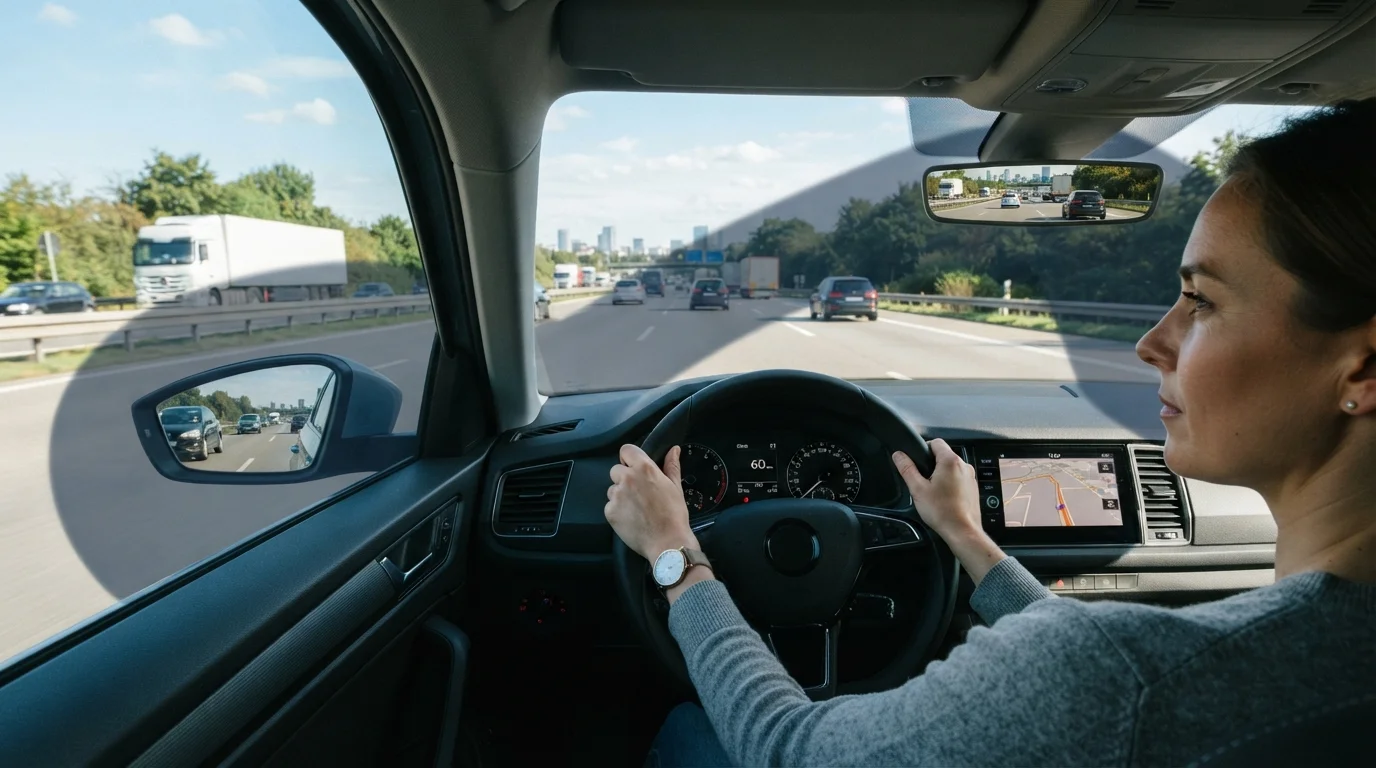
Photo: InsightsVilla.com | Quick Search. Right Info editorial
Key Takeaways
- Mirrors alone cannot eliminate blind spots - proper adjustment reduces them but doesn't erase them.
- The default mirror position most drivers use still leaves significant rear-quarter gaps.
- A quick shoulder check covers what mirrors physically cannot reflect.
- Larger vehicles like SUVs and trucks have meaningfully bigger blind zones than sedans.
- Blind-spot monitoring systems assist but are not substitutes for active driver awareness.
- Mirror angle, seat height, and head restraint position all affect how much your mirrors reveal.
Why Mirrors Don't Tell the Full Story
Most drivers learn early that mirrors are their primary tool for tracking surrounding traffic. But mirrors are optical tools with fixed angles and flat reflective surfaces - they cover a specific arc, and everything outside that arc is invisible to you while your eyes face forward.
The rearview mirror gives you a centered view directly behind the car, typically a cone stretching back 20 to 30 feet depending on the window size. Side mirrors extend that view outward, but they create their own problem: the areas just beyond where each side mirror ends and the rear quarter panel begins are precisely where other vehicles hide.
This isn't a flaw in any particular car design. It's a geometric reality. A flat mirror can only reflect what's within its line of sight, and mounting a mirror on the side of a moving vehicle always leaves angular gaps. Understanding this geometry - rather than assuming your mirrors cover everything - is what separates attentive drivers from overconfident ones. For more on the habits that separate experienced low-risk drivers from the rest, see safe driving habits that hold up across any condition.
~840,000
Annual U.S. blind-spot-related crashes
The National Highway Traffic Safety Administration has estimated that hundreds of thousands of annual crashes involve blind zone limitations, with lane-change collisions representing a significant share.
28%
Of sideswipe crashes involve blind zone failure
Research published by traffic safety organizations has attributed a substantial portion of sideswipe and lane-change collisions to drivers who did not detect vehicles in their rear-quarter blind zones.
Up to 12 ft
Front blind zone depth in large pickup trucks
Studies measuring forward blind zones found that some full-size pickup trucks and SUVs have front dead zones extending up to 12 feet in front of the bumper - enough to obscure a small child or low obstacle entirely.
Getting Mirror Adjustment Right
The single most common mirror mistake is keeping side mirrors angled too far inward - a habit many drivers pick up without realizing it. When your side mirrors show you a large portion of your own vehicle, they're duplicating the rearview mirror's coverage rather than extending it. You're watching the same space twice and leaving rear-quarter zones completely unmonitored.
A better approach: adjust each side mirror outward until your car's flank barely appears along the inner edge. At that angle, a vehicle passing you will appear in the side mirror just as it's leaving the rearview mirror's frame, creating a near-seamless handoff. The goal is continuity of coverage, not comfort or a familiar view.
Seat height matters too. Shorter drivers who sit lower may see more sky than road in a side mirror without realizing it. Adjusting seat height before setting mirrors - not after - ensures the angles are calibrated to your actual eye position. This is worth adding to your routine, especially after someone else has driven the vehicle. Our pre-trip safety walkthrough covers exactly this kind of quick reset before driving.
Adjust Mirrors Before Every Unfamiliar Drive
What the Head Check Actually Does
Even with perfectly adjusted mirrors, a physical shoulder check - briefly turning your head to look through the rear side window - covers the gap mirrors cannot. This is the area from roughly your rear door backward to the tail of the car, extending out one lane. A vehicle sitting in that zone won't register in any mirror, but a one-second glance over your shoulder will reveal it immediately.
The head check isn't about distrust of your mirrors. It's about acknowledging what mirrors physically cannot do. Before any lane change, the sequence should be: mirror check, signal, shoulder check, then move - in that order. The signal gives other drivers warning before you check, not after.
Shoulder checks are especially important for new drivers who may over-rely on mirrors out of habit. Common early driving mistakes often include skipping the shoulder check on lane changes, which is a significant factor in sideswipe collisions. And when it comes to the full sequence of merging at speed, see our guide on merging on the highway without cutting people off.
Blind-Spot Monitoring Has Real Limits
Blind Spots Beyond the Rear Quarters
Most drivers think of blind spots as purely a rear problem, but vehicles have forward and downward blind zones as well. The front blind zone - the ground in front of your bumper that you can't see from the seat - grows considerably in pickup trucks and SUVs. This is why backup cameras and front sensors have become standard safety features; they compensate for the geometric limitations of sitting high off the ground.
Pillars are another overlooked source of blind spots. The A-pillars (the columns on either side of your windshield) can obscure pedestrians, cyclists, and even other vehicles at intersections, particularly during turns. Drivers should develop the habit of leaning slightly forward at intersections to see around A-pillars before proceeding.
Distraction compounds these limitations - when your attention is divided, you're less likely to perform mirror checks at the right moments, and head checks may become cursory rather than deliberate. Awareness of where your vehicle's dead zones are is only useful when paired with consistent habits to check them.
Frequently Asked Questions
The content on this site is for informational purposes only and is not a substitute for professional advice. Always consult a qualified professional for guidance specific to your situation.