
What Distracted Driving Really Covers Beyond Your Phone

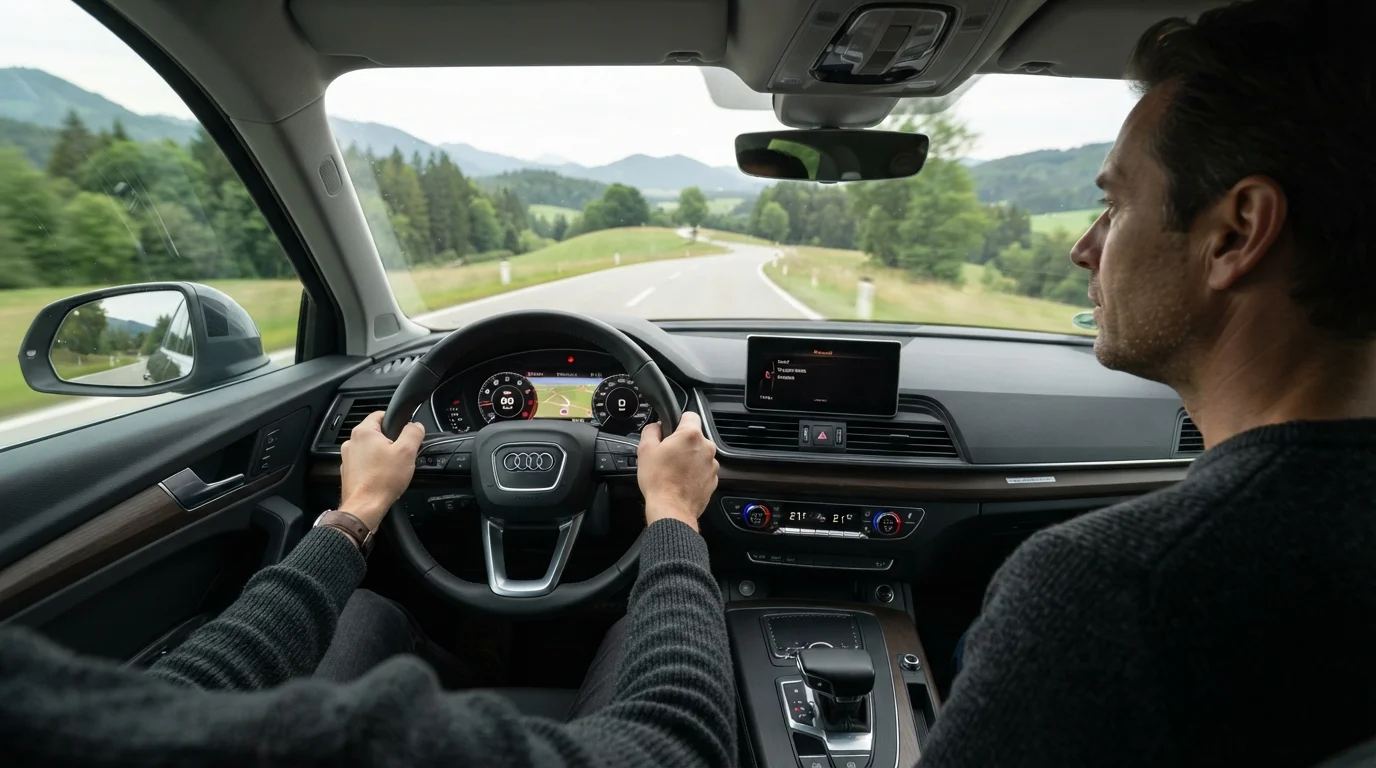
Photo: InsightsVilla.com | Quick Search. Right Info editorial
Key Takeaways
- Distracted driving includes manual, visual, and cognitive impairment - not just phone use.
- Eating, adjusting controls, and daydreaming all meaningfully degrade driving performance.
- Passengers, especially young children, are a frequently underestimated source of distraction.
- Cognitive distraction persists even after a hands-free call ends, for up to 27 seconds.
- Recognizing the full range of distractions is the first step toward eliminating them.
Why Phone Bans Alone Don't Solve the Problem
Handheld phone laws have raised awareness about distracted driving, but they've also created a misleading narrative: that putting the phone down makes you a fully attentive driver. Traffic safety research consistently categorizes distraction into three overlapping types - manual (hands off the wheel), visual (eyes off the road), and cognitive (mind off the task of driving). Phone use scores high across all three, which is why it draws so much attention. But dozens of everyday behaviors trigger at least one of these categories, often without the driver realizing it.
The NHTSA estimates that in a recent reporting year, distraction was a reported factor in thousands of fatal crashes - and phone use accounted for only a portion of those. Understanding what else qualifies as distraction isn't about adding to your worry list; it's about building an accurate mental model of risk so you can manage it deliberately.
Myth
As long as I'm not on my phone, I'm driving without distraction.
Fact
Dozens of non-phone behaviors create manual, visual, or cognitive impairment that affects driving performance.
Phone bans target one of the most measurable distractions, but they don't address eating, adjusting controls, daydreaming, or emotionally charged conversations. All of these consume the same cognitive and physical resources that safe driving demands. A driver who puts the phone away but eats a burger at 65 mph is still impaired in meaningful ways.
Myth
Hands-free phone calls are safe because my eyes stay on the road.
Fact
Hands-free calls still create significant cognitive distraction that persists even after the call ends.
Research from the University of Utah and others has shown that hands-free conversation impairs hazard detection, slows reaction time, and produces "inattention blindness" - where a driver looks at an object but doesn't consciously process it. Studies suggest this cognitive load can linger for up to 27 seconds after a call concludes, meaning a brief conversation at highway speeds affects attention across a substantial distance.
Myth
Experienced drivers can safely multitask because they've automated driving.
Fact
Driving experience reduces conscious effort for routine conditions, but it does not protect against attentional limits under distraction.
Automation of basic vehicle control is real - experienced drivers do handle familiar roads with less active effort. But distraction research consistently shows that human attentional capacity has a hard ceiling regardless of experience. When unexpected hazards appear, experienced drivers who are distracted respond no faster than inexperienced ones and sometimes slower, because overconfidence reduces defensive scanning behavior.
Myth
Short glances - under two seconds - are safe enough for quick tasks.
Fact
At highway speeds, even a two-second glance travels the length of nearly two basketball courts without eyes on the road.
At 55 mph, a vehicle covers roughly 160 feet per second. A two-second eyes-off interval covers over 320 feet - during which lane drift, braking from a vehicle ahead, or a pedestrian entering the road can all become unavoidable hazards. NHTSA uses this calculation to establish why even brief glances at navigation screens or mirrors carry real risk during active traffic conditions.
Distractions That Fly Under the Radar
Several common behaviors rarely come up in public safety campaigns, yet they carry documented risk at highway speeds.
8 sec
Average eyes-off-road time per voice-text interaction
According to NHTSA research, sending or receiving a voice-based text message takes an average of 8 seconds of cognitive and visual attention.
27 sec
Cognitive distraction after a hands-free call ends
Research published by the AAA Foundation for Traffic Safety found measurable cognitive impairment lasting up to 27 seconds following a hands-free phone conversation.
Eating and drinking: Reaching for a coffee cup, unwrapping a sandwich, or wiping a spill requires manual and visual attention simultaneously. Studies have found that eating while driving increases crash risk measurably - yet it remains entirely legal in most states and socially normalized during commutes.
In-vehicle controls: Adjusting climate, navigation, or audio systems - particularly on touchscreen interfaces - demands eyes-off-road time. Some infotainment systems require multiple screen interactions to complete a single task, extending visual distraction well beyond a momentary glance.
Passengers: Adult passengers can actually improve safety by serving as a second set of eyes. Young children in the back seat are a different story - research has found they demand significantly more driver attention than adult passengers, with some studies estimating they are a distraction many times more disruptive mile for mile. Emotional conversations, even with adults, produce cognitive load that degrades hazard detection.
Mind-wandering: Cognitive distraction doesn't require a device. Daydreaming, mental rehearsal of an upcoming meeting, or replaying an argument all pull processing capacity away from driving. This is sometimes called "highway hypnosis" in extended form, and it's a recognized contributor to single-vehicle crashes. For a closer look at how fatigue compounds this effect, see the real tradeoffs of driving tired.
Building Better Habits at the Wheel
Awareness alone doesn't change behavior - but it creates the foundation for deliberate habit-building. A few evidence-aligned practices make a meaningful difference:
- Pre-trip setup: Program navigation, adjust mirrors, and set your climate controls before pulling out of the driveway. This eliminates common mid-drive manual and visual distractions at the source. For more on mirror configuration, see blind spots and mirror gaps most drivers miss.
- Designate eating time: If you're eating on the go, pull into a parking lot. The time cost is minimal; the risk reduction is substantial.
- Pause before responding to passengers: It's reasonable to tell passengers - including children - that you need a moment to navigate a complex interchange. Normalizing that conversation sets a good precedent, especially for families.
- Acknowledge mind-wandering: If you notice you've traveled a stretch of road without conscious awareness of it, treat that as a signal. Reduce speed, increase following distance, or consider pulling over if cognitive fatigue is the underlying issue. Night driving compounds these risks significantly - low visibility and fatigue interact in ways many drivers underestimate.
Distracted driving is a broad, behavioral challenge - not a single-device problem. Recognizing its full scope is what separates informed drivers from merely compliant ones.
The content on this site is for informational purposes only and is not a substitute for professional advice. Always consult a qualified professional for guidance specific to your situation.