
The Case For and Against Using Your Smartphone as Your Only Camera

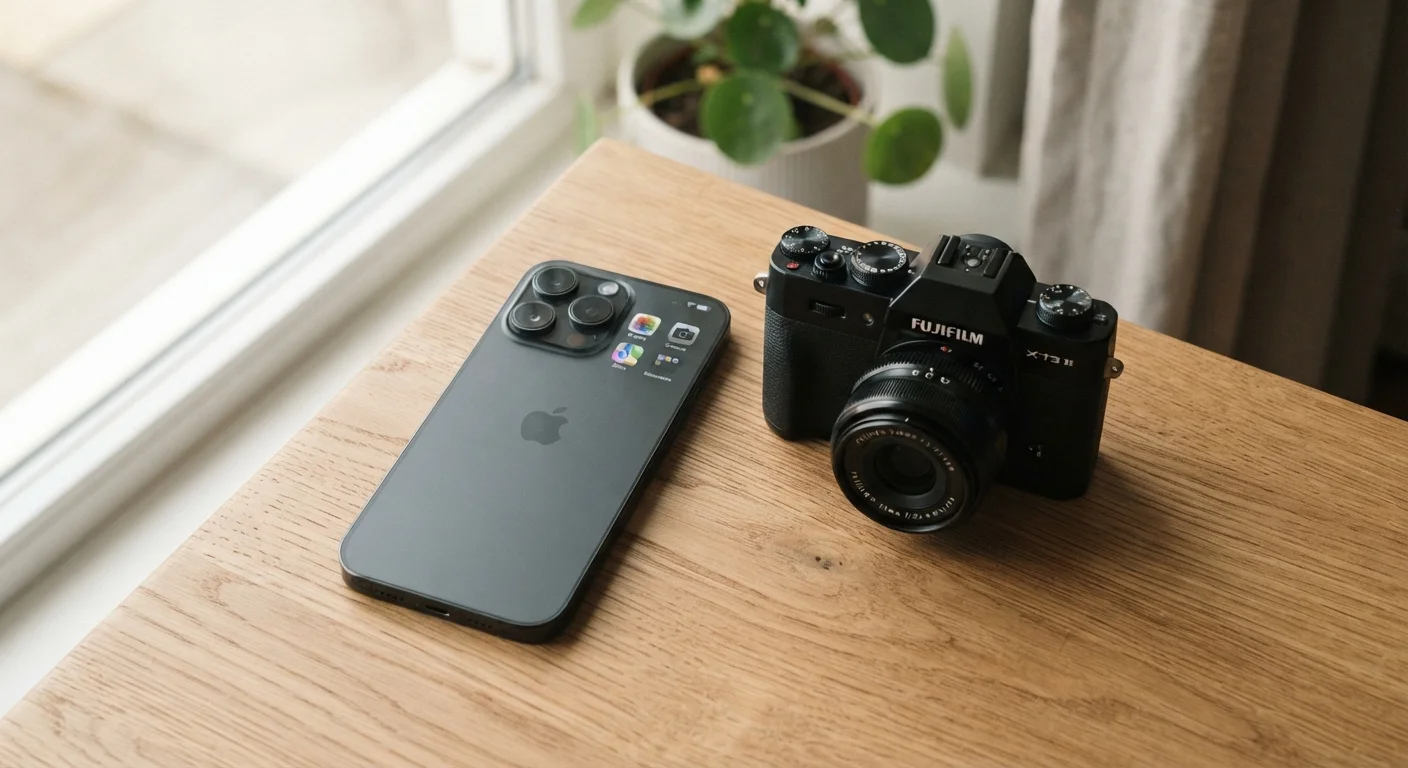
Photo: InsightsVilla.com | Quick Search. Right Info editorial
Key Takeaways
- Modern smartphone cameras perform remarkably well in good lighting conditions for everyday photography.
- Dedicated cameras still hold real advantages in low light, optical zoom, and manual control.
- Convenience and connectivity make smartphones the default choice for most casual shooters.
- The right answer depends on what and how often you shoot - not just on specs.
Always with you - no extra bag or case needed
A smartphone eliminates the decision to bring a camera at all. Spontaneous moments - a sunset, a child's expression, a funny street sign - get captured because the phone is already in your pocket.
Instant sharing to social media and messaging apps
Photos shoot directly into an ecosystem of apps, cloud backups, and sharing tools. There's no card reader, cable, or transfer step between taking the photo and sending it to someone.
Computational photography produces impressive results automatically
Night mode, portrait blur, HDR processing, and AI-assisted sharpening all happen without any user input, often producing cleaner images than a similarly priced point-and-shoot in the same conditions.
Multiple lenses offer versatile coverage in one device
Most modern mid-range and flagship phones include an ultra-wide, standard, and at least a short telephoto lens, covering the range most everyday shooters actually need.
One fewer device to buy, maintain, and carry
Dedicated cameras require batteries, memory cards, lens caps, cases, and periodic firmware updates. Removing that overhead saves money and simplifies travel packing considerably.
Low-light performance still lags behind dedicated sensors
Smartphone sensors are physically small, which limits how much light they can capture. Even with night mode, images in genuinely dark environments often show noise, smearing, or color inaccuracy that a larger-sensor camera handles more cleanly.
Optical zoom range is limited by physical lens size
Periscope telephoto lenses have improved reach, but true long-distance optical zoom - the kind needed for wildlife or sports - still requires a lens too large to fit in a phone. Digital zoom degrades image quality noticeably.
Battery drain competes with all your other phone needs
Heavy camera use on a day trip can drain your phone battery before evening, leaving you without navigation, communication, and your camera at once - a single-point-of-failure problem a dedicated camera avoids.
Limited manual control for experienced photographers
While pro modes exist on many phones, the hardware constraints - fixed aperture, small sensor - mean that manual adjustments have a narrower real-world impact than on an interchangeable-lens camera.
Durability and weather sealing vary widely
Many flagship phones now offer meaningful water resistance, but fewer are built for the kind of rough outdoor handling a ruggedized dedicated camera can withstand over years of use.
How Good Are Smartphone Cameras, Really?
Smartphone cameras have undergone a dramatic transformation over the past decade. Modern flagship phones pack multiple lenses, large image sensors, and sophisticated computational photography - software that automatically combines multiple exposures, reduces noise, and sharpens detail in milliseconds. The result is that photos from a current mid-range or high-end smartphone can rival, or occasionally surpass, images from compact point-and-shoot cameras costing hundreds of dollars.
That said, specs can be misleading. As explained in our guide to megapixels and camera quality, raw megapixel count is only one factor. Sensor size, aperture width, and processing algorithms all shape the final image. Understanding these trade-offs is key before deciding whether to leave a dedicated camera at home for good.
57%
Americans who use smartphones as their primary camera
Pew Research Center surveys have consistently found that a majority of American adults rely on their smartphones as their main photography device rather than a standalone camera.
3-5x
Typical optical zoom range on flagship phones
Most high-end smartphones in recent years offer between 3x and 5x optical zoom via a secondary telephoto lens, compared to 20x-60x optical zoom available on dedicated superzoom cameras.
The Case For Going Smartphone-Only
There are compelling, practical reasons why millions of Americans have already stopped carrying a separate camera.
Always with you - no extra bag or case needed
A smartphone eliminates the decision to bring a camera at all. Spontaneous moments - a sunset, a child's expression, a funny street sign - get captured because the phone is already in your pocket.
Instant sharing to social media and messaging apps
Photos shoot directly into an ecosystem of apps, cloud backups, and sharing tools. There's no card reader, cable, or transfer step between taking the photo and sending it to someone.
Computational photography produces impressive results automatically
Night mode, portrait blur, HDR processing, and AI-assisted sharpening all happen without any user input, often producing cleaner images than a similarly priced point-and-shoot in the same conditions.
Multiple lenses offer versatile coverage in one device
Most modern mid-range and flagship phones include an ultra-wide, standard, and at least a short telephoto lens, covering the range most everyday shooters actually need.
One fewer device to buy, maintain, and carry
Dedicated cameras require batteries, memory cards, lens caps, cases, and periodic firmware updates. Removing that overhead saves money and simplifies travel packing considerably.
Convenience is the overriding factor for most people. A smartphone is always in your pocket, always charged (ideally - see tips for keeping your phone in peak condition), and ready to shoot in under a second. That immediacy means you actually capture the moment rather than missing it while fumbling for a second device.
The Case Against: Where Smartphones Still Fall Short
Honest enthusiasm about smartphone cameras needs to be balanced against real, persistent limitations that matter in specific shooting situations.
Low-light performance still lags behind dedicated sensors
Smartphone sensors are physically small, which limits how much light they can capture. Even with night mode, images in genuinely dark environments often show noise, smearing, or color inaccuracy that a larger-sensor camera handles more cleanly.
Optical zoom range is limited by physical lens size
Periscope telephoto lenses have improved reach, but true long-distance optical zoom - the kind needed for wildlife or sports - still requires a lens too large to fit in a phone. Digital zoom degrades image quality noticeably.
Battery drain competes with all your other phone needs
Heavy camera use on a day trip can drain your phone battery before evening, leaving you without navigation, communication, and your camera at once - a single-point-of-failure problem a dedicated camera avoids.
Limited manual control for experienced photographers
While pro modes exist on many phones, the hardware constraints - fixed aperture, small sensor - mean that manual adjustments have a narrower real-world impact than on an interchangeable-lens camera.
Durability and weather sealing vary widely
Many flagship phones now offer meaningful water resistance, but fewer are built for the kind of rough outdoor handling a ruggedized dedicated camera can withstand over years of use.
The Physics Problem Smartphones Can't Fully Solve
For shooters who frequently work in dim venues, wildlife scenarios, or who need precise manual exposure control, these gaps are not minor inconveniences - they are fundamental constraints built into the physics of a thin device.
How to Decide What's Right for You
The honest answer is that "smartphone only" works well for most people most of the time. If your photography is primarily social - family events, travel snapshots, food, everyday life - a current smartphone will meet your needs without compromise. The images will look great on screens, share instantly, and require no extra gear.
Where the math shifts is in frequency and context. If you regularly shoot concerts, wildlife, dim restaurants, or sports - or if you print large-format photos - the limitations above will surface repeatedly. In those cases, even an entry-level dedicated camera may produce noticeably better results in the conditions that matter to you.
It's also worth remembering that the smartphone you already own is a capable machine beyond its camera. Understanding what makes smartphones tick can help you get more out of every feature, camera included. The best camera, as photographers often say, is the one you have with you - and for most Americans, that's a smartphone.
The content on this site is for informational purposes only and is not a substitute for professional advice. Always consult a qualified professional for guidance specific to your situation.