
Raw Diets vs. Commercial Kibble: What Nutritionists and Vets Actually Debate

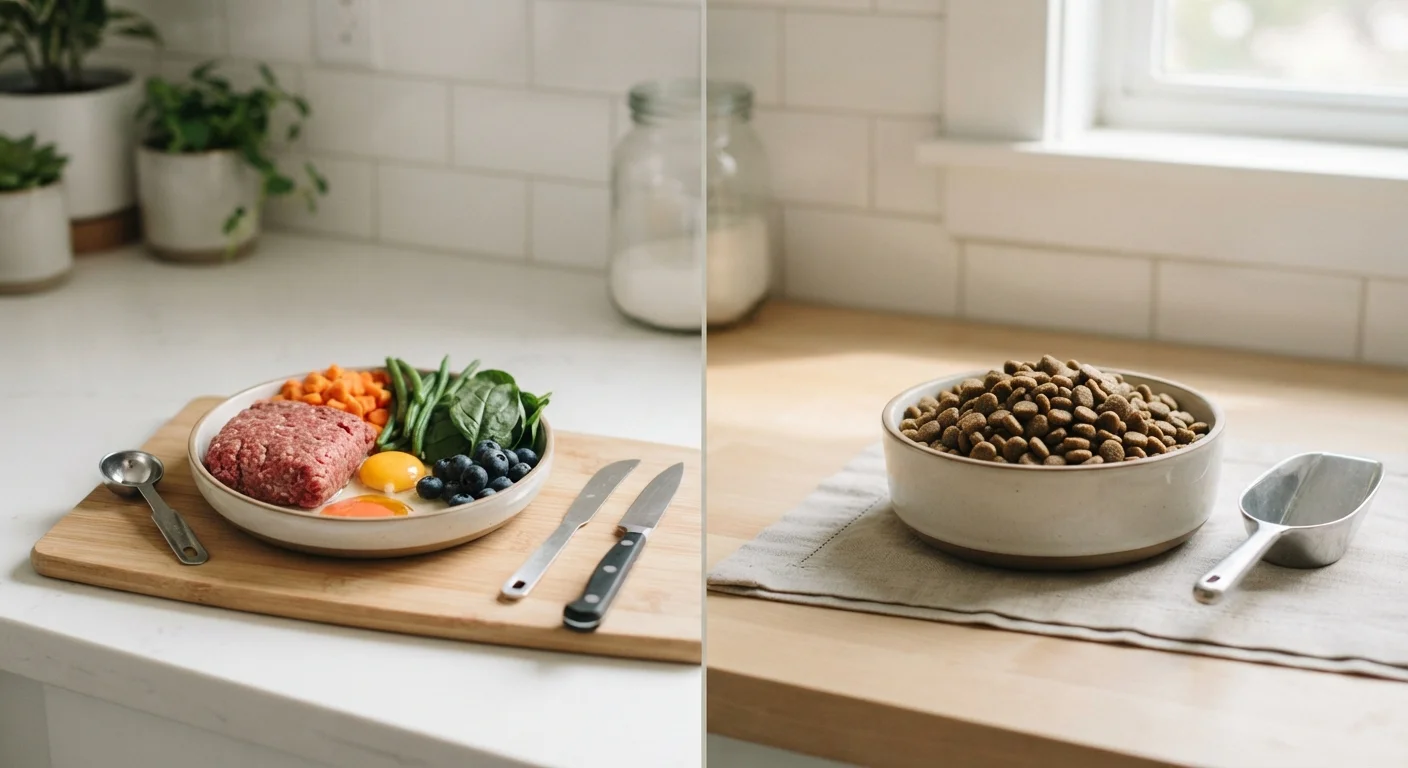
Photo: InsightsVilla.com | Quick Search. Right Info editorial
Key Takeaways
- Both raw and kibble diets can support pet health, but each carries distinct risks and benefits.
- Veterinary and nutritionist opinion genuinely diverges on raw feeding - there is no single consensus.
- Pathogen contamination is a well-documented safety concern with raw diets, especially in multi-pet or vulnerable-household settings.
- Commercial kibble must meet AAFCO nutritional profiles, but processing methods can affect certain nutrient levels.
- Your pet's age, health status, and household context should guide diet decisions made with your veterinarian.
Where the Debate Actually Stands
Few topics in pet care generate as much disagreement as raw diets versus commercial kibble. Pet owners encounter passionate advocates on both sides, but the expert conversation is more nuanced - and more honest about uncertainty - than social media suggests.
Veterinary organizations such as the American Veterinary Medical Association (AVMA) and the American Animal Hospital Association (AAHA) have issued cautionary statements about raw meat-based diets, primarily citing pathogen risks. Meanwhile, a subset of veterinary nutritionists and integrative practitioners argue that well-formulated raw diets can be appropriate for certain healthy animals. Understanding why credentialed experts disagree is more useful than simply picking a side.
For a deeper look at how commercial pet food is regulated and labeled, see what pet food labels are actually telling you.
Nutritional Completeness: How Each Approach Is Evaluated
Commercial dry kibble sold in the U.S. is typically formulated to meet nutritional profiles established by the Association of American Feed Control Officials (AAFCO). This means a product labeled "complete and balanced" must meet minimum standards for protein, fat, vitamins, and minerals for a stated life stage. That regulatory baseline is one area where kibble holds a consistent structural advantage.
Raw diets - particularly homemade ones - do not carry that guarantee. Studies published in peer-reviewed veterinary journals have found that a significant proportion of homemade and commercial raw recipes fail to meet AAFCO nutrient profiles, with deficiencies most commonly noted in calcium, phosphorus, and certain vitamins. Nutritional imbalances may not produce visible symptoms immediately, making them difficult to detect without periodic veterinary bloodwork.
Proponents of raw feeding counter that heat processing during kibble manufacturing can degrade heat-sensitive nutrients such as certain B vitamins and some amino acids, which manufacturers then add back synthetically. Whether that round-trip affects bioavailability in meaningful ways remains an area of active - and genuinely unresolved - research.
| Raw Diet | Commercial Kibble | |
|---|---|---|
| Nutritional oversight | No mandatory AAFCO verification | Must meet AAFCO profiles if labeled complete |
| Pathogen risk | Higher - Salmonella, Listeria, E. coli possible | Lower - heat processing reduces bacterial load |
| Ingredient transparency | Variable; depends on source and formulation | Regulated labeling with ingredient and analysis disclosure |
| Cost | Generally higher, especially commercial raw | Ranges widely; broadly more affordable |
| Handling requirements | Strict hygiene protocols required | Standard storage; less handling risk |
| Nutrient stability | Heat-sensitive nutrients preserved | Some nutrients degraded by processing, then re-added |
| Suitability for vulnerable households | Not recommended by most vet organizations | Generally considered lower risk |
For a parallel look at canned versus dry food trade-offs, see wet food vs. dry food.
Pathogen Risk: The Safety Concern That Shapes Institutional Guidance
The most consistent objection veterinary organizations raise against raw diets is microbial contamination. Raw meat can harbor Salmonella, Listeria monocytogenes, E. coli, and in some cases parasites. Critically, pets that eat contaminated raw food can shed these pathogens in their feces without appearing ill - posing a transmission risk to human household members, particularly children, older adults, and anyone who is immunocompromised.
Raw Diets Carry Household Transmission Risks
Commercial kibble is not entirely free of contamination risk - there have been notable recalls involving dry and wet pet foods - but the cooking process used in kibble manufacturing does reduce bacterial load. The FDA recommends safe handling practices regardless of the food type chosen.
For guidance on which everyday foods pose direct risks to pets, see safe and unsafe foods for common household pets.
What Vets and Nutritionists Actually Disagree On
Most of the genuine expert disagreement clusters around a few specific questions rather than the entire raw-versus-kibble framing:
- Digestibility: Some research suggests raw animal proteins are highly digestible for dogs and cats, but controlled comparative studies are limited and often industry-funded, which complicates interpretation.
- Long-term health outcomes: There is currently insufficient longitudinal data to make confident claims that either diet produces better long-term health outcomes across the pet population.
- Individual variation: Factors like breed, age, gut microbiome, and existing health conditions may make one approach more appropriate than another for a specific animal.
Board-certified veterinary nutritionists - specialists with formal post-doctoral training in animal nutrition - are generally the most credentialed voices on these questions. They tend to support kibble's regulatory structure while acknowledging that a properly formulated, commercially prepared raw diet from a reputable manufacturer may be lower risk than a homemade version.
Ask for a Nutritional Assessment
If you're evaluating supplementation to address gaps in either diet type, pet supplements: what they can and cannot do provides a useful starting point for questions to raise with your vet.
Making an Informed Decision for Your Pet
There is no diet recommendation that applies equally to every dog or cat. Puppies, kittens, pregnant animals, seniors, and pets managing chronic illness have distinct nutritional needs that should be assessed individually. A veterinarian - ideally one with additional nutrition training or access to a board-certified veterinary nutritionist - is best positioned to evaluate your specific pet's requirements.
If you're evaluating kibble options, learning to read labels critically matters. Reading a pet food label without getting lost in the fine print explains what guaranteed analysis statements and AAFCO claims actually mean in practice.
Similarly, the grain-free versus grain-inclusive question intersects with this debate and has its own evidence base worth reviewing: see grain-free vs. grain-inclusive pet diets.
This article is for general informational purposes only and does not constitute veterinary medical advice. Always consult a licensed veterinarian for guidance specific to your pet's health and nutritional needs.
The content on this site is for informational purposes only and is not a substitute for professional advice. Always consult a qualified professional for guidance specific to your situation.