
The American Potluck: A Social Institution Hiding in Plain Sight

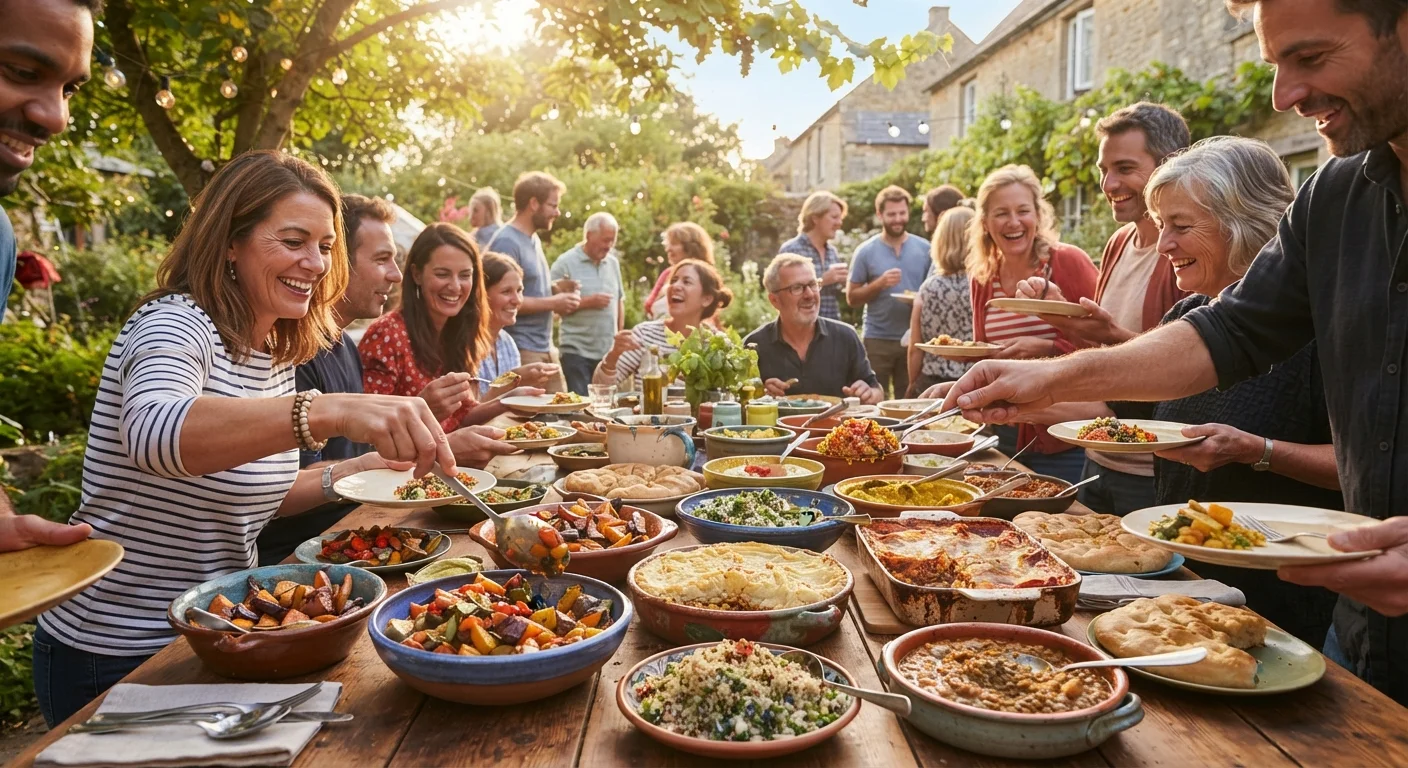
Photo: InsightsVilla.com | Quick Search. Right Info editorial
Key Takeaways
- Potlucks distribute the cost and effort of hosting across all guests, making gatherings more accessible.
- The format reflects core American values: informality, community participation, and practical generosity.
- Potlucks appear across nearly every American social setting - churches, workplaces, neighborhoods, and family reunions.
- The shared table is a form of social glue, strengthening community ties through food and mutual contribution.
- Regional food traditions find one of their most natural stages at the potluck table.
More Than Just a Meal
Walk into almost any American church hall, office break room, or neighborhood park on the right weekend, and you'll find the same scene: a row of slow cookers, covered casserole dishes, store-bought rolls, and homemade pies arranged on folding tables. People are loading paper plates, trading compliments, and asking for recipes. This is the potluck - and it's one of the most quietly significant social rituals in American life.
Unlike a dinner party, where a host controls the menu and absorbs the full cost and labor, a potluck distributes both the effort and the ownership. That shift isn't incidental. It's the whole point. The potluck says: this meal belongs to all of us. In a culture that values individual contribution and informal community, few formats fit as naturally.
Just as the American road trip channels national values of independence and self-direction, the potluck channels something equally American - the belief that a community works best when everyone pitches in.
Why the Format Works So Well
The genius of the potluck is structural. Hosting a large group can be expensive and exhausting. The potluck solves both problems elegantly: costs are distributed, kitchen labor is shared, and no single person is stretched too thin. This makes gathering more accessible - a family in a small apartment can host thirty people if everyone shows up with something.
~1 in 3
Americans who feel lonely often or always
According to a 2023 U.S. Surgeon General advisory on the loneliness epidemic, approximately one in three American adults report feeling lonely - underscoring the value of community rituals like the potluck.
72%
Americans who eat meals with others less than they'd like
A 2019 survey by Cigna found that a substantial majority of Americans wish they shared more meals with others, pointing to a widespread appetite for exactly what the potluck provides.
There's also a social psychology at work. Research on contribution and belonging suggests that when people actively participate in creating something - even a meal - they feel more invested in the experience and more connected to the group. A potluck guest isn't a passive recipient; they're a co-creator. That distinction matters.
The variety that results is its own reward. A potluck table is rarely curated. It's often surprising - someone's grandmother's mac and cheese next to a quinoa salad next to tamales. That eclecticism mirrors the diversity of American communities themselves, and it gives the regional food traditions that vary so widely across the country a natural stage to show up and be shared.
Bringing Something Meaningful Goes a Long Way
A Social Institution Across American Life
The potluck isn't confined to any single demographic or region. It lives in faith communities - the church covered dish supper is a Southern institution - and just as comfortably in urban apartment complexes and suburban cul-de-sacs. Workplace holiday potlucks are practically universal. Family reunions in every part of the country run on the same logic.
This ubiquity is telling. Like Friday night football, the potluck functions as a shared ritual that creates belonging beyond its surface activity. It's not really about the food. It's about showing up, contributing, and being welcomed at a table that everyone built together.
“Food is our common ground, a universal experience. When we share a meal - especially one we each had a hand in making - we're doing something fundamentally human.”
— James Beard, American culinary writer and food culture commentator
In a period when Americans report feeling increasingly isolated - surveys consistently show declining rates of close friendship and civic participation - the potluck offers a low-barrier entry point back into community. You don't need a perfectly clean house. You don't need to be a great cook. You just need to bring something and show up.
The Unwritten Rules That Make It Work
Every potluck runs on informal norms that most participants absorb without ever being told. Bring enough for the whole group. Don't monopolize the serving spoon. Stay to help clean up. If you have dietary restrictions, it's kind to bring something you can eat so there's at least one safe option for you. These small agreements create the social contract that keeps the gathering functional and warm.
Modern potlucks often involve some light coordination - a shared sign-up so there are appetizers, mains, sides, and desserts rather than seven pasta salads. But even uncoordinated ones tend to self-organize. People naturally read the table and fill gaps. That implicit cooperation is part of what makes the format so resilient.
The potluck also has an honesty to it that more formal dining lacks. A dish someone made at home, imperfections and all, reveals something real about them. In that sense, the potluck is a small act of social trust - and a reminder that community doesn't require perfection, just participation.
Frequently Asked Questions
The content on this site is for informational purposes only and is not a substitute for professional advice. Always consult a qualified professional for guidance specific to your situation.