
Holidays Americans Celebrate Very Differently by Region

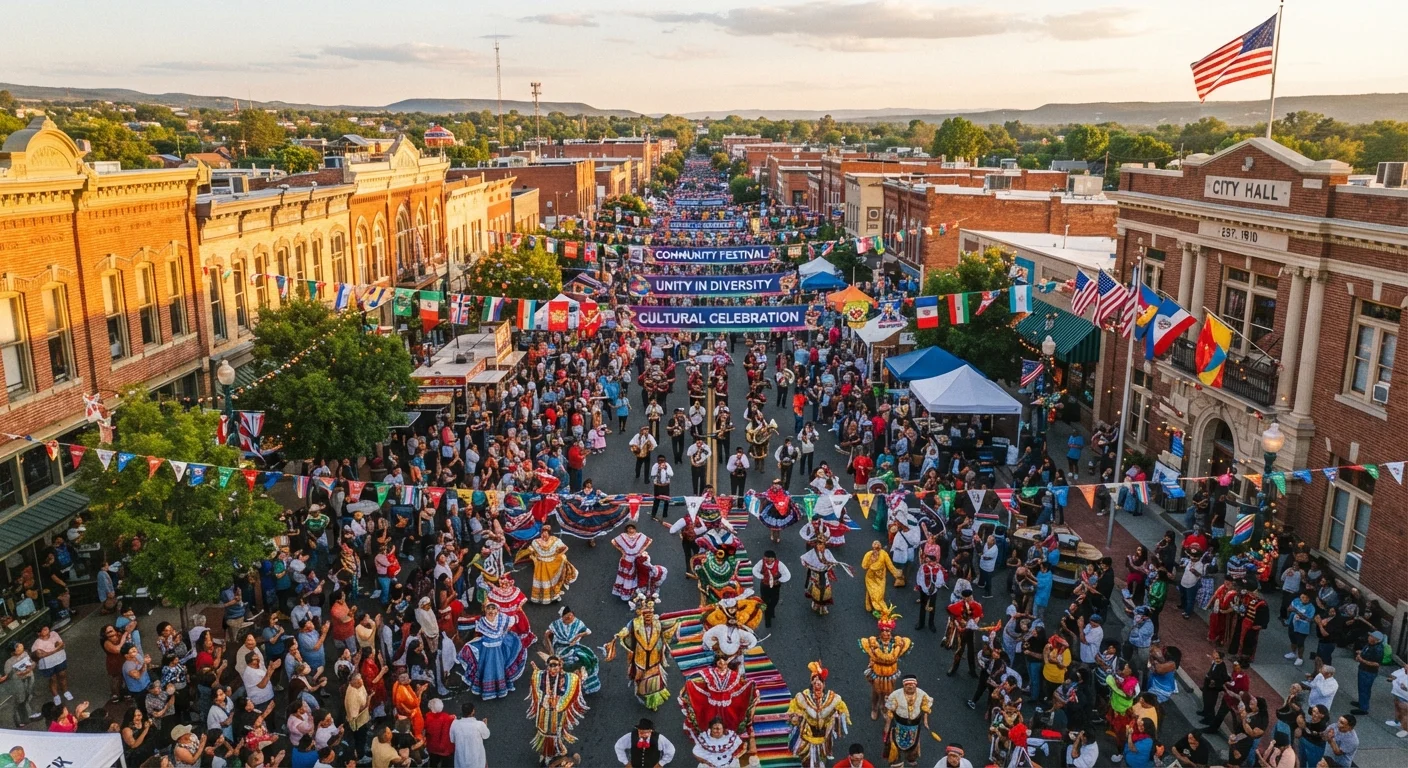
Photo: InsightsVilla.com | Quick Search. Right Info editorial
Key Takeaways
- Many American holidays are observed in dramatically different ways depending on region, history, and local culture.
- Some celebrations - like Mardi Gras and Pioneer Day - are deeply rooted in specific states or communities.
- Regional holiday traditions reflect migration patterns, Indigenous heritage, and immigrant influences.
- Understanding these differences reveals how diverse American identity truly is beneath a shared national surface.
One Country, Many Calendars
When most people picture American holidays, they think of the big ones - Thanksgiving, the Fourth of July, Christmas. But zoom in past the national picture and something fascinating comes into view: Americans don't just celebrate differently by family or faith - they celebrate differently by geography.
From Louisiana's pre-Lenten street spectacles to Utah's celebration of pioneer settlement, regional holidays and distinct local traditions reveal a country far more culturally layered than any single narrative can hold. These differences aren't quirks. They're windows into history, identity, and what it means to belong to a particular place. If you're curious about other ways place shapes American expression, our look at regional slang that reveals how differently Americans speak offers a similar kind of insight.
Here are some of the most striking examples of holidays Americans celebrate very differently by region.
Mardi Gras - Louisiana (and the Gulf Coast)
Mardi Gras is technically a date on the Christian liturgical calendar observed across many countries, but in Louisiana - especially New Orleans - it becomes something else entirely. The weeks-long celebration features elaborate krewes (private carnival organizations), parade floats, masked balls, and the iconic tradition of throwing beads and doubloons from floats to street crowds.
The holiday draws on French Catholic, African, Caribbean, and Native American cultural threads woven together over centuries. In much of the rest of the U.S., Mardi Gras is barely noticed. In New Orleans, it's arguably the most important cultural event of the year - businesses close, families plan months ahead, and entire neighborhoods organize around their parade routes.
In New Orleans, Mardi Gras is arguably the most important cultural event of the entire year.
Pioneer Day - Utah
On July 24th, Utah observes Pioneer Day - a state holiday commemorating the arrival of Latter-day Saint pioneers in the Salt Lake Valley in 1847. For many Utah residents, particularly members of The Church of Jesus Christ of Latter-day Saints, it rivals the Fourth of July in community significance.
Celebrations include parades, fireworks, rodeos, and family reunions. Outside Utah, the holiday is largely unknown. It's a striking example of how a state's founding religious and cultural history can shape its civic calendar in ways that have no parallel elsewhere in the country.
For many Utah residents, Pioneer Day rivals the Fourth of July in community significance.
Juneteenth - Deep Roots in Texas
Juneteenth - June 19th - marks the date in 1865 when enslaved people in Galveston, Texas, learned of their emancipation, more than two months after the Civil War ended. Black Texan communities have observed Juneteenth for over 150 years, making Texas the spiritual and historical home of the holiday.
While Juneteenth became a federal holiday in 2021, its texture varies dramatically by region. In Texas and parts of the South, communities have deep, multigenerational traditions - cookouts, musical gatherings, historical readings - that predate federal recognition by generations. In other parts of the country, awareness of the holiday is newer and celebrations are still taking shape.
Black Texan communities have observed Juneteenth for over 150 years, long before federal recognition.
Dia de los Muertos - The Southwest and Beyond
Rooted in Indigenous Mesoamerican traditions and shaped by Spanish Catholic influence, Día de los Muertos (Day of the Dead) is observed on November 1st and 2nd. In Mexican-American communities across the Southwest - particularly in Texas, New Mexico, Arizona, and California - it's a meaningful cultural observance featuring ofrendas (altars), marigolds, and visits to cemeteries to honor deceased relatives.
In cities with large Mexican-American populations like San Antonio, Los Angeles, and Tucson, public celebrations can be elaborate and deeply community-driven. In other parts of the country, the holiday is far less embedded in daily life, though awareness has grown significantly in recent decades.
In Southwest cities with large Mexican-American populations, Día de los Muertos is deeply community-driven.
Town Meeting Day - Vermont
Vermont's Town Meeting Day, held on the first Tuesday of March, is a legally designated state holiday when many towns pause regular business so residents can gather and vote directly on local budgets, ordinances, and officials. It's a living example of direct democracy that dates back to colonial New England governance.
While New England has a broader tradition of town meetings, Vermont is the only state where it's an official holiday. Schools close, employers accommodate it, and civic participation is treated as a community obligation rather than an option. It's the kind of hyperlocal tradition that simply has no equivalent in most of the country.
Vermont is the only state where Town Meeting Day is an official holiday tied to direct democracy.
Carnival - Mobile, Alabama
While New Orleans gets most of the national attention, Mobile, Alabama, actually has a legitimate claim to hosting the oldest Mardi Gras celebration in the United States - predating New Orleans by several years, according to local historians. Mobile's Carnival season has its own distinct character: smaller, more community-focused, and fiercely proud of its independent identity.
Locals bristle at the assumption that their celebration is simply a smaller version of New Orleans'. The krewes, the mystic societies, and the civic rituals reflect Mobile's own French colonial history and community culture - a reminder that even two geographically close cities can carry traditions that feel worlds apart.
Mobile's Carnival season is fiercely proud of its identity as distinct from New Orleans.
What Regional Holidays Tell Us About America
These regional observances aren't just curiosities - they're evidence that American culture is, at its core, a patchwork. As the widely held beliefs about American culture that don't hold up article explores, the idea of a single, uniform American experience has always been more myth than reality.
Explore Regional Traditions When You Travel
Whether it's the smell of king cake in February or the sound of fireworks over the Green Mountains on Town Meeting Day, these traditions bind communities to their histories in ways that no national holiday quite can. The next time you travel - or simply talk to someone from a different part of the country - ask them how they mark the year. You might be surprised by what you learn.
The content on this site is for informational purposes only and is not a substitute for professional advice. Always consult a qualified professional for guidance specific to your situation.