
High School Football and the Towns That Organize Around It

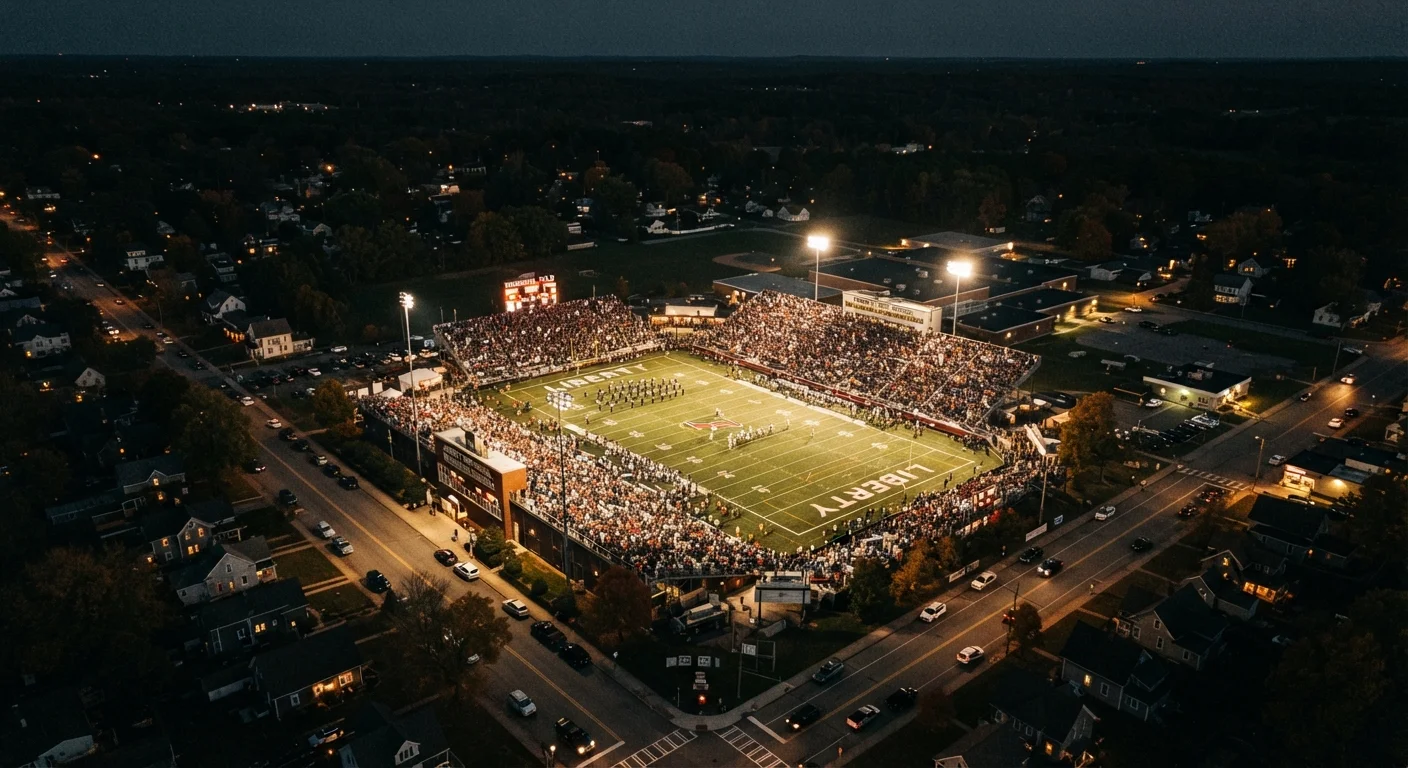
Photo: InsightsVilla.com | Quick Search. Right Info editorial
Key Takeaways
- High school football serves as a community ritual in many American towns, not just an athletic event.
- Smaller and more rural communities often show stronger identification with their local team.
- The game night experience involves far more participants than just players and fans in the stands.
- Friday night football can reinforce local pride, but also community pressure and exclusion for some.
- Digital communities offer belonging too, but in-person rituals like game night carry a distinct social weight.
More Than a Game: What's Really Happening on Friday Night
Drive through almost any small or mid-sized American town on a Friday evening in autumn, and you'll notice something: the streets are quiet, but the high school is alive. Cars fill the parking lot. The smell of popcorn and hot dogs drifts past the chain-link fence. The marching band is warming up. This is Friday night football - and while the scoreboard matters, it often isn't the point.
What's actually happening is a community gathering dressed as a sporting event. Parents who haven't seen each other since last week catch up in the bleachers. Alumni drive back into town. Local businesses close early so employees can attend. The game gives everyone a reason to show up in the same place at the same time - something increasingly rare in modern American life.
This is the cultural role that high school football plays in countless communities across the country. It functions as a recurring public ritual - a reliable anchor in the weekly calendar that brings people together across generational and social lines.
~1 million
High school football players in the US annually
According to the National Federation of State High School Associations, roughly one million students participate in high school football each year - making it one of the most participated-in high school sports in the country.
11,000+
High school football programs nationwide
The sheer number of programs means that in many communities, especially in states like Texas, Ohio, and Pennsylvania, the local team is a central civic institution.
~50%
Americans who say sports are important to their community identity
A Gallup survey found that roughly half of Americans feel sports play an important role in their sense of local community, with high school sports cited as particularly meaningful in smaller towns.
Why Smaller Towns Feel It More Intensely
The phenomenon tends to be most visible - and most emotionally charged - in smaller communities. In a city, a high school football game competes with dozens of other Friday night options. In a town of 4,000, it might be the only show in town.
When a community has fewer shared gathering spaces and events, the ones that do exist carry more weight. Researchers who study social cohesion often point to the importance of what are sometimes called "third places" - spaces beyond home and work where people connect informally. For many small towns, the football stadium is one of the last remaining third places that reliably draws a crowd.
This helps explain why the team's performance can feel so personally meaningful to residents who never played a down. A winning season becomes a source of collective pride. A losing streak can feel like a communal funk. The team's fortunes become entangled with the town's sense of itself.
“In many American towns, the high school football game is the closest thing to a town square that still exists. It's where people from different walks of life end up in the same place, at the same time, cheering for the same thing.”
— Robert Putnam, Political scientist and author of 'Bowling Alone,' on community bonding in American life
The Wider Cast: Who Game Night Actually Belongs To
It's easy to think of high school football as being about the players - but the culture it generates involves a much larger cast. Consider everyone who participates in a single Friday night game:
- Marching bands and color guards that rehearse for weeks and perform at halftime
- Cheerleading squads with their own competitive traditions
- Booster clubs made up of parents and community members who fundraise and volunteer
- Local businesses that advertise in the game program or sponsor the scoreboard
- Alumni for whom the stadium is a memory as much as a venue
- Younger kids who run around under the bleachers while dreaming of one day playing on that field
For all of these participants, the connection to the game is social and emotional rather than athletic. Game night belongs to the whole community - not just the 22 players on the field at any given moment. This mirrors what researchers find when they study what makes any community cohere: shared purpose and repeated, meaningful gathering. You can see similar dynamics examined in digital spaces too - see what makes an online community actually work for a comparison of how belonging gets built in very different environments.
Looking for connection in your own community?
The Tensions Underneath the Tradition
Celebrating this culture honestly means acknowledging its complications. High school football traditions carry real social weight - and that weight isn't distributed evenly.
For students who don't fit the dominant social culture around the team - whether because of interests, identity, ability, or simply not caring about football - game night can feel isolating rather than inclusive. When a school or town's identity becomes too tightly fused with one activity, it can inadvertently signal to some residents that there's only one way to belong.
There are also documented concerns about how schools allocate resources, how much pressure young athletes face, and the physical risks of the sport itself. These are real conversations happening in communities across the country, alongside genuine appreciation for what game night provides.
Communities that navigate this well tend to treat football as one source of shared identity rather than the only one - making room for the other informal rituals that quietly hold communities together, from neighborhood potlucks to community theater to local festivals.
The Digital vs. In-Person Community Divide
Frequently Asked Questions
The content on this site is for informational purposes only and is not a substitute for professional advice. Always consult a qualified professional for guidance specific to your situation.