
Warning Signs Your Debt Load Is Becoming Unmanageable

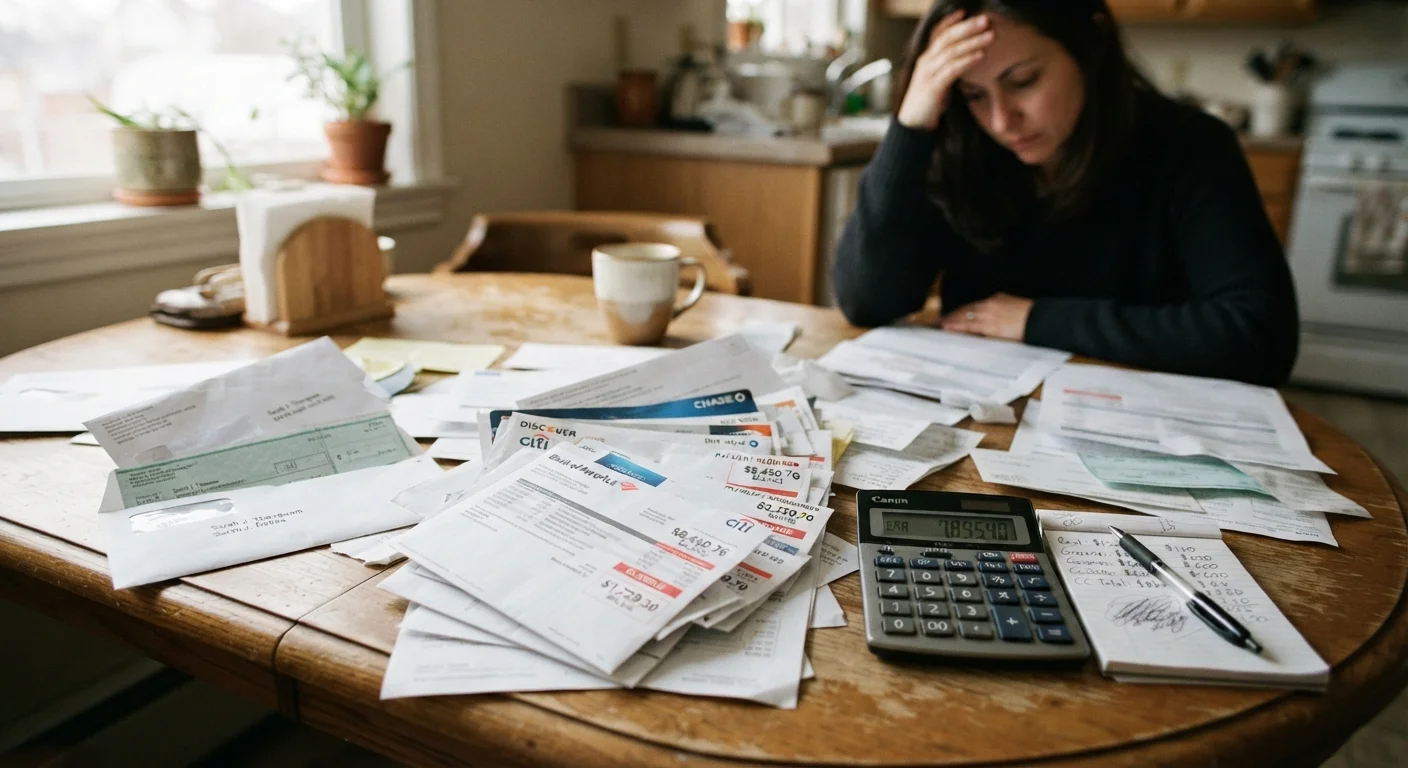
Photo: InsightsVilla.com | Quick Search. Right Info editorial
Key Takeaways
- Paying only the minimum every month is one of the clearest early signs debt is growing out of control.
- Using one form of credit to pay another is a serious red flag that your income can't cover your obligations.
- Your debt-to-income ratio is a concrete number you can calculate to gauge how serious the situation is.
- Emotional stress and avoidance around money are warning signs just as real as the financial ones.
- Recognizing these signs early expands your options - the longer you wait, the fewer paths remain.
Why It's Worth Checking In on Your Debt
Debt rarely becomes unmanageable overnight. It creeps. A balance you intended to pay off lingers, a second card gets used to cover a gap, and before long the minimum payments alone eat up a significant chunk of your paycheck. The problem is that this process is gradual enough that many people don't register the shift until they're already in a tight spot.
This checklist is designed to help you spot the warning signs while you still have room to act. None of these signals automatically means financial disaster - but seeing several of them at once is a strong cue to take a closer look at your situation. If you're new to how credit and borrowing work, the Credit and Debt starting guide offers useful background before diving in here.
Payment Behavior
Income vs. Obligations
Spending and Credit Use
Behavioral and Emotional Signals
What to Do If Several of These Apply to You
Seeing yourself in multiple items on this list doesn't mean your situation is hopeless - it means you have useful information, and that's a starting point. The next practical step is getting a clear picture of what you owe, to whom, and at what interest rate. From there, structured payoff strategies exist that are designed specifically for this situation. The Debt Avalanche vs. Debt Snowball comparison explains two of the most commonly recommended approaches and what each one costs over time.
It's also worth knowing that some of the habits that lead to debt trouble - like only making minimum payments - can quietly damage your credit in ways that aren't obvious until later. For more on that, see Missteps That Quietly Damage Credit Over Time.
Don't Wait for a Crisis to Act
If your situation feels severe - you're fielding calls from collectors, facing eviction or utility shutoff, or seeing no path forward on your own - a nonprofit credit counselor can review your full picture at low or no cost. Look for agencies affiliated with the National Foundation for Credit Counseling (NFCC). A licensed financial professional can help you assess options appropriate to your specific circumstances.
This article is for general informational purposes only and does not constitute personalized financial or legal advice. For guidance specific to your situation, consult a qualified financial professional.
The content on this site is for informational purposes only and is not a substitute for professional advice. Always consult a qualified professional for guidance specific to your situation.