
Monthly Budget vs. Paycheck-to-Paycheck Budgeting: Which Cadence Works Better?

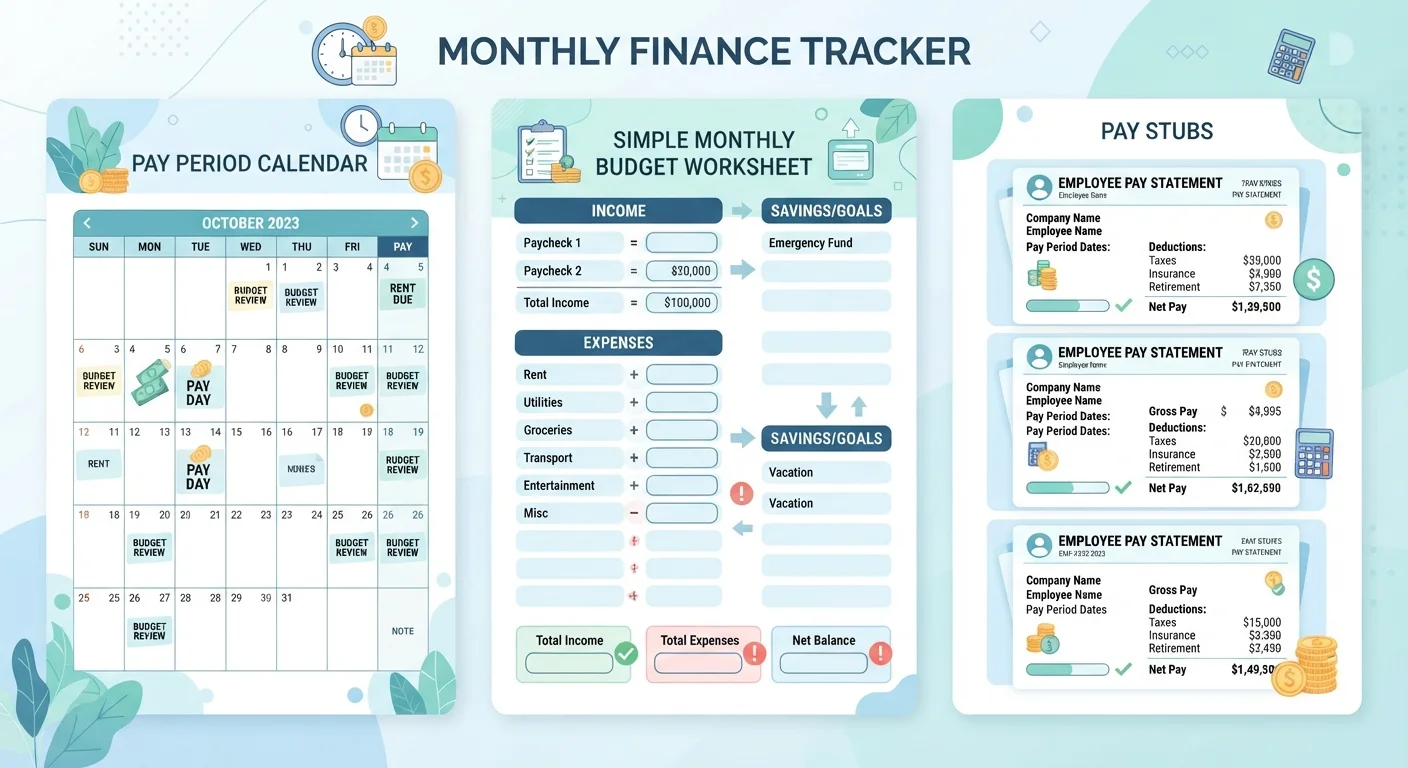
Photo: InsightsVilla.com | Quick Search. Right Info editorial
Key Takeaways
- Monthly budgets work best when your bills and income arrive on a predictable schedule.
- Paycheck-to-paycheck budgeting (also called pay-period budgeting) aligns spending decisions with each deposit.
- Neither method is universally better - the right choice depends on your income pattern and habits.
- You can combine both approaches: plan monthly totals, then divide them by pay period.
What Each Budgeting Cadence Actually Means
A monthly budget means you plan your income and spending for the entire month at once - usually before the month begins. You total up expected income, assign dollars to categories like rent, groceries, and savings, and track against those targets over 30 or 31 days.
Pay-period budgeting (sometimes called paycheck-to-paycheck budgeting, though that term can carry negative baggage) means you reset your plan with each paycheck. If you're paid biweekly, you budget roughly every two weeks. Each deposit triggers a fresh allocation of dollars to spending categories.
Neither approach requires special software or financial expertise. Both are legitimate planning frameworks used by people at every income level. The real question is which cadence matches how money actually flows in and out of your life. See how different budgeting styles fit different habits to understand what else might shape that choice.
How Monthly Budgeting Works - and Where It Struggles
Monthly budgeting has a natural advantage: most recurring bills - rent or mortgage, utilities, subscriptions, loan payments - are priced on a monthly cycle. Planning in monthly units makes it easier to match income to those obligations at a glance.
It also gives you a cleaner view of the big picture. When you're looking at a full month of estimated spending, irregular costs like a quarterly insurance premium or an annual car registration are easier to anticipate and spread out. A monthly budget health check at the end of each cycle helps you catch drift before it compounds.
The challenge: if you're paid biweekly, you receive 26 paychecks per year - meaning two months each year include three paydays. Monthly budgets can obscure this. A salaried worker depositing $3,000 on the 1st and 15th has a tidy fit with monthly math. But an hourly worker whose hours fluctuate, or a freelancer whose deposits are irregular, may find a monthly plan falls apart mid-month when the money doesn't match the plan.
Monthly Plans Can Mislead Variable Earners
If you're new to budgeting and want to set up a monthly plan from scratch, the step-by-step monthly budget walkthrough is a practical starting point.
How Pay-Period Budgeting Works - and Where It Struggles
Pay-period budgeting builds your plan around each deposit rather than the calendar month. When a paycheck lands, you decide upfront where every dollar goes: fixed bills due in this period, groceries, gas, savings, and a buffer for anything unexpected. You don't spend what isn't there yet.
This approach is especially useful for biweekly earners because it prevents a common trap - spending freely in week one of the month and scrambling in week three. It also aligns naturally with how many people actually think about money: in terms of the check they just got, not an abstract 30-day total.
Budget Around Your Actual Pay Schedule
For workers with unpredictable hours or tips, pay-period budgeting has real advantages, but it comes with its own wrinkles. The guide to budgeting on irregular income covers those situations in detail.
The drawback: large annual or quarterly expenses can catch you off guard if you're only thinking two weeks ahead. A pay-period budget needs a forward-looking layer - a simple list of upcoming big expenses - to avoid being blindsided.
Comparing the Two Cadences Side by Side
The table below lays out how the two approaches compare across the factors that matter most in daily use.
| Monthly Budgeting | Pay-Period Budgeting | |
|---|---|---|
| Planning horizon | Full calendar month | Each paycheck cycle (1-2 weeks) |
| Best income type | Salaried, consistent monthly deposits | Biweekly, hourly, or variable income |
| Big-picture visibility | High - all bills visible at once | Lower - requires separate forward planning |
| Short-term overspend risk | Higher if income is uneven mid-month | Lower - spending tied to available funds |
| Handling irregular expenses | Easier to plan ahead within the month | Requires a separate sinking-fund layer |
| Effort to maintain | Monthly reset with periodic check-ins | More frequent reviews each pay period |
Neither system is fragile by nature - both fail when the habits don't stick, not because of the calendar math. Understanding why budgets unravel in month two can help you build habits that outlast the initial motivation.
The Hybrid Option: Plan Monthly, Execute by Paycheck
Many people find the most traction with a combination approach. Set your targets monthly - total grocery budget, savings goal, debt payment - then divide each category by the number of paychecks you expect that month. Each pay period, you work from your per-paycheck slice rather than the full monthly figure.
This gives you the big-picture visibility of monthly planning without losing the guardrails that pay-period budgeting provides. It also handles the three-paycheck month gracefully: that extra deposit can be earmarked for savings or a sinking fund before it blends into general spending.
If you're deciding between physical tracking and digital tools alongside your cadence choice, comparing envelope budgeting and digital trackers can help you pick a format that fits your method.
This article is for general informational and educational purposes only and does not constitute personalized financial advice. Consider consulting a qualified financial professional for guidance specific to your situation.
The content on this site is for informational purposes only and is not a substitute for professional advice. Always consult a qualified professional for guidance specific to your situation.