
Monthly Budget Health Check

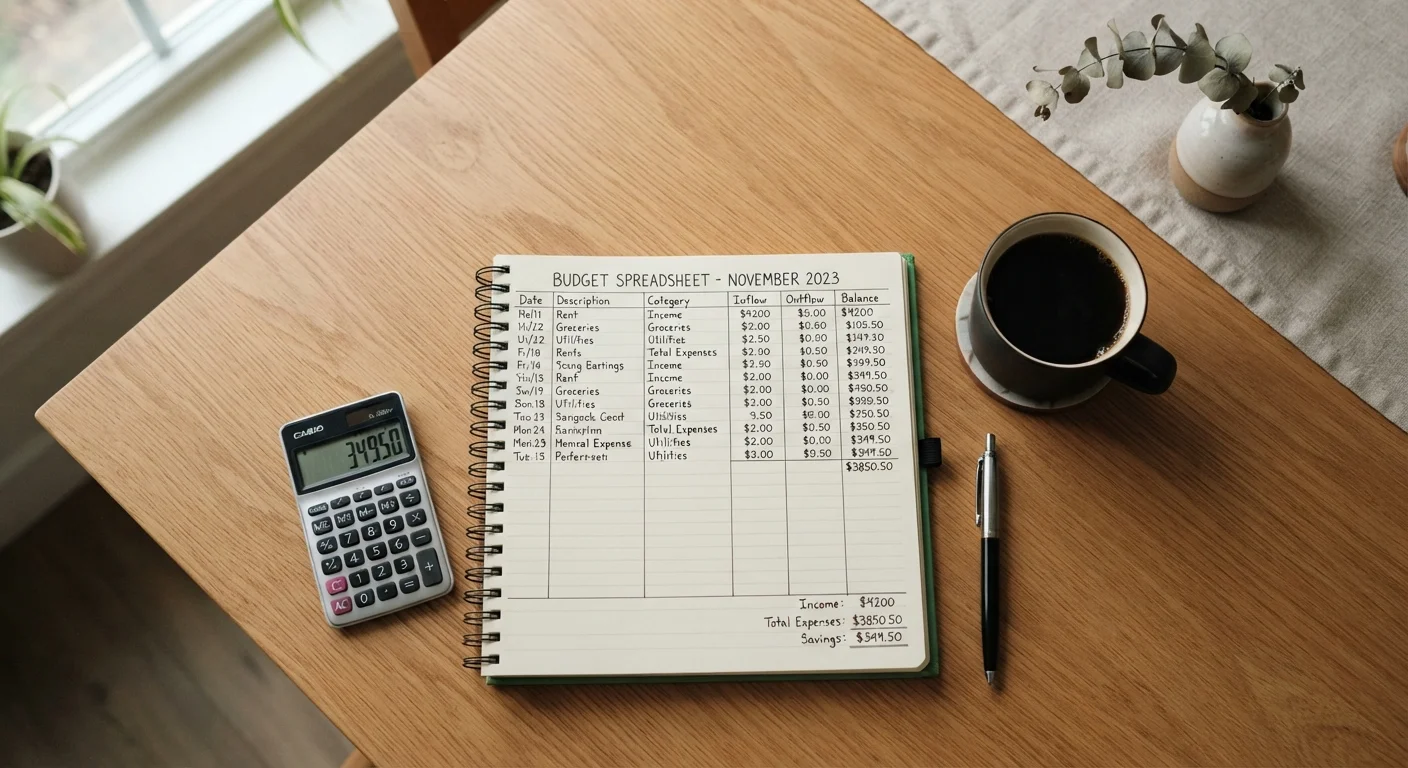
Photo: InsightsVilla.com | Quick Search. Right Info editorial
Key Takeaways
- Reviewing your budget at month's end catches problems before they snowball into next month.
- Comparing actual spending to your plan is more useful than reviewing your plan alone.
- Overspent categories are data points - adjust your budget rather than abandon it.
- Savings progress should be verified, not assumed, every single month.
- One small adjustment each month adds up to a significantly stronger budget over a year.
Why a Monthly Budget Review Matters
Most budgets don't fail on the day you build them. They quietly fall apart over the weeks that follow - usually because no one goes back to check what actually happened. A monthly health check closes that gap.
Think of this checklist as a 20-to-45-minute appointment with your money. You're not looking for perfection. You're looking for patterns: where did spending drift, did income land where you expected, and is your savings plan still on track? Answering those three questions consistently is what separates budgets that work from ones that get abandoned. If you've struggled to keep a budget going past the first few weeks, our article on why budgets fail in month two explains the most common traps - and how to avoid them.
Pull up your bank and credit card statements before you start. If you track spending in an app or spreadsheet, have that open too. The checklist below works whether you budget monthly or by paycheck - though if you're unsure which cadence fits your life, it's worth reading about monthly versus paycheck-to-paycheck budgeting.
Bank and credit card statements
Provides the complete transaction history needed to verify income and categorize every dollar spent.
Budgeting spreadsheet or app
Holds your original budget plan so you can compare planned versus actual amounts for each category.
Calculator
Useful for quickly totaling category spending or calculating the gap between budgeted and actual amounts.
Notebook or notes app
Capture observations, patterns, and your one planned change for next month during the review.
The Monthly Budget Health Check Checklist
Work through these items in order. Each group builds on the last - income accuracy sets the foundation, spending review reveals the story, and the forward-looking steps turn insight into action.
Income Verification
Spending Review
Savings Progress
Adjustments for Next Month
Don't Skip Months After a Hard One
If your income varies month to month - freelance work, tips, or gig income - give yourself extra time on the income section. Our guide to budgeting with irregular income walks through how to handle unpredictable paychecks. And if you share expenses with a partner or roommates, see our advice on shared household budgeting for keeping everyone on the same page.
Overspending Doesn't Mean Your Budget Failed
Turning Your Review Into Next Month's Plan
The review isn't finished until you carry its lessons forward. If a spending category went over budget two months in a row, that's your budget telling you the limit isn't realistic - raise it and trim somewhere else. If you underspent consistently, you may have room to boost savings.
Savings deserve a special look here. Don't assume contributions hit your account just because you planned them. Verify the transfer happened and check your running total against your goal. If you haven't set a concrete savings target yet, setting a savings goal you'll actually reach can help you define one that fits your real income. For irregular but predictable costs - car registration, annual subscriptions, holiday gifts - a sinking fund is one of the most underused tools in a personal budget.
End each review by writing down one specific change for next month. Just one. Small, consistent adjustments compound over time far more reliably than dramatic overhauls that don't last past week two.
This article is for general informational and educational purposes only and does not constitute personalized financial or legal advice. Consider consulting a qualified financial professional for guidance specific to your situation.
The content on this site is for informational purposes only and is not a substitute for professional advice. Always consult a qualified professional for guidance specific to your situation.