
Envelope Budgeting vs. Digital Spending Trackers

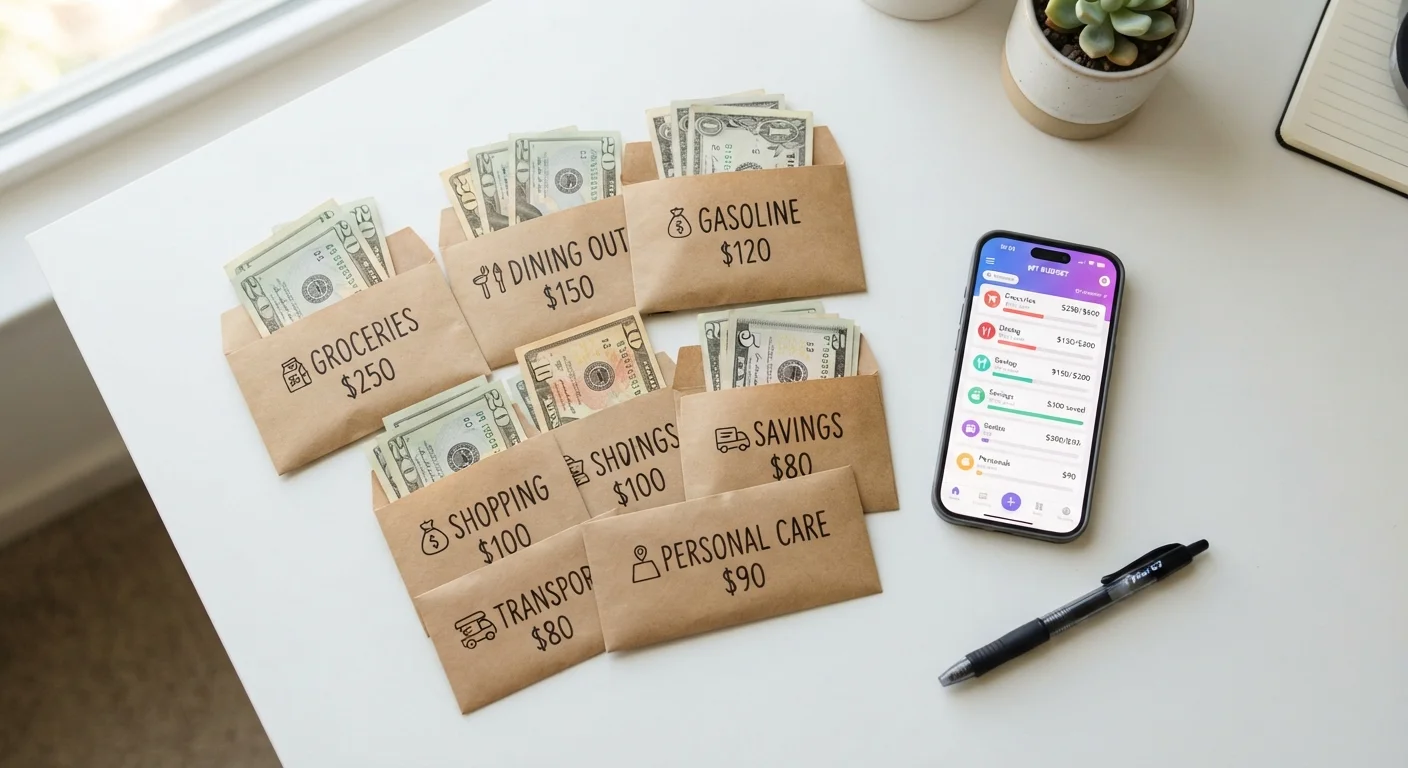
Photo: InsightsVilla.com | Quick Search. Right Info editorial
Key Takeaways
- Envelope budgeting uses physical cash to create hard spending limits per category.
- Digital trackers sync with bank accounts and show spending patterns automatically.
- Envelope budgeting tends to reduce impulse spending because empty means empty.
- Digital tools work better for online purchases, subscriptions, and cashless living.
- Neither method is universally better - the right choice depends on your habits.
- Many people combine both approaches to get structure and convenience together.
How Each Method Actually Works
Envelope budgeting is straightforward: at the start of a budget period, you withdraw cash and divide it into labeled envelopes - one for groceries, one for gas, one for eating out, and so on. You spend only from each envelope. When the cash is gone, that category is closed until next period. No credit card backup, no borrowing from tomorrow.
Digital spending trackers work differently. Most connect to your bank accounts, credit cards, and debit cards to pull in transactions automatically. The app categorizes your purchases and shows you in real time where your money went. Some apps let you set category budgets and alert you when you're getting close. You don't need to touch cash at all.
Both methods share the same underlying goal: make spending visible so you can control it. They just take opposite paths to get there. For more on the philosophy of assigning every dollar a purpose, see our guide to zero-based budgeting, which complements both approaches.
Side-by-Side: Key Differences
Here's a direct look at how the two methods stack up across the things that matter most day to day.
| Criterion | Envelope Budgeting | Digital Spending Trackers |
|---|---|---|
| Payment type | Cash only | Cards, bank accounts, digital |
| Setup effort | Low - just envelopes and cash | Moderate - link accounts, configure |
| Spending limits | Hard stop - cash runs out | Soft alerts - easy to ignore |
| Works for online purchases | No | Yes |
| Automatic tracking | No - manual only | Yes - syncs transactions |
| Historical spending data | Limited | Detailed, months of history |
| Best for impulse control | Strong - physical friction helps | Weaker - passive visibility only |
| Shared household use | Difficult to coordinate | Easier with shared access features |
One gap worth noting: envelope budgeting breaks down with online shopping, autopay bills, and digital subscriptions - categories that don't lend themselves to physical cash. Trackers handle those naturally. On the flip side, trackers depend on you actually reviewing your data. A dashboard no one checks is just noise.
The Psychology Behind Each Approach
Research in behavioral economics has consistently shown that paying with cash feels more painful than swiping a card - a phenomenon sometimes called the "pain of paying." Envelope budgeting leans into that friction deliberately. When you hand over physical bills, the spending feels real in a way that card transactions often don't.
Digital trackers reduce friction instead of adding it. They work with existing cashless habits, which makes adoption easier for many people. But the trade-off is that the automatic nature can make it easier to stay passive - logging spending isn't the same as making conscious decisions about it.
~83%
Americans using cashless payments regularly
According to Pew Research Center survey data, a large majority of Americans go at least some weeks without using cash at all, underscoring why digital trackers appeal to so many.
~1 in 3
Adults who say they overspend without realizing it
Multiple consumer finance surveys have found that a significant share of adults consistently spend more than they intended, often without noticing until the bank balance drops.
If you're not sure which style fits how you think about money, our article on budgeting methods by money personality can help you match a framework to your habits.
Practical Trade-Offs to Consider
Before choosing, think through a few real-world realities:
- Safety: Carrying cash introduces loss risk. If an envelope is stolen or misplaced, that money is gone. Digital tools don't carry that risk, though they do introduce data-privacy considerations.
- Convenience: Envelopes require ATM trips and change management. Trackers require a smartphone and willingness to review data regularly.
- Shared budgets: Coordinating envelopes with a partner or housemate is genuinely harder. Two people, one envelope - it gets messy. See our overview of budgeting as a couple or household for strategies.
- Learning curve: Envelopes are immediately understandable. Some tracker apps involve setup time, linking accounts, and correcting miscategorized transactions.
You Don't Have to Pick Just One
Neither system requires perfection to work. Even an imperfect envelope system or a partially-reviewed tracker app tends to produce better outcomes than no system at all. If you want a lighter approach, our piece on tracking spending without obsessing over every penny covers low-friction middle ground.
This article is for general informational and educational purposes only. It does not constitute personalized financial advice. Consider speaking with a qualified financial professional about your specific situation.
The content on this site is for informational purposes only and is not a substitute for professional advice. Always consult a qualified professional for guidance specific to your situation.