
The Nutrition Facts Label: Every Number Decoded

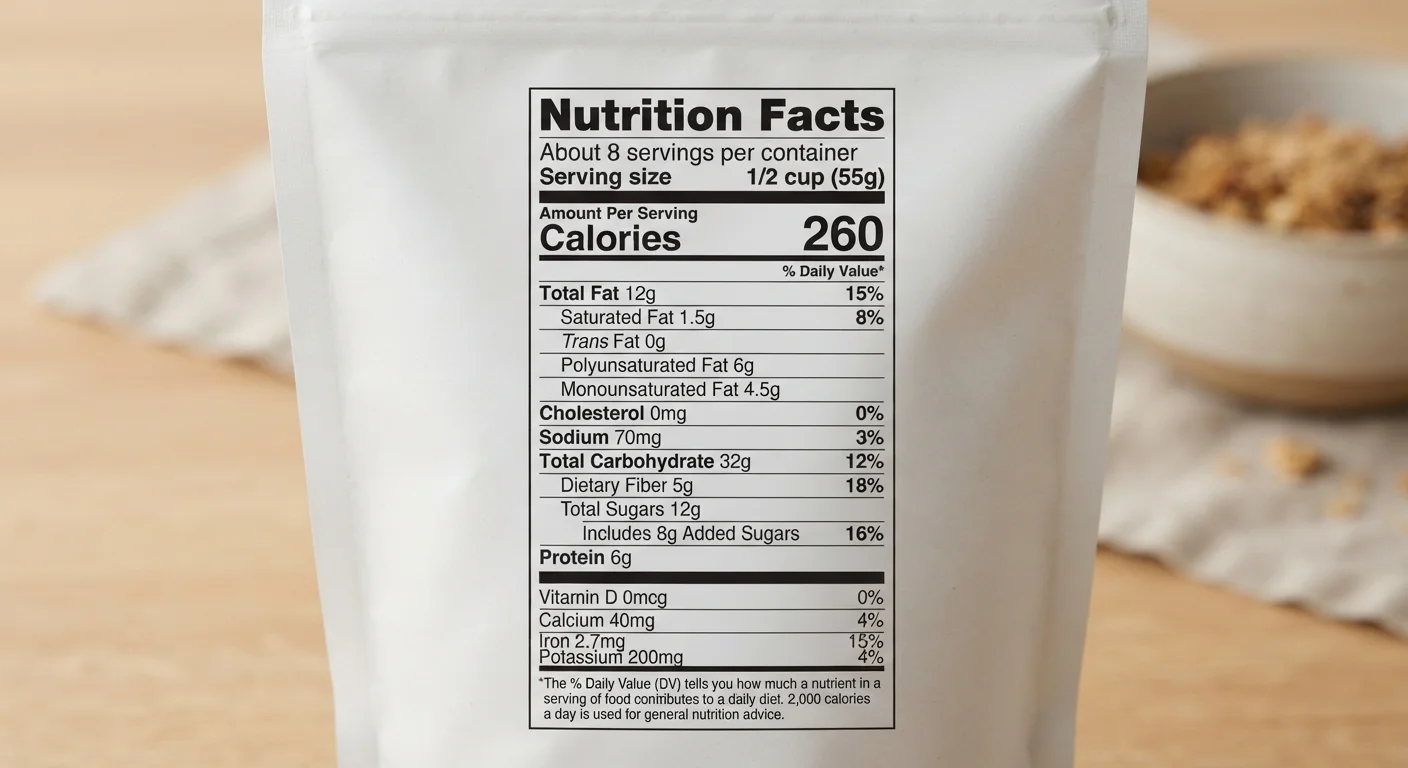
Photo: InsightsVilla.com | Quick Search. Right Info editorial
Start Here: Serving Size and Calories
The Nutrition Facts label can look like a wall of numbers, but it follows a logical order from top to bottom. Everything starts with serving size - the amount the label's numbers are based on. This is not a recommendation of how much you should eat; it's a standardized reference point set by the FDA to make comparison shopping easier.
Directly below serving size you'll find the servings per container. This is where many readers trip up: if a bag of chips lists 150 calories but contains three servings, the whole bag delivers 450 calories. Always check both lines before reading anything else.
Calories appear next in large print. A calorie is simply a unit of energy - the label counts how many energy units are packed into one serving. The FDA's 2,000-calorie daily reference figure shown at the bottom of many labels is a general benchmark used for calculating percent Daily Values, not a target for any individual person. For personalized guidance on your own calorie needs, a registered dietitian is your best resource.
The Nutrient Rows: What Each Line Measures
Below calories, the label lists specific nutrients in a consistent order. Here's what each one actually means:
- Total Fat - includes all fat types in one gram count, then breaks down into saturated fat and trans fat as sub-items. Unsaturated fats (mono- and polyunsaturated) may also appear but aren't required.
- Saturated Fat - current U.S. dietary guidelines suggest keeping this relatively low; it's called out separately because of its relationship to LDL cholesterol levels.
- Trans Fat - the FDA has largely eliminated artificial trans fats from the food supply, but trace amounts from naturally occurring sources may still appear. No %DV is listed because no safe intake level has been established.
- Cholesterol - measured in milligrams. Dietary cholesterol's effect on blood cholesterol is more nuanced than once thought, but it remains on the label for context.
- Sodium - also in milligrams. Most Americans consume significantly more than public health guidelines suggest. See our deep dive on sodium in the American diet for more context on where it hides.
- Total Carbohydrate - breaks into dietary fiber and total sugars, with added sugars as a required sub-item since the 2016 label update.
- Added Sugars - sugars incorporated during processing or preparation, distinct from naturally occurring sugars in fruit or dairy.
- Protein - measured in grams. A %DV for protein is only required when a protein claim is made on the package.
Vitamins and minerals (Vitamin D, Calcium, Iron, Potassium) appear at the bottom because Americans have historically under-consumed them. They're shown as %DV only.
Serving Size
A standardized reference amount set by the FDA reflecting how much people typically eat in one sitting. It's the basis for all nutrient values on the label - not a dietary recommendation.
Daily Value (%DV)
A percentage showing how much of a nutrient one serving contributes to a general 2,000-calorie daily diet. It helps you compare foods and gauge whether a nutrient level is high or low.
Added Sugars
Sugars introduced during food processing or preparation - such as high-fructose corn syrup or table sugar - as opposed to sugars naturally present in whole foods like fruit or milk.
Saturated Fat
A type of fat found mainly in animal products and some tropical oils, listed separately on the label because of its noted relationship to LDL (low-density lipoprotein) cholesterol levels.
Trans Fat
Partially hydrogenated oils that raise LDL cholesterol. The FDA has largely banned artificial trans fats, but small naturally occurring amounts may still appear on some labels.
Dietary Fiber
The indigestible portion of plant foods, listed as a sub-item under Total Carbohydrate. Fiber supports digestive health and is a nutrient most Americans consume below recommended levels.
Percent Daily Value: The Column That Does the Heavy Lifting
The % Daily Value (%DV) column on the right side is arguably the label's most useful tool. It tells you how much of a nutrient one serving contributes toward a general daily intake reference - based on a 2,000-calorie diet. You don't need to hit exactly 100% for every nutrient every day; it's a relative guide, not a strict target.
A general rule of thumb recognized by nutrition educators: 5% DV or less is considered low for a nutrient, while 20% DV or more is considered high. This matters differently depending on the nutrient - you'd typically want a higher %DV for fiber or Vitamin D, and a lower %DV for saturated fat or sodium.
The 2,000-Calorie Benchmark Is Just a Reference
For a broader walkthrough of how to use these numbers together in practice, our guide to reading a Nutrition Facts label without getting lost walks through real-world scenarios step by step. And when you're ready to go deeper on what's actually in a product, reading an ingredient list is a natural next step - ingredients are listed by weight, and the label and list work together.
This article is for general informational and educational purposes only and is not intended as medical or dietary advice. Consult a qualified healthcare professional or registered dietitian for guidance tailored to your individual health needs.
The content on this site is for informational purposes only and is not a substitute for professional advice. Always consult a qualified professional for guidance specific to your situation.