
Reading an Ingredient List Without Getting Lost

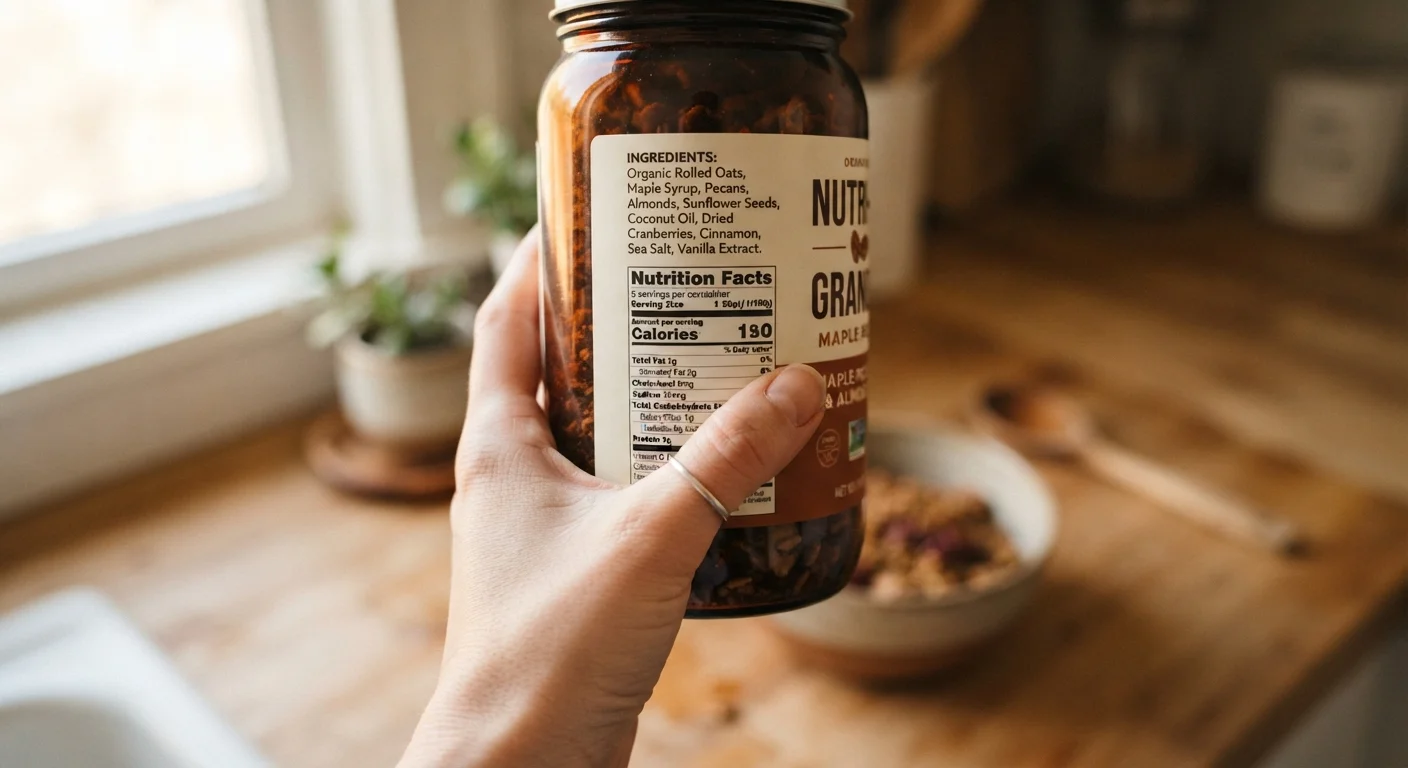
Photo: InsightsVilla.com | Quick Search. Right Info editorial
Key Takeaways
- Ingredients are listed in descending order by weight - the first few matter most.
- Technical chemical names are often just vitamins, minerals, or preservatives with official names.
- A long ingredient list isn't automatically bad; a short one isn't automatically good.
- Added sugars can appear under more than a dozen different names on a label.
- Parenthetical ingredients explain what a compound ingredient like 'enriched flour' contains.
Why the Ingredient List Exists and What It Must Include
Under U.S. Food and Drug Administration regulations, almost every packaged food sold in the United States is required to carry a complete ingredient list. The rule covers processed and multi-ingredient foods; single-ingredient items like a bag of plain almonds or a piece of fresh produce don't have one because there's nothing to list. The list must include every ingredient used in the product, including components of compound ingredients and any additives used during processing - even if those additives perform a technical function and aren't there for flavor or nutrition.
What this means in practice: the ingredient list is one of the most complete disclosures on any food package. The Nutrition Facts panel shows you numbers, but the ingredient list shows you sources. Used together, they give a much fuller picture than either does alone. For more on the sodium numbers you'll often encounter on both, our piece on sodium in the American diet explains where it hides.
This Is Education, Not Medical Advice
How to Read It: Step-by-Step
What you will need
Food package with ingredient list
The label itself is your primary reference - practice makes reading faster and more intuitive.
FDA's food additives database (online)
Use it to look up unfamiliar additive names and confirm what they're approved for.
Find the ingredient list (it's separate from the Nutrition Facts panel)
The ingredient list is required by U.S. law on nearly all packaged foods and is almost always printed near the Nutrition Facts panel - but it's a different section. It reads as a single block of text beginning with the word Ingredients:. Don't confuse the two: the Nutrition Facts panel shows quantities (grams, percentages), while the ingredient list shows what's actually in the food by name. For a deeper look at the numbers panel, see our plain-language breakdown of the Nutrition Facts label.
Understand the order: weight, not importance
Ingredients are listed in descending order by weight as they exist before cooking or processing. That means the first ingredient is present in the largest amount by weight, and the last ingredient is present in the smallest. A cereal that lists sugar second is telling you something meaningful. A loaf of bread that lists whole wheat flour first is also telling you something meaningful.
Weight-before-processing matters here: some ingredients - like flour or oats - lose moisture during baking, so their final proportion in the cooked product may differ slightly from their raw weight ranking.
Decode compound ingredients and parenthetical lists
When an ingredient is itself made of multiple components, the label must break those down in parentheses immediately after the ingredient name. For example: enriched flour (wheat flour, niacin, reduced iron, thiamine mononitrate, riboflavin, folic acid). That's one compound ingredient - enriched flour - followed by its sub-ingredients. This is why a list can look long even when the food is fairly simple. Each parenthetical group belongs to the ingredient named before it.
Spot added sugars under their many names
Sugar can appear on an ingredient list under more than a dozen legal names. Common ones include: high-fructose corn syrup, cane juice, dextrose, maltose, treacle, agave nectar, fruit juice concentrate, honey, and molasses, among others. Because each form counts as a separate ingredient, a product could rank several sugar sources lower on the list while still delivering a significant total amount of added sugar. Cross-referencing with the Added Sugars row on the Nutrition Facts panel gives you the complete picture - our walkthrough of the Nutrition Facts panel explains that row in detail.
Look up unfamiliar additive names before assuming the worst
Long chemical-sounding names are often just standard preservatives, emulsifiers, stabilizers, or added nutrients with their official scientific names. Tocopherols are vitamin E used as an antioxidant. Ascorbic acid is vitamin C. Lecithin is an emulsifier found naturally in egg yolks and soybeans. The FDA maintains a searchable database of food additives that tells you exactly what each one is approved to do. When in doubt, look it up rather than assuming it's harmful - and equally, don't assume it's harmless just because it has a familiar-sounding name.
Check the allergen statement separately
After the main ingredient list, many packages include a bolded Contains: line listing the major allergens present. This is a quick-scan tool, but it doesn't replace reading the full ingredient list if you need to avoid a specific ingredient for health reasons. Cross-contact warnings (e.g., "may contain traces of peanuts") are voluntary and not standardized - their presence or absence reflects a manufacturer's own assessment of their production environment.
Allergens Can Hide in Plain Sight
Scan the First Three Ingredients First
Common Myths About Ingredient Lists
Myth: Shorter lists are always healthier. A plain bag of potato chips might have three ingredients (potatoes, oil, salt), while a whole-grain cracker with seeds, herbs, and added vitamins could have fifteen. Ingredient count doesn't measure nutritional value - context does.
Myth: If you can't pronounce it, don't eat it. Pyridoxine hydrochloride is vitamin B6. Cyanocobalamin is vitamin B12. Unpronounceable names are often just chemistry. That said, it's always fair to look up what something is before deciding how you feel about it.
Myth: "Natural" in an ingredient name means anything specific. The FDA has a loose working definition of "natural" but has not formally defined it for labeling purposes. The term doesn't carry a legally binding standard the way "organic" does under USDA certification.
If you're building broader food-reading skills, our guide to reading recipes like a cook covers a different but equally useful kind of food literacy.
The content on this site is for informational purposes only and is not a substitute for professional advice. Always consult a qualified professional for guidance specific to your situation.