
What 'Deglaze' Actually Means-and Why It Makes Sauces So Much Better

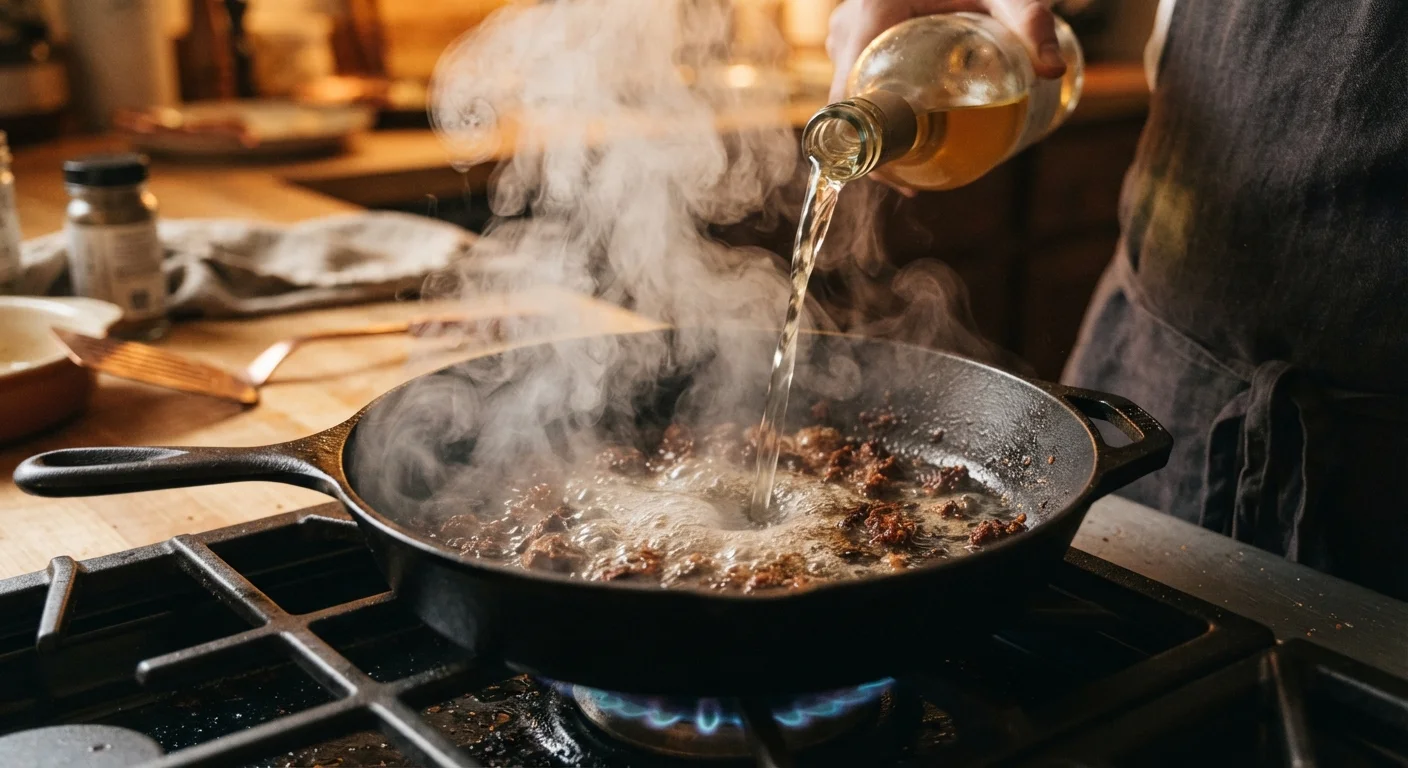
Photo: InsightsVilla.com | Quick Search. Right Info editorial
Key Takeaways
- Deglazing adds deep, complex flavor to sauces by dissolving browned pan drippings called the fond.
- Almost any liquid works - wine, broth, beer, juice, or even plain water.
- The technique takes about 30 seconds and works best immediately after searing meat or vegetables.
- Scraping the pan bottom while the liquid simmers is the key step - don't skip it.
- Deglazing is the foundation of most classic pan sauces made in restaurants and home kitchens alike.
The Stuff Stuck to Your Pan Is Actually the Good Stuff
If you've ever seared a chicken thigh or browned some ground beef and then faced a pan covered in dark, stuck-on bits, your instinct might be to soak it and scrub it clean. But those bits - the fond - are concentrated flavor, and deglazing is how you turn them into something delicious.
The Maillard reaction, the chemical process behind browning, creates hundreds of flavor compounds that cling to the pan surface after cooking. When you add liquid to that hot pan and scrape, those compounds dissolve into the liquid, instantly creating a richly flavored base. That's the whole trick. That's deglazing.
“The fond is where the flavor lives. Every professional cook knows that a good pan sauce starts with not wasting what's already been built on the bottom of the pan.”
— Jacques Pépin, French chef, culinary educator, and author of numerous classical cooking texts
How to Actually Do It (It Really Is 30 Seconds)
After your meat, mushrooms, or aromatics are done cooking, remove them from the pan and leave it on medium-high heat. While the pan is still hot, pour in your liquid - about a quarter cup is usually plenty to start. It will sizzle and steam immediately.
Now grab a wooden spoon or silicone spatula and scrape the bottom of the pan. The fond will loosen and dissolve into the liquid within seconds. Let the mixture bubble for a minute or two to concentrate the flavor slightly, and you've got the foundation of a pan sauce.
Stand Back When You Add the Liquid
From there, you can keep it simple - season it and spoon it straight over your food - or build on it by stirring in butter for richness, a splash of cream, fresh herbs, or a squeeze of lemon. This is essentially how most restaurant pan sauces are made. It's not a secret technique; it's just a habit most home cooks haven't picked up yet. If you're the type who likes to have everything ready before this moment, check out mise en place basics - a bit of prep upfront makes the whole process even smoother.
Matching Your Liquid to the Dish
The liquid you choose does matter, though almost nothing is truly wrong here. A general guideline: complement the protein or vegetable you're cooking.
- Red wine pairs beautifully with beef, lamb, or duck - it adds depth and a slight acidity that balances richness.
- White wine or dry vermouth works well with chicken, pork, and seafood, adding brightness without overwhelming.
- Chicken or vegetable broth is the all-purpose, alcohol-free workhorse - reliable and flavorful in almost any context.
- Apple cider or juice pairs naturally with pork chops or chicken, adding a subtle sweetness.
- Beer - particularly a lager or amber ale - can add a pleasant malty quality to beef or sausage dishes.
300+
Flavor compounds created by the Maillard reaction
Food scientists estimate the browning reaction responsible for the fond produces hundreds of distinct aroma and flavor molecules, according to food chemistry research.
~30 sec
Time to deglaze a pan
In practice, the actual deglazing step - adding liquid and scraping - takes less than a minute from start to finish once your pan is hot.
Understanding your heat level matters too. For a deeper look at how different cooking temperatures affect your food, simmering vs. boiling vs. poaching breaks that down clearly.
Common Mistakes - and One Myth Worth Clearing Up
The most common mistake is adding liquid to a pan that's gone cold. The fond won't release as readily, and you lose that satisfying steam and sizzle that signals everything is working. Keep the heat on and act while the pan is still hot.
Another misstep: using too much liquid right away and diluting the flavor before it has a chance to concentrate. Start small, let it reduce briefly, then taste and adjust.
One thing worth noting: some home cooks assume the browned bits on their pan mean they burned the food and the pan is ruined. Usually, that's not the case - a dark brown fond is good; a black, acrid-smelling fond means the heat was too high for too long. Common cooking myths like this one can hold people back from techniques that would genuinely improve their cooking.
Dark Brown Fond vs. Burnt Pan
Frequently Asked Questions
The content on this site is for informational purposes only and is not a substitute for professional advice. Always consult a qualified professional for guidance specific to your situation.