
Everything You Need to Know About Cooking with Herbs

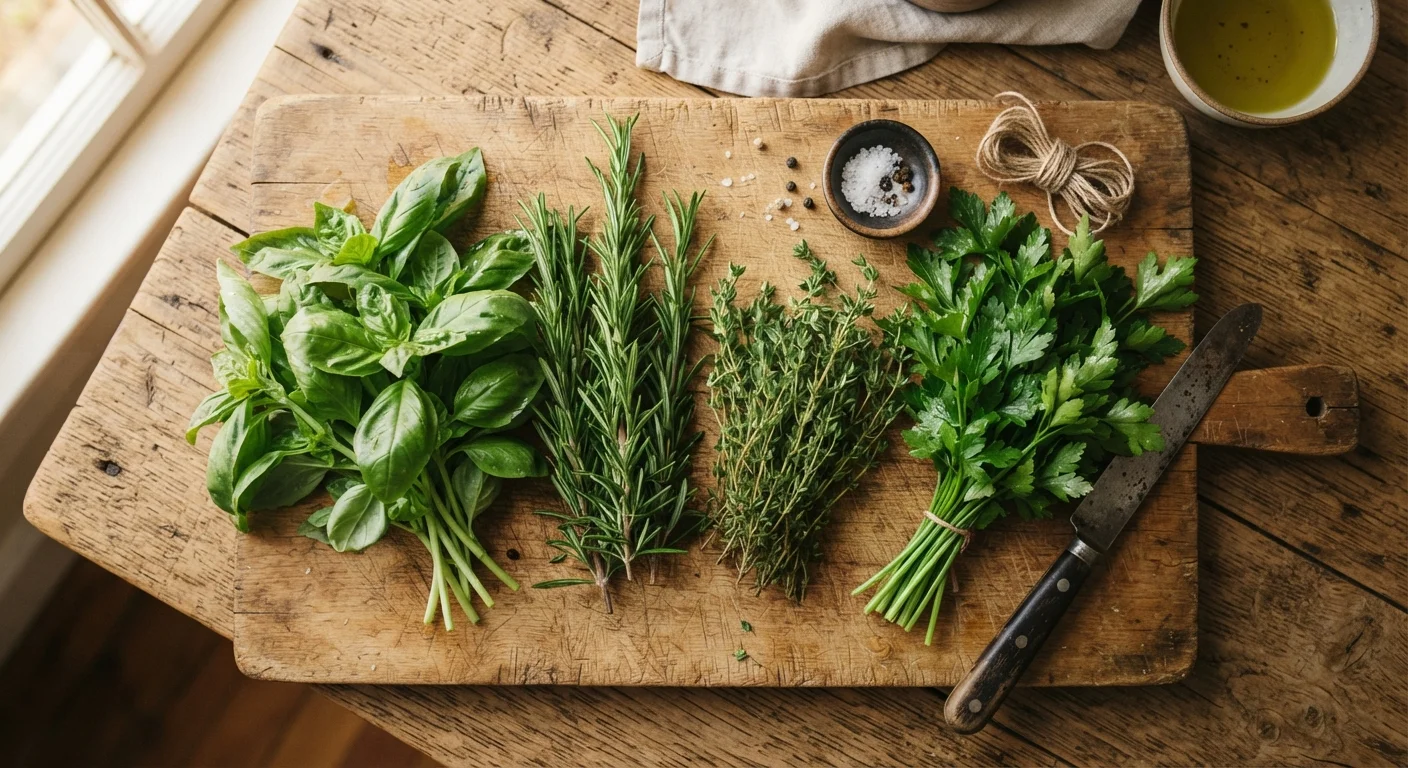
Photo: InsightsVilla.com | Quick Search. Right Info editorial
Key Takeaways
- Dried herbs are about three times more potent than fresh - adjust quantities accordingly.
- Hardy herbs like rosemary and thyme can go in early; delicate ones like basil should be added last.
- Fresh herbs stored upright in water like cut flowers stay fresh significantly longer.
- Matching herbs to food families - Mediterranean herbs with olive oil dishes, for instance - is a reliable shortcut.
- Bruising or tearing herbs rather than over-chopping releases more aromatic oils.
Fresh vs. Dried: Which Should You Use?
One of the most common questions home cooks wrestle with is whether to reach for fresh herbs or the jars in the spice cabinet. The honest answer: both have a place, and knowing when to use each is what separates good dishes from great ones.
As a general rule, dried herbs are roughly three times more concentrated in flavor than fresh. That means if a recipe calls for 1 tablespoon of fresh thyme, you'd substitute about 1 teaspoon of dried. Getting this ratio wrong is one of the most common seasoning mistakes in home cooking - and it's completely avoidable once you know the math.
Fresh herbs tend to shine in raw or lightly cooked applications: tossed into salads, stirred into finishing sauces, or scattered over finished dishes. Dried herbs perform best in long-cooked dishes - braises, soups, stews - where their flavor has time to fully bloom in liquid and heat. Understanding this distinction is part of reading a recipe like a real cook, not just following instructions mechanically.
3x
Potency of dried herbs vs. fresh
A widely used culinary ratio: 1 teaspoon dried herb equals approximately 1 tablespoon of fresh in most recipes.
~2 weeks
Fridge life of herbs stored in water
Soft herbs stored upright in a jar of water and loosely covered can last up to twice as long as herbs stored dry in a bag.
6-12 months
Peak flavor window for dried herbs
Most culinary experts suggest replacing opened dried herbs within 6 to 12 months for best flavor, though they remain safe longer.
When to Add Herbs During Cooking
Timing is everything with herbs. Add the wrong herb at the wrong moment and you'll either lose all its flavor or end up with something bitter and flat.
Hardy herbs - rosemary, thyme, sage, bay leaves, oregano - have tough cell structures that hold up to heat. Add them early, at the start of sautéing or into a simmering pot, so they have time to release their oils gradually into the dish.
Delicate herbs - basil, cilantro, parsley, dill, tarragon, chives - wilt and lose their vibrancy fast. These belong at the very end of cooking, or even added fresh at the table. Heat destroys the volatile compounds that make them taste bright and aromatic.
Bloom dried herbs in fat before adding other ingredients - heat the oil, add the dried herb, and let it sizzle for 30 seconds before anything else goes in. This step dramatically amplifies their aroma.
Keep a small bunch of hardy herbs like thyme or rosemary in a bag in your freezer. You can crumble them straight into hot dishes from frozen - no thawing needed, and they last months.
A good mental model: if you can imagine an herb surviving a long hike through heat, it's probably hardy. If it wilts the moment it touches warmth, save it for the finish.
How to Store Herbs So They Actually Last
Fresh herbs are notorious for going limp or slimy within days of purchase. A little know-how goes a long way here.
For soft, leafy herbs (basil, parsley, cilantro, mint): trim the stems and place them in a jar of water, like a bouquet of flowers, then loosely cover with a plastic bag and keep on the counter or in the fridge. Basil actually prefers room temperature - cold can cause black spots. This method can extend freshness from 3-4 days to nearly two weeks.
For hardy herbs (thyme, rosemary, sage, chives): wrap loosely in a barely damp paper towel, place in a zip-close bag, and refrigerate. They'll keep well for up to two weeks.
Revive Wilting Fresh Herbs Fast
For dried herbs, the enemy is light and moisture. Store them in a cool, dark cabinet - not directly above the stove where steam and heat accelerate flavor loss. Most dried herbs are best within 6-12 months of opening, though they won't make you sick after that; they'll just taste like very little.
Pairing Herbs with the Right Foods
Herb pairing can feel intimidating, but there are reliable patterns that make it intuitive over time. Think about culinary traditions as your guide: dishes from the same region tend to use the same herbs for good reason.
- Mediterranean cooking - basil, oregano, rosemary, thyme - pairs naturally with olive oil, tomatoes, lamb, and white beans.
- French cuisine - tarragon, chervil, chives, parsley - suits chicken, eggs, fish, and cream sauces.
- Mexican and Latin dishes - cilantro, epazote, Mexican oregano - complement beans, pork, citrus, and chiles.
- Indian and South Asian cooking - fenugreek, curry leaves, cilantro - work beautifully with lentils, yogurt, and spiced vegetables.
Understanding how herbs interact with salt, fat, acid, and heat - the four fundamentals of flavor - sharpens your instincts further. Our guide on salt, fat, acid, and heat explains how these elements work together to make food taste its best.
Chopping and Prepping Herbs the Right Way
How you handle herbs before they hit the pan matters more than most cooks realize. Over-chopping bruises the cell walls too aggressively, releasing bitter compounds and oxidizing the herbs quickly - you'll notice the green turning dull and dark almost immediately.
For most delicate herbs, a rough chop or a simple hand-tear is enough. For firmer herbs like rosemary, strip the leaves from the stem and mince finely so the tough bits don't create unpleasant textures in the final dish. A sharp knife is genuinely important here - a dull blade crushes and smashes rather than slicing cleanly. Our home cook's knife skills guide covers exactly how to get this right without spending hours practicing.
“Herbs are the easiest way to make a simple dish taste intentional. They signal care - that someone thought about flavor from the beginning, not as an afterthought.”
— Samin Nosrat, Chef and author of 'Salt Fat Acid Heat'
One useful technique: the chiffonade. Stack large, flat leaves like basil, roll them into a tight cylinder, then slice crosswise into thin ribbons. It's fast, it looks beautiful as a garnish, and it minimizes the bruising that dulls flavor. Once you've prepped your herbs confidently, the rest of your kitchen setup falls into place naturally.
The Home Cook's Guide to Knife Skills
Sharp knife technique makes prepping herbs faster and cleaner. This guide covers the foundational cuts every home cook should know.
Salt, Fat, Acid, Heat: The Four Elements That Make Home Cooking Click
Understanding how the four flavor fundamentals interact helps you deploy herbs with far more confidence and creativity.
Reading a Recipe Like a Cook, Not Just a Follower
Knowing how to interpret herb instructions in recipes - not just follow them - is a skill that pays off in every dish you make.
The content on this site is for informational purposes only and is not a substitute for professional advice. Always consult a qualified professional for guidance specific to your situation.