
The Sugar in Your Drink: How Common Beverages Compare

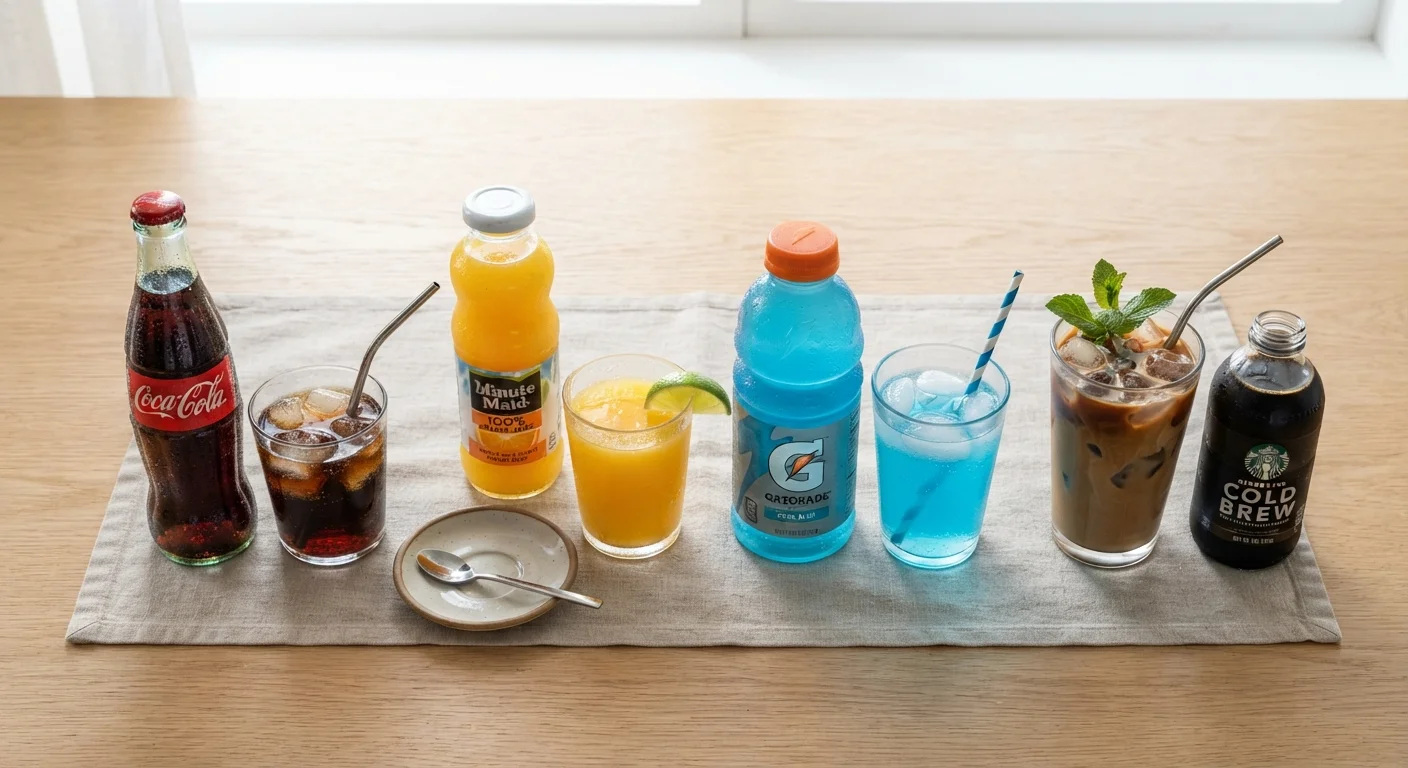
Photo: InsightsVilla.com | Quick Search. Right Info editorial
Key Takeaways
- A standard 12-oz can of regular soda contains roughly 35-40 grams of added sugar.
- 100% fruit juice carries natural sugars, not added ones, but the amounts per serving can be surprisingly high.
- Flavored coffee drinks from cafés can easily exceed 40 grams of sugar in a single cup.
- Sports drinks and energy drinks vary widely - some are moderate, others rival sodas in sugar content.
- Sparkling water and plain unsweetened tea contain little to no sugar, making them easy low-sugar swaps.
Why Beverage Sugar Is Easy to Underestimate
When we think about cutting back on sugar, food tends to get all the attention - cookies, cereal, candy. But drinks are one of the most significant sources of added and naturally occurring sugar in the American diet, and because we drink them quickly and without much ceremony, their sugar content rarely registers the way a slice of cake does.
The distinction between added sugars and naturally occurring ones matters, too. Added sugars and naturally occurring sugars behave differently in terms of food labeling and nutritional context, even if your body handles the glucose similarly. It's worth understanding both as you read through these comparisons.
All figures below reflect typical standard-serving sizes found in the US market. Exact amounts vary by brand and preparation.
How the Most Common Drinks Stack Up
Here's a side-by-side look at approximate sugar content across six popular beverage categories. Figures represent typical values for standard servings.
| Beverage | Typical Serving | Approx. Sugar (grams) | Sugar Type | |
|---|---|---|---|---|
| Regular soda | 12 oz can | ~39g | Added | |
| 100% orange juice | 8 oz | ~22g | Naturally occurring | |
| Sports drink | 20 oz bottle | ~34g | Added | |
| Flavored café coffee | 16 oz medium | ~40-50g | Mostly added | |
| Plain unsweetened tea | 12 oz | ~0g | None | |
| Plain sparkling water | 12 oz | 0g | None |
A few things stand out immediately. Flavored café coffee drinks - think a medium sweet latte or a blended frozen coffee - can quietly deliver more sugar than a can of soda, especially when syrups and whipped toppings enter the picture. Sports drinks are often perceived as healthy, but many 20-oz bottles contain 30+ grams of sugar. Energy drinks have a similarly wide range depending on the product.
Meanwhile, plain sparkling water has zero sugar - a point worth keeping in mind if you love the sensation of bubbles. Sparkling water, club soda, tonic, and seltzer are actually four distinct things, and only tonic water carries meaningful sugar on its own.
The Juice Question: Natural Doesn't Mean Low
Fruit juice occupies a complicated space. A glass of 100% orange juice contains no added sugar - all the sweetness is naturally present in the fruit. But a typical 8-oz serving still delivers around 21-26 grams of sugar, largely because juice concentrates the fruit's natural sugars while removing the fiber that slows their absorption.
A Simple Way to Cut Juice Sugar
Things get murkier when you move beyond 100% juice. Juice drinks and juice cocktails may contain only a fraction of real juice, with the rest made up of water, added sweeteners, and flavoring. These products can look identical to 100% juice on a store shelf - the label is your only reliable guide.
If you want to understand more about how added and natural sugars compare from a nutritional standpoint, our piece on added sugar vs. natural sugar goes deeper on what the research actually shows.
Making Sense of the Numbers in Everyday Life
The US Dietary Guidelines suggest that added sugars ideally account for less than 10% of daily calories for most adults - a rough benchmark, not a hard rule. For a 2,000-calorie diet, that works out to about 50 grams of added sugar per day. A single large flavored coffee drink or a 20-oz bottle of soda can account for the bulk of that in one go.
That doesn't mean those drinks are off-limits - context and overall eating patterns matter far more than any single choice. But knowing the numbers takes the guesswork out of it. Small adjustments add up: ordering a smaller size, asking for fewer pumps of syrup, or diluting juice with sparkling water are all easy moves if you're looking to trim sugar without giving up the drinks you enjoy. For anyone curious about fermented drinks like kombucha, those can vary widely too - always worth checking the label.
This article provides general nutrition information for educational purposes and is not a substitute for personalized dietary advice. Consult a registered dietitian or qualified healthcare professional for guidance specific to your health needs.
The content on this site is for informational purposes only and is not a substitute for professional advice. Always consult a qualified professional for guidance specific to your situation.