
Juice vs. Juice Drink vs. Juice Cocktail: Reading the Label

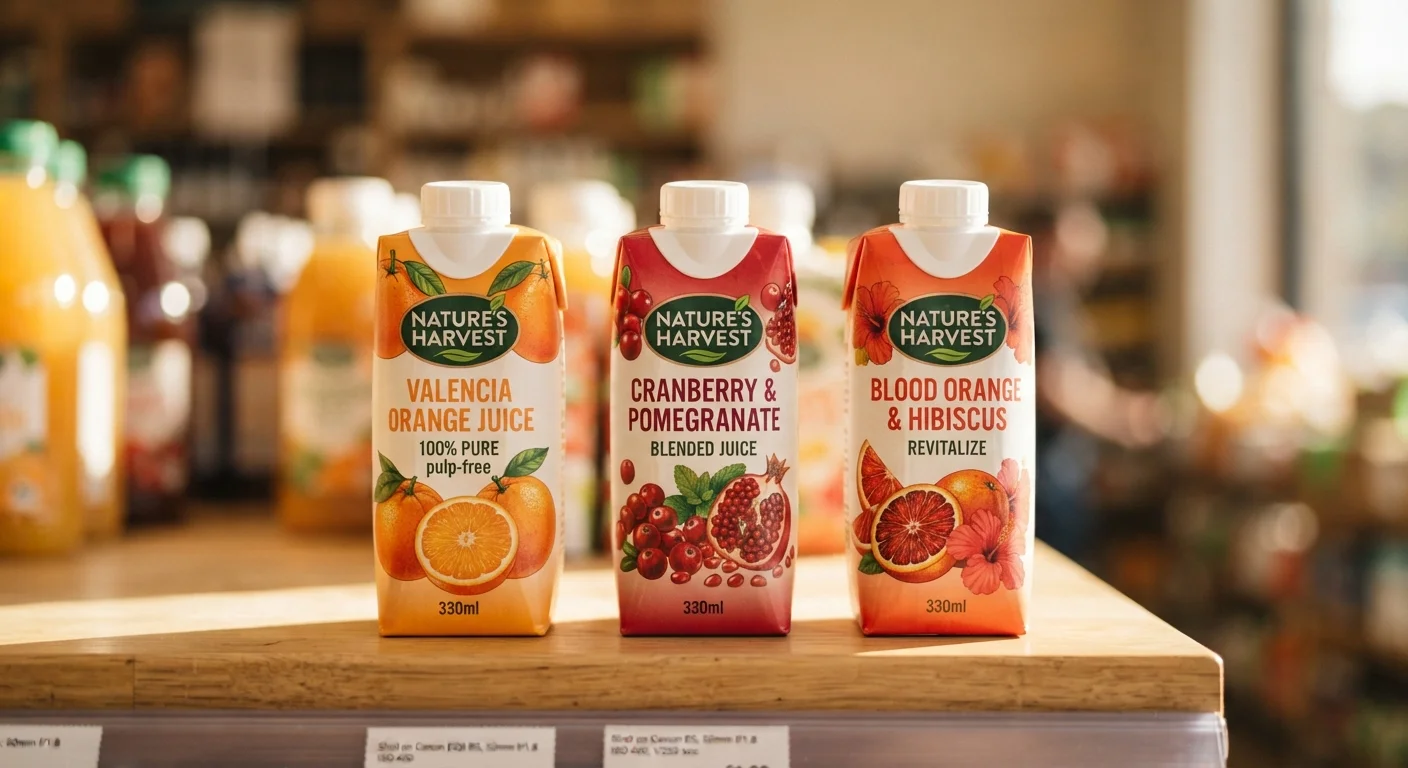
Photo: InsightsVilla.com | Quick Search. Right Info editorial
Key Takeaways
- "100% juice" means the entire liquid comes from fruit or vegetable juice, with no added sweeteners.
- "Juice drink" and "juice cocktail" labels signal that real juice makes up only a portion of the product.
- Federal rules require non-100% products to display their actual juice percentage on the package.
- Added sugars can make juice drinks comparable to soda in total sugar content.
- Checking the ingredient list alongside the juice percentage gives the clearest picture of what you're buying.
Why the Wording on the Carton Matters
Standing in the juice aisle, it's easy to assume that anything labeled with a fruit name is more or less the same thing. The colors are vivid, the packaging often shows whole fruit, and the names sound wholesome. But the specific words a manufacturer uses - juice, juice drink, juice cocktail, juice beverage, or juice blend - aren't random marketing choices. They reflect real distinctions set by the U.S. Food and Drug Administration.
Knowing what those words signal takes about two minutes to learn and can change how you read a shelf for the rest of your life. And if you've ever been surprised by how much sugar was in something that seemed healthy, this is likely part of why. For a deeper look at how sugar stacks up across popular drinks, see how common beverages compare.
The Three Main Categories Explained
100% Juice
When a label says "100% juice," it means every drop in the container comes from fruit or vegetable juice. No added sugar, no added water - just juice. The juice may be made from concentrate (water is removed during processing, then added back later), and that's still legally "100% juice" as long as nothing else goes in. Common examples include orange juice, apple juice, and grape juice sold in cartons or bottles without any qualifier on the name.
Juice Drink / Juice Beverage / Juice Blend
Any product that uses one of these qualifiers contains some real juice, but also water and typically added sweeteners like sugar or high-fructose corn syrup. There is no single required minimum juice percentage for these terms - a "juice drink" could be anywhere from around 5% to 99% juice. Federal rules do require the package to state the actual juice percentage, usually near the product name or on the information panel.
Juice Cocktail
"Juice cocktail" follows the same pattern. Despite the festive name, it simply means a blended beverage that includes real juice alongside water and sweeteners. Cranberry cocktail is one of the most familiar examples in American refrigerator cases - real cranberry juice is tart and expensive, so it's commonly diluted and sweetened before sale. Again, the label must disclose the juice percentage.
10-99%
Juice content range in "juice drinks"
FDA regulations require disclosure of actual juice percentage but set no single minimum for products labeled "juice drink" or "juice cocktail."
100%
Juice content required to drop the qualifier
Under FDA labeling rules (21 CFR Part 101), only beverages made entirely from juice may use "100% juice" on the label without additional qualifiers.
#1
Ingredient by weight signals what dominates
FDA ingredient-list rules require ingredients to appear in descending order by weight, so the first item listed is the most abundant ingredient in the product.
How to Actually Read the Label
Once you know the category system, three spots on any juice product tell you almost everything you need:
- The product name itself. Words like "drink," "cocktail," "beverage," or "blend" are your first signal that it's not 100% juice.
- The juice percentage declaration. Look for "contains X% juice" - this number is required by law on any non-100% product and is your clearest indicator of how much real juice is inside.
- The ingredient list. Ingredients are listed in order by weight. If water or a sweetener appears before juice, there's more of those than actual juice in the product.
Pairing this habit with a quick look at the Nutrition Facts panel rounds out the picture. Our guide to reading a Nutrition Facts label walks through every row in plain language if you want a full refresher.
Quick Label Check in Three Steps
A Few Things Worth Keeping in Mind
Even 100% juice contains naturally occurring sugars and calories, so it isn't sugar-free - it simply has no added sugar. Nutrition professionals and public health bodies generally suggest treating juice as a complement to whole fruit rather than a direct replacement, since whole fruit provides fiber that juice typically does not. For personal dietary guidance, a registered dietitian is the right resource.
It's also worth noting that some juice cocktails are deliberately crafted for flavor balance - pure cranberry or tart cherry juice, for example, can be quite sharp on their own, and blending makes them more approachable. That's a legitimate product choice; what matters is knowing what you're getting. If you enjoy mixing juices with other ingredients at home, non-alcoholic cocktail ideas offer a fun way to experiment with flavor combinations.
The bottom line: the label is doing real work here. A few seconds of reading - product name, juice percentage, ingredient list - is all it takes to know exactly what's in your glass.
"From Concentrate" Doesn't Mean Inferior
Frequently Asked Questions
The content on this site is for informational purposes only and is not a substitute for professional advice. Always consult a qualified professional for guidance specific to your situation.