
Road Signs Every American Driver Should Actually Know

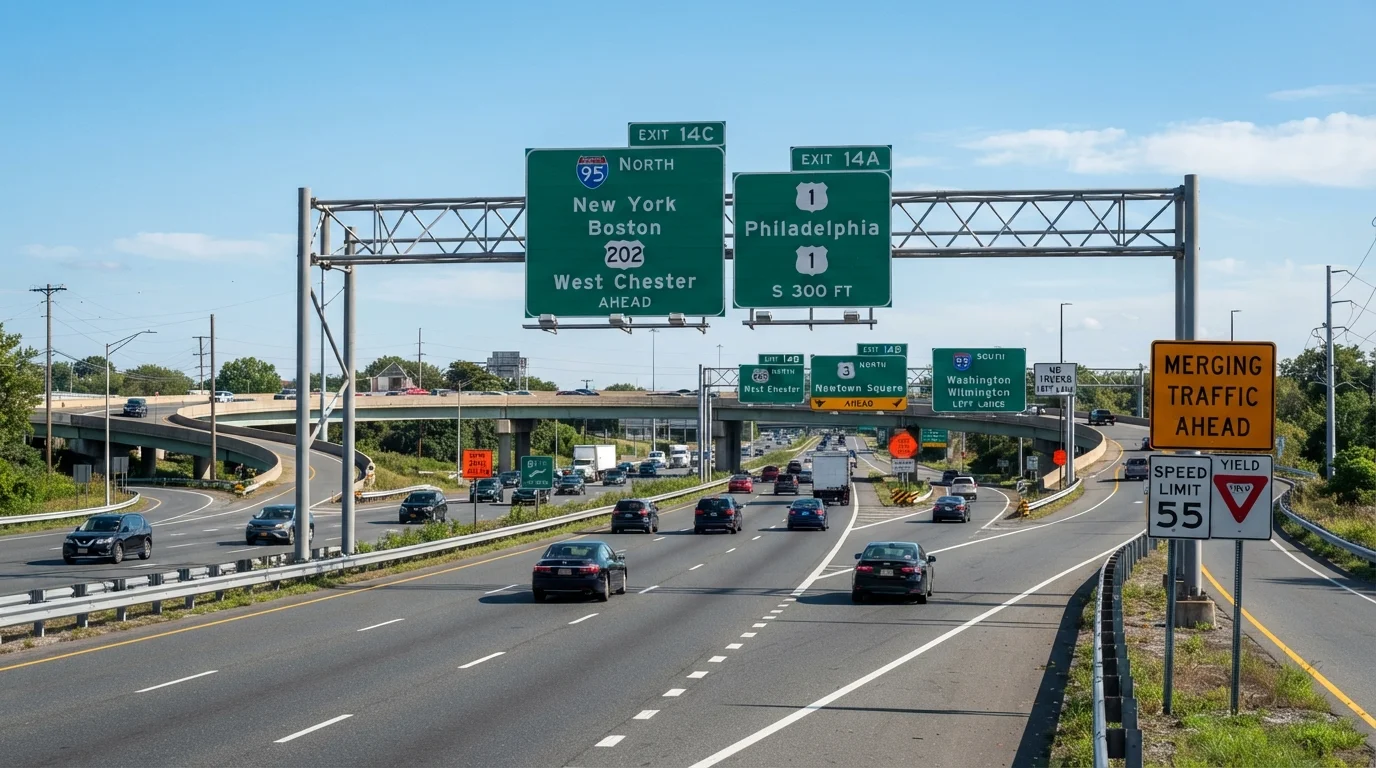
Photo: InsightsVilla.com | Quick Search. Right Info editorial
The Three Sign Categories That Govern Every Road
Every sign on an American road belongs to one of three federally standardized categories, defined by the FHWA in the Manual on Uniform Traffic Control Devices (MUTCD): regulatory, warning, and guide signs. Color and shape are your first clues - before you can read a word.
| Sign shape: Octagon | Always a STOP sign (MUTCD, FHWA) |
| Sign shape: Triangle (inverted) | Always a YIELD sign (MUTCD, FHWA) |
| Warning sign color | Yellow (standard); orange in work zones (MUTCD, FHWA) |
| Regulatory sign color | White background (most); red for stop/yield/prohibition (MUTCD, FHWA) |
| Guide sign - highway routes | Green background (MUTCD, FHWA) |
| Guide sign - traveler services | Blue background (MUTCD, FHWA) |
Regulatory signs (white or red backgrounds) communicate laws and restrictions that drivers must follow. A red octagon is always a stop sign. A white rectangle with black text is typically a speed limit, turn restriction, or parking rule. These carry legal weight - ignoring them can result in citations or liability in a crash.
Warning signs (yellow diamond-shaped) alert you to changing road conditions ahead: curves, intersections, pedestrian crossings, or merge points. They are advisory, not mandatory, but they exist because the road geometry or environment creates real hazard potential.
Guide signs (green, blue, or brown backgrounds) direct you toward destinations, services, and points of interest. Green signs indicate highway routes and distances; blue signs mark motorist services like gas, food, and lodging; brown signs denote parks and recreational areas.
Signs That Regularly Confuse Experienced Drivers
Passing a driver's test once does not guarantee fluency with every sign you'll encounter. Several regulatory and warning signs are routinely misread - even by drivers with years behind the wheel.
Regulatory sign
A sign that communicates a traffic law or restriction that drivers are legally required to obey. Most feature white or red backgrounds with black or white text and symbols.
Warning sign
A diamond-shaped yellow sign that alerts drivers to a road condition or hazard ahead, such as a sharp curve, pedestrian crossing, or intersection. These are advisory rather than legally mandatory.
Guide sign
A sign that provides directional, distance, or service information. Green signs indicate highway routes; blue signs mark traveler services; brown signs identify parks and recreation areas.
MUTCD
The Manual on Uniform Traffic Control Devices, published by the Federal Highway Administration. It is the national standard governing the design, placement, and use of all traffic signs, signals, and road markings in the U.S.
Advisory speed plaque
A yellow rectangular sign posted beneath a warning sign - typically a curve - indicating the recommended safe speed for that specific road feature. It is not a legally enforceable speed limit.
Object marker
A sign with white diagonal stripes used to mark a physical roadside hazard, such as a bridge abutment or barrier end. The stripe direction indicates which side drivers should pass on.
"No outlet" vs. "Dead end": These are not identical. A dead-end sign means the road terminates and you must reverse. A no-outlet sign means the local road network has no through connection - useful to know before committing to a neighborhood detour.
Flashing yellow arrow: Introduced widely after 2009, this signal permits a left turn but requires drivers to yield to oncoming traffic and pedestrians. It does not mean stop - and it does not mean you have a protected green arrow. Many drivers either treat it like a protected turn or freeze unnecessarily.
White diagonal-stripe signs on bridges or overpasses: These are object markers, indicating a physical hazard like a barrier end or abutment. Pass to the right of a single-diagonal marker; pass to either side of a chevron (two diagonals). Ignoring them can mean clipping a fixed structure.
Advisory speed plaques: A yellow placard beneath a curve warning reading "35 MPH" is a recommended speed for that curve - not a regulatory speed limit. You won't be ticketed for going 40, but engineers calculated that advisory speed based on safe lateral forces through the turn. For tips on handling limited visibility around curves, see our article on blind spots and mirror gaps.
Roundabout signs: The circular arrow warning sign with a yield line indicates a roundabout ahead where entering traffic yields. If you're still unclear on how roundabouts work, our roundabout guide walks through the rules step by step.
Temporary and Work Zone Signs Have Priority
Putting Sign Literacy Into Practice
Recognizing a sign is different from reading it in time to act on it. At highway speeds, a driver traveling 65 mph covers roughly 95 feet per second. FHWA sign-legibility standards are designed so that a driver with normal vision can read a standard sign at a minimum distance - but visual clutter, fatigue, and nighttime conditions all cut that window significantly.
Staying sign-literate means actively scanning the road environment rather than fixating on the vehicle ahead. The same alertness that helps you catch a sudden merge warning also helps you spot hazards that compound after dark, when sign reflectivity and your own visual acuity are both reduced.
95 ft/sec
Distance covered per second at 65 mph
Based on standard speed-distance conversion; underscores how little time drivers have to read and respond to signs at highway speeds.
~900
Distinct sign types in the MUTCD
The Federal Highway Administration's Manual on Uniform Traffic Control Devices catalogs hundreds of standardized sign designs used across U.S. roads.
If you notice your vehicle has a dashboard warning you're uncertain about, that's a separate but related skill - our warning lights reference covers what each symbol means and when it demands immediate attention.
Ultimately, confident sign recognition is one piece of a larger picture. Consistent, low-risk driving habits integrate sign awareness with speed management, space cushioning, and road-reading skills that apply in any condition.
The content on this site is for informational purposes only and is not a substitute for professional advice. Always consult a qualified professional for guidance specific to your situation.