
Your Car's Warning Lights, Explained

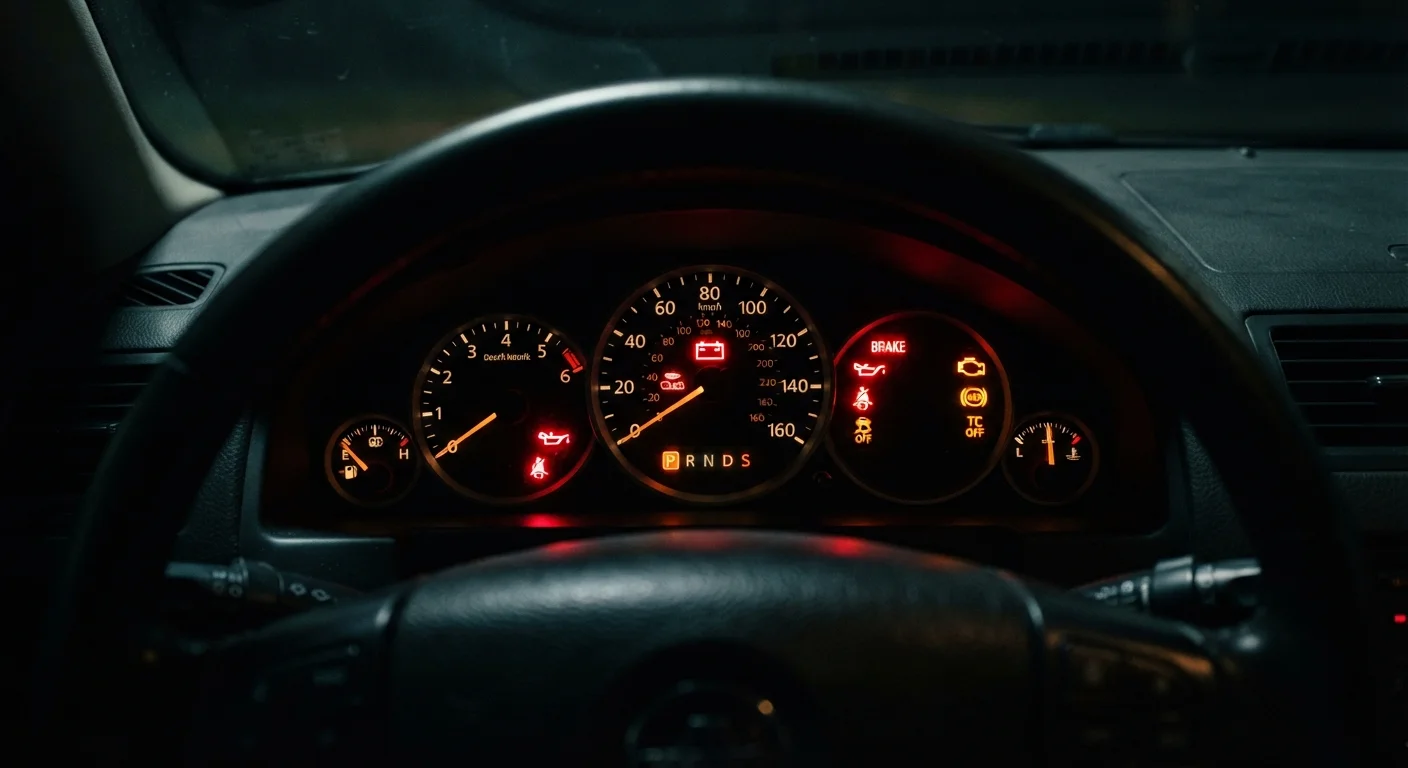
Photo: InsightsVilla.com | Quick Search. Right Info editorial
How Dashboard Warning Lights Work
Your car's onboard diagnostic system constantly monitors dozens of sensors - from engine temperature to tire pressure - and uses dashboard warning lights to flag anything outside normal parameters. These lights follow a general color-coding standard: red means stop or act immediately, yellow/amber means investigate soon, and green or blue means a system is simply active (like high beams or turn signals).
Ignoring a red or amber light rarely makes a problem disappear - it almost always makes it worse and more expensive. A fluid leak flagged early, for example, costs far less to fix than an engine that overheated because the warning was dismissed. For a broader look at keeping repair costs in check, see our guide on keeping car ownership costs manageable.
| Number of warning light colors | 3 primary (red, amber, green/blue) |
| Red light action | Stop driving and address immediately |
| Amber light action | Schedule service within days, not weeks |
| OBD-II mandatory since | 1996 (all U.S. passenger vehicles) (U.S. EPA and CARB regulations) |
| TPMS required on new U.S. vehicles since | 2008 (NHTSA Federal Motor Vehicle Safety Standard 138) |
Lights That Demand Immediate Attention
Some warning lights signal conditions that can damage your vehicle or put you in danger within minutes. If any of the following appear, pull over safely and address the issue before driving further.
- Oil Pressure (red oil can icon): Low or no oil pressure means engine parts are not being lubricated. Driving even a short distance can cause catastrophic engine damage. Check your oil level immediately and do not restart until the cause is identified.
- Engine Temperature (red thermometer in water): Your engine is overheating. Pull over, turn off the engine, and let it cool. Do not open the radiator cap while hot. Our article on car fluids and what happens when you neglect them explains how coolant prevents this scenario.
- Battery (red battery icon): The charging system has failed. You may have minutes of driving left before the car stalls. Head directly to a shop.
- Brake Warning (red circle with exclamation or "BRAKE"): Could mean the parking brake is engaged, brake fluid is low, or there's a hydraulic failure. If the parking brake is off and the light stays on, treat it as an emergency. Learn more about your braking system in our guide to brake pads, rotors, and calipers.
Your Owner's Manual Is the Definitive Reference
Lights That Can Wait - But Shouldn't Be Ignored
Amber or yellow lights generally indicate a developing problem that won't strand you right now, but should be evaluated at your next earliest opportunity - usually within a few days to a week.
- Check Engine (amber engine outline): One of the most misunderstood lights on the road. It can signal something minor like a loose gas cap or something serious like a failing catalytic converter. A mechanic can read the stored diagnostic code in minutes. For a full breakdown, see why your check engine light is on and when it's urgent.
- Tire Pressure (TPMS - horseshoe with exclamation): One or more tires is significantly under-inflated. Proper inflation affects fuel economy, handling, and tire lifespan. Check all four tires with a gauge and inflate to the pressure listed on the driver's door jamb sticker - not the tire sidewall.
- Transmission Temperature: The transmission fluid is running hot, often from towing heavy loads. Allow the vehicle to cool and check fluid levels.
- Service Required / Maintenance Due: A scheduled service interval has been reached. This is informational - not a failure warning - but don't let it lapse too long.
OBD-II System
On-Board Diagnostics II is the standardized electronic system in all U.S. passenger vehicles made after 1996 that monitors engine and emissions performance. When a fault is detected, it stores a diagnostic trouble code (DTC) that a mechanic or scan tool can read.
Diagnostic Trouble Code (DTC)
A standardized alphanumeric code stored by your vehicle's computer when a sensor detects an out-of-range reading. Mechanics use these codes to identify the source of a warning light rather than guessing.
TPMS
Tire Pressure Monitoring System - a sensor-based system required on all U.S. passenger vehicles sold after 2008 that alerts drivers when one or more tires drops significantly below the recommended pressure.
Charging System
The combination of the alternator, battery, and associated wiring that keeps your vehicle's electrical systems powered while the engine runs and keeps the battery charged.
Coolant
A liquid mixture (typically water and antifreeze) that circulates through the engine to absorb heat and carry it to the radiator. Low or degraded coolant is a leading cause of engine overheating.
The content on this site is for informational purposes only and is not a substitute for professional advice. Always consult a qualified professional for guidance specific to your situation.