
Defensive Driving vs. Aggressive Driving: A Mindset Comparison

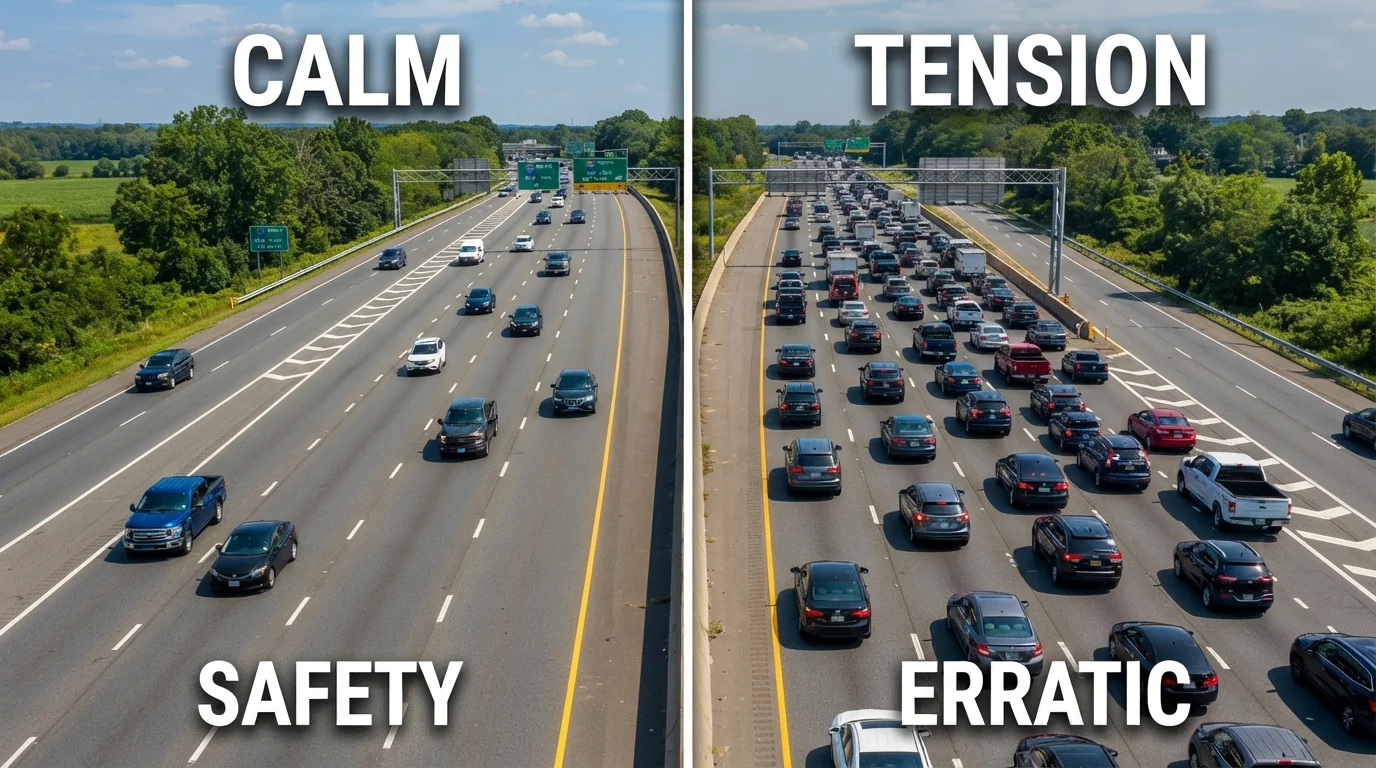
Photo: InsightsVilla.com | Quick Search. Right Info editorial
Key Takeaways
- Defensive driving reduces crash risk by anticipating hazards rather than reacting to them after the fact.
- Aggressive driving behaviors - speeding, tailgating, cutting off - are linked to a significant share of U.S. traffic fatalities.
- The mindset difference between the two styles is more important than any single driving technique.
- Defensive drivers manage space, speed, and attention simultaneously to create a safety buffer.
- Aggressive driving can escalate into road rage, which carries serious legal and physical consequences.
What Each Driving Style Actually Means
Defensive driving is a structured approach to operating a vehicle that prioritizes anticipation over reaction. A defensive driver continuously scans the road ahead, maintains safe following distances, adjusts speed to conditions, and assumes that other drivers may make unpredictable moves. The goal is to create enough time and space to respond safely - before a situation becomes an emergency.
Aggressive driving, by contrast, is defined by the National Highway Traffic Safety Administration (NHTSA) as a pattern of unsafe behaviors including speeding, following too closely, weaving between lanes, running red lights, and failing to yield. It is rooted in impatience and a disregard for shared road space. Unlike a single lapse in judgment, aggressive driving is a consistent behavioral pattern that compounds risk with every mile.
Understanding the two as mindsets - not just individual actions - is what separates drivers who consistently avoid crashes from those who routinely create near-misses. For a broader look at the habits that hold up over time, see our guide to safe driving habits that experienced low-risk drivers use every trip.
| Criterion | Defensive Driving | Aggressive Driving |
|---|---|---|
| Core mindset | Anticipate and prevent hazards | React to frustration; prioritize speed |
| Following distance | 3+ seconds in normal conditions | Tailgating; minimal buffer |
| Speed selection | Adjusted to conditions and visibility | At or above limit regardless of conditions |
| Attention focus | Full road environment, mirrors, hazards | Destination-focused; emotionally reactive |
| Crash risk | Significantly reduced | Significantly elevated |
| Legal exposure | Minimal | Reckless driving, road rage charges possible |
| Impact on other road users | Creates a safer shared environment | Raises risk for surrounding vehicles |
How Each Mindset Shapes Real-World Decisions
The clearest difference between defensive and aggressive driving shows up in how each mindset handles three universal driving demands: space management, speed selection, and attention allocation.
A defensive driver follows the three-second rule - maintaining at least three seconds of following distance in normal conditions and extending that gap in rain, fog, or darkness. This single habit alone dramatically reduces rear-end collision risk because it provides reaction time. An aggressive driver, by contrast, tailgates routinely, collapsing that safety buffer to near zero. At 60 mph, the average human reaction time of 1.5 seconds means a vehicle travels roughly 132 feet before the driver even begins to brake.
Speed selection tells a similar story. Defensive drivers treat posted speed limits as a baseline, not a floor, and reduce speed proactively when visibility drops or road conditions change. Aggressive drivers often treat limits as obstacles, accelerating in merges and treating yellow lights as invitations. The physics are unforgiving: stopping distance increases with the square of speed, meaning a car traveling at 60 mph requires nearly four times the stopping distance of one at 30 mph.
Attention is where aggressive driving perhaps does its most invisible damage. An aggressive driver is frequently distracted by frustration, competition with other vehicles, or the goal of reaching a destination faster. A defensive driver scans mirrors every five to eight seconds, watches for brake lights two or three cars ahead, and treats intersections as high-risk zones requiring full attention - especially relevant in low-visibility situations covered in our article on why night driving is more dangerous than it feels.
66%
Traffic fatalities involving aggressive driving
The AAA Foundation for Traffic Safety has estimated that aggressive driving behaviors are a factor in roughly two-thirds of U.S. traffic fatalities.
132 ft
Distance traveled before braking at 60 mph
At 60 mph, a vehicle covers approximately 132 feet during an average driver's 1.5-second reaction time before braking even begins.
4×
Increase in stopping distance from 30 to 60 mph
Because stopping distance increases with the square of speed, a vehicle at 60 mph needs roughly four times the stopping distance of one at 30 mph.
The Escalation Risk: When Aggression Becomes Road Rage
Aggressive driving exists on a spectrum. At its lower end, it's impatient lane changes and running late to work. At its upper end, it escalates into road rage - deliberate, targeted confrontation with another driver. The AAA Foundation for Traffic Safety has documented that aggressive driving behaviors are a contributing factor in a substantial majority of U.S. traffic crashes that result in fatalities.
Road rage incidents can involve brake-checking, deliberate blocking, verbal confrontation, or in extreme cases, physical assault. Legally, road rage can result in reckless driving charges, license suspension, or criminal prosecution depending on state law. A defensive driver's response to a road rage encounter is straightforward: avoid eye contact, don't retaliate, increase distance, and if threatened, drive to a public place or a police station rather than home.
New drivers are especially vulnerable to being drawn into aggressive exchanges before they have the experience to manage them well. Our coverage of the moments new drivers get wrong most often addresses this and other high-risk patterns in early driving experience. Parents helping teens build road awareness will also find relevant guidance in our teen driver safety resource.
Defensive Driving Courses Have Real Benefits
The content on this site is for informational purposes only and is not a substitute for professional advice. Always consult a qualified professional for guidance specific to your situation.