
eSIM vs. Physical SIM Card: How Each One Works and When It Matters

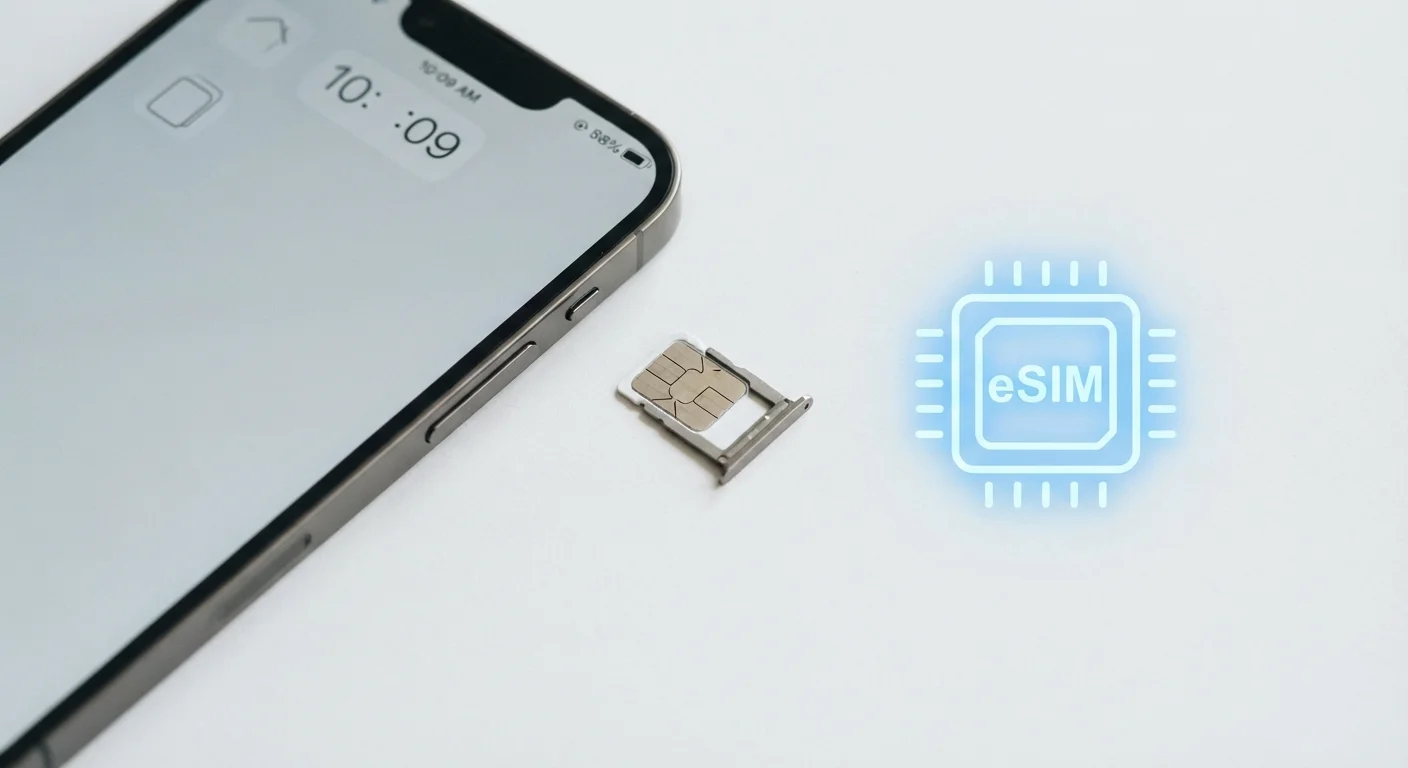
Photo: InsightsVilla.com | Quick Search. Right Info editorial
Key Takeaways
- An eSIM is a chip permanently embedded in your phone; it stores carrier credentials digitally and never needs to be swapped out.
- Physical SIM cards are removable plastic cards that carry your carrier identity and can be moved between compatible devices.
- eSIMs allow multiple carrier profiles on one device simultaneously, while a physical SIM typically supports one carrier per slot.
- Not all carriers or countries fully support eSIM yet, making physical SIMs the more universally compatible choice in some regions.
- Many modern smartphones support both formats, giving users flexibility depending on their situation.
What Each Format Actually Is
A SIM card - short for Subscriber Identity Module - is what tells a cellular network who you are. It stores a unique identifier that links your device to your carrier account, enabling calls, texts, and mobile data. Without some form of SIM, your phone can't connect to any cellular network.
A physical SIM is a small plastic card (most commonly nano-SIM size today) that slides into a tray on the side of your phone. It's a piece of hardware you can hold, remove, and insert into another device. Your carrier identity lives on that card.
An eSIM (embedded SIM) performs the same function, but the chip is soldered directly onto your phone's circuit board at the factory. There's nothing to insert or remove. Instead of a physical card, your carrier credentials are downloaded and stored digitally - a process sometimes called provisioning. You can learn more about the broader hardware ecosystem in our guide to how modern smartphones actually work.
How They Differ in Practice
The core difference is physical versus digital. With a physical SIM, changing carriers means getting a new card - either mailed to you or picked up at a store. With an eSIM, switching often means scanning a QR code or tapping through a carrier app, and the new profile downloads in minutes.
| Criterion | eSIM | Physical SIM Card |
|---|---|---|
| Form factor | Built-in chip, no physical card | Removable plastic card |
| Carrier switching | Download new profile digitally | Swap or request a new card |
| Multiple profiles | Yes, multiple stored simultaneously | One card per slot |
| Universal compatibility | Requires carrier/device support | Supported by nearly all carriers globally |
| Transferability | Tied to device; digital transfer only | Move card to any compatible device |
| International travel | Add local plan remotely in minutes | Buy or obtain local SIM on arrival |
| Setup process | QR code or carrier app | Insert card; usually auto-activates |
One practical distinction that matters for many users: eSIM devices can hold multiple carrier profiles simultaneously. You might keep your primary U.S. carrier active while downloading a local European plan for a trip, then switch between them in your phone's settings. A physical SIM slot, by contrast, holds one card at a time - though many phones offer dual physical SIM slots in some markets.
There's also a durability angle. Physical SIM trays are a minor mechanical point of failure - they can accumulate lint, get bent, or wear out over time. eSIM eliminates that vulnerability, which is one reason some device makers have started removing physical SIM trays entirely from newer models.
Where Each One Has the Edge
Physical SIMs still hold real advantages in certain situations. They're universally compatible with virtually every carrier on the planet and with older devices. If you're handing a phone down to a family member or reselling it, popping out your SIM takes two seconds and leaves the device completely clean. No account access is needed.
eSIM shines when convenience and flexibility matter most. International travelers can pre-purchase a data plan digitally before landing. People managing personal and work lines on one phone avoid carrying two devices. And because there's no tray to open, eSIM devices can more easily achieve better water resistance ratings.
~50%
Global smartphones with eSIM support by mid-2020s
Industry analysts have estimated that roughly half of all new smartphones shipped globally were eSIM-capable by the mid-2020s, with adoption accelerating year over year.
2017
Year eSIM first appeared in a consumer smartwatch
The Apple Watch Series 3 was among the first mainstream consumer wearables to include eSIM functionality, signaling broader adoption to come in phones.
One area where eSIM still lags: support isn't uniform. Availability depends on your carrier, your country, and your specific device. While major U.S. carriers - including the large national networks - have broadly adopted eSIM, smaller regional carriers and many prepaid services continue to rely primarily on physical cards. Always verify eSIM compatibility with your specific carrier before assuming it's available.
Locked Phones and eSIM Transfers
Which Format Is Right for You?
For most people buying a flagship smartphone today in the U.S., eSIM support is already built in and ready to use alongside a physical SIM slot. That dual capability means you don't have to choose - you can use both formats depending on the situation.
If you rarely travel internationally, never switch carriers, and value the simplicity of a transferable card, your physical SIM does the job perfectly well. If you're a frequent traveler, a dual-line user, or just someone who prefers to manage everything digitally, eSIM offers genuine quality-of-life improvements.
The format your phone uses is just one part of the broader picture of how your device connects to the world. For a wider look at how operating system choices shape your phone experience, see our breakdown of Android vs. iOS differences.
The content on this site is for informational purposes only and is not a substitute for professional advice. Always consult a qualified professional for guidance specific to your situation.