
The Science Behind Why Animals Play

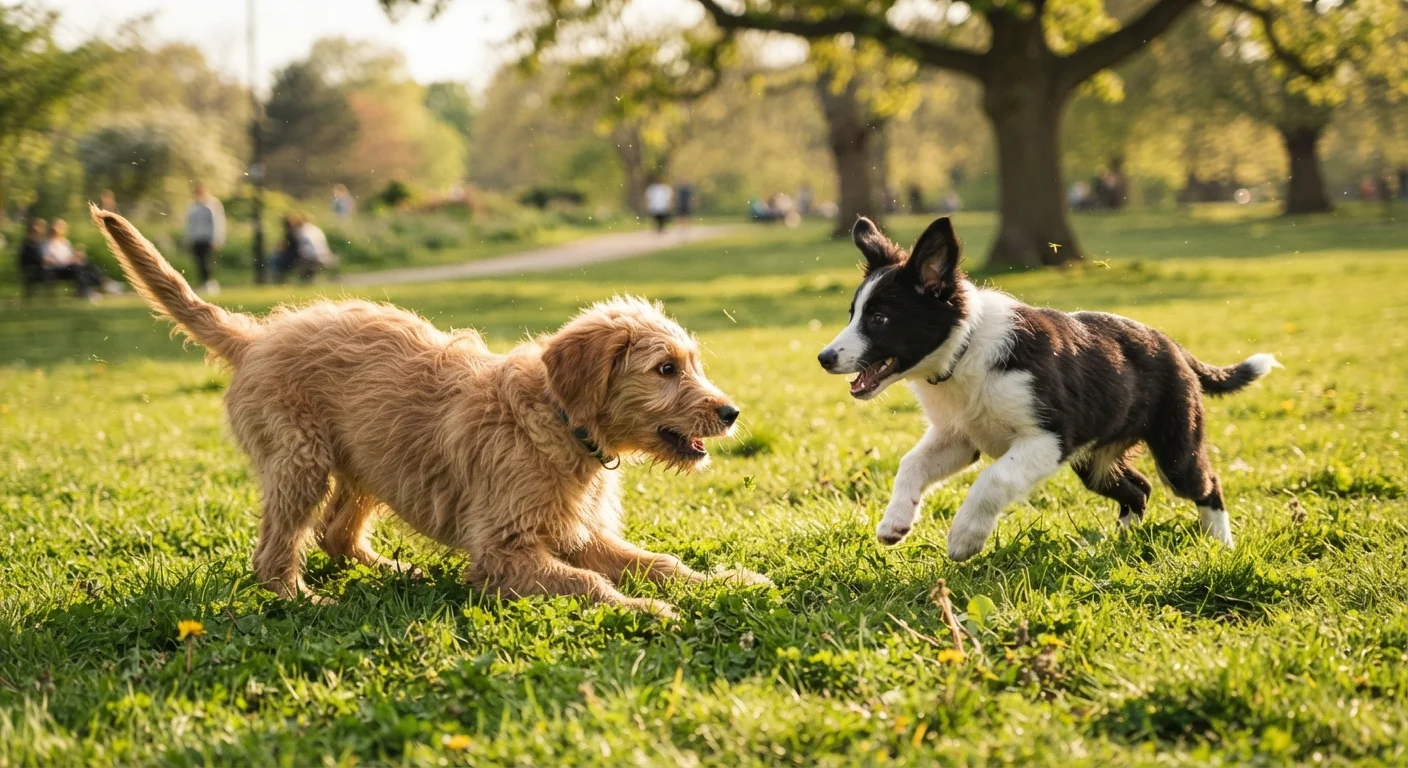
Photo: InsightsVilla.com | Quick Search. Right Info editorial
Key Takeaways
- Play is a biologically hardwired behavior, not just an optional amusement for animals.
- It supports critical functions including brain development, motor skill refinement, and social bonding.
- The "play bow" and similar signals help animals communicate safe, non-threatening intent before and during play.
- Deprivation of play in young animals is linked to social deficits and increased stress responses.
- Domestic pets that lack adequate play opportunities often show recognizable signs of boredom and frustration.
- Understanding why animals play helps owners provide more meaningful enrichment.
Play Is a Biological Imperative, Not a Luxury
When a kitten pounces on a dangling string or a puppy launches into a play bow, it looks like pure fun - and it is. But underneath that lighthearted surface lies a sophisticated biological process shaped by millions of years of evolution. Play is not an accident or a byproduct of having spare energy. It is a deeply conserved behavior that researchers have documented across hundreds of species.
Scientists who study animal behavior - a field called ethology - have found that play activates the brain's reward circuits in ways that closely resemble eating or social bonding. This neurological fingerprint suggests that play is intrinsically motivated: animals are biologically driven to seek it out, not just incidentally stumbling into it.
One key insight is that play is most concentrated during critical developmental windows. Young animals that engage in regular social play develop stronger neural connections in areas governing impulse control, emotional regulation, and social cognition. In other words, play is the brain's training ground. Understanding this helps explain why pets that lack adequate stimulation often display behavioral problems that go beyond simple restlessness.
15+
Mammal orders observed engaging in play
Research compiled by Gordon Burghardt (University of Tennessee) identified play behavior across more than 15 mammalian orders, as well as in birds, reptiles, and some fish.
~50%
Reduction in play-fighting after social isolation
Studies in juvenile rats showed that animals raised in social isolation engaged in significantly less play behavior and displayed heightened stress responses compared to socially reared counterparts.
3 types
Core categories of animal play behavior
Ethologists broadly classify animal play into locomotor play, object play, and social play - each engaging overlapping but distinct neural pathways.
The Three Core Functions of Play
Animal behaviorists generally identify three overlapping reasons why play exists and persists across species:
- Skill rehearsal: Play allows young animals to practice behaviors - hunting, chasing, wrestling - in a low-risk setting. A young predator that never play-fights may struggle to execute real predatory sequences as an adult. The same principle applies to prey animals that rehearse escape maneuvers through playful chasing games.
- Social calibration: Social play teaches animals how to read and send social signals accurately. Animals learn to modulate bite strength, interpret body language, and recognize when a partner wants to stop. This is closely tied to broader animal communication systems that govern everything from threat displays to affection.
- Brain development: Play stimulates the production of brain-derived neurotrophic factor (BDNF), a protein that supports the growth and maintenance of neurons. Studies in juvenile rats have shown that those deprived of play show measurably reduced development in the prefrontal cortex - the region responsible for decision-making and emotional control.
These functions don't operate in isolation. A single play session can simultaneously build motor skills, strengthen a social relationship, and promote neurological growth.
“Play is the fundamental mechanism by which young mammals - and many birds - learn the rules of social engagement. It is not optional behavior; it is the curriculum.”
— Gordon M. Burghardt, Comparative psychologist and animal behavior researcher, University of Tennessee
How Animals Signal That Play Is Safe
One of the most fascinating aspects of animal play is the communication system animals use to establish and maintain it. Because play often involves behaviors that resemble aggression - biting, chasing, pinning - animals have evolved reliable signals that effectively say: "This is just for fun."
The dog's play bow (front end lowered, rear end raised) is one of the most studied examples. Research by animal behaviorist Marc Bekoff found that dogs use the play bow not just to initiate play, but to reaffirm playful intent after an interaction becomes accidentally intense. It functions as a real-time clarification signal.
Similar metacommunication exists across species. Ravens engage in acrobatic aerial maneuvers with no survival function. Juvenile bears show a "relaxed open-mouth" face that signals non-threatening intent. These signals are surprisingly consistent within species, suggesting they are at least partially hardwired rather than purely learned - which connects directly to the broader question of what is instinct versus learned behavior in pets.
Watch for the Play Bow in Your Dog
What This Means for Pet Owners
Understanding play as a biological need - rather than a cute bonus - changes how owners should approach their pet's daily routine. For domestic animals, play is often the primary outlet for instincts that would otherwise be expressed through hunting, foraging, or complex social interaction in the wild. Without adequate play, those drives don't disappear; they re-emerge as chewing, digging, excessive vocalization, or attention-seeking behaviors.
The type of environment a pet lives in also shapes its play needs significantly. As explored in our guide to indoor vs. outdoor pet care, animals with less environmental complexity rely more heavily on owner-initiated play to meet their enrichment requirements.
Interactive play - where the owner participates directly - carries an added benefit: it builds the human-animal bond through shared positive experience. Research into how pets read human emotions suggests that domestic animals are attuned to our engagement levels and respond to genuine interaction differently than they do to passive toy access alone.
Providing regular, varied play isn't just enriching - it is one of the most evidence-supported things an owner can do for a pet's long-term behavioral health.
Frequently Asked Questions
The content on this site is for informational purposes only and is not a substitute for professional advice. Always consult a qualified professional for guidance specific to your situation.