
Animal Communication: How Different Species Signal Danger, Safety, and Affection

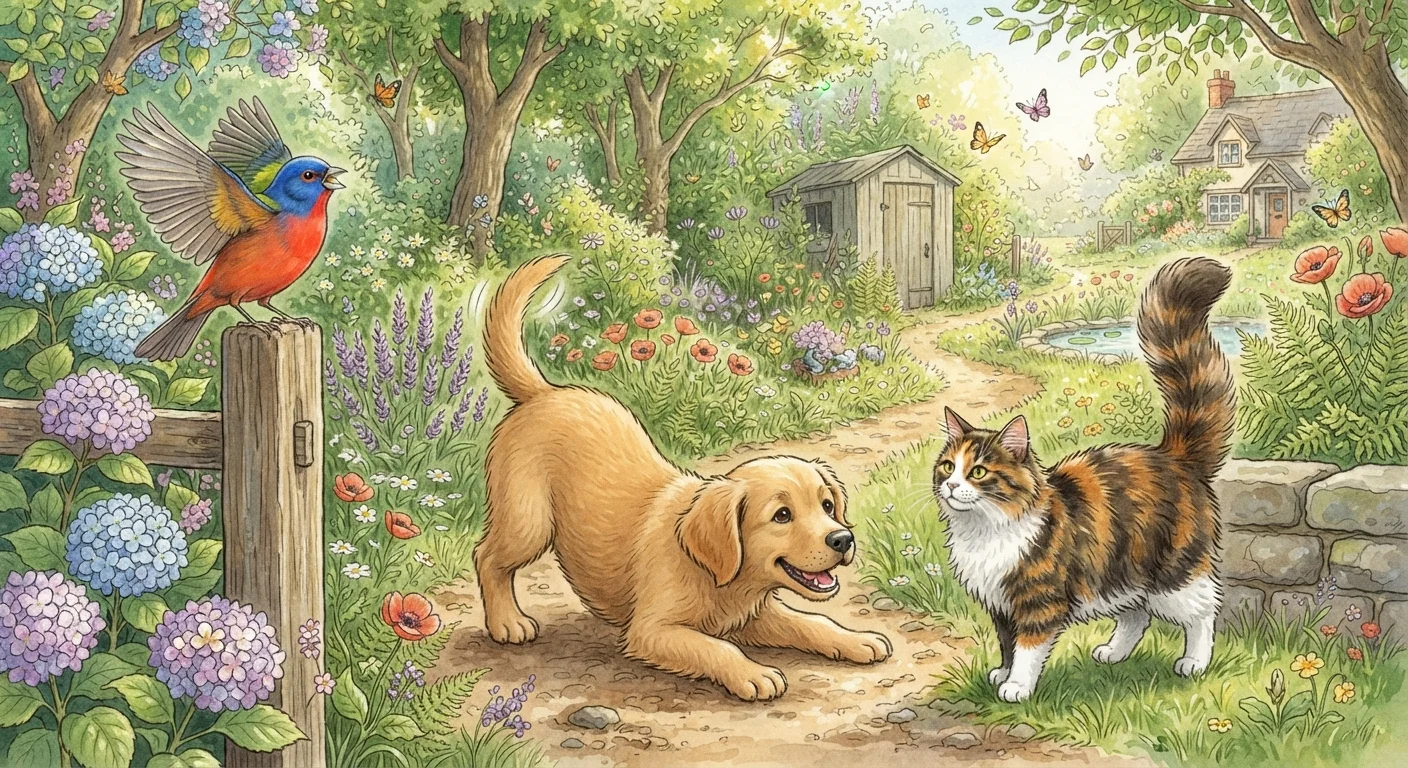
Photo: InsightsVilla.com | Quick Search. Right Info editorial
Key Takeaways
- Animals use at least four distinct channels - sound, posture, scent, and color - to send precise social messages.
- Alarm signals are often species-specific but can cross species lines, especially between prey animals sharing habitat.
- Appeasement and calming signals reduce conflict and are used actively by dogs, primates, and birds.
- Affection displays in animals are rooted in bonding behaviors tied to survival and social cohesion.
- Pet owners who learn to read these signals can respond more accurately to their animals' needs.
- Context is critical - the same signal can mean different things depending on the situation and species.
Why Animal Communication Matters
Communication is not a human invention. Every animal species on Earth has evolved ways to send and receive information critical to survival - who is a threat, who is safe, and who is a potential ally or mate. Understanding those signals gives us a window into animal cognition and, for pet owners, a practical toolkit for better care.
Animal communication spans four main channels: acoustic (sounds and vocalizations), visual (posture, color, and movement), chemical (scent and pheromones), and tactile (touch). Most species rely on combinations of all four, though the balance differs dramatically between birds, mammals, reptiles, and insects.
Research in animal behavior - a field called ethology - has shown that many signals are highly structured, not random. Researchers such as Nikolaas Tinbergen and Konrad Lorenz established in the mid-20th century that animals produce consistent, predictable signals in predictable contexts. That science continues to advance today. For everyday pet owners, it connects directly to questions like: Is my cat scared or content? Is my dog relaxed or escalating? See our side-by-side guide to cat and dog body language for a deeper look at how two familiar species use identical postures for opposite meanings.
Signaling Danger: Alarm Calls and Warning Displays
Danger signals are arguably the most studied category of animal communication, because the stakes - survival - are highest. These signals have two audiences: potential predators (to warn them off) and social group members (to coordinate escape).
Alarm Calls
Ground squirrels and prairie dogs produce distinct calls for aerial predators versus ground predators, essentially encoding predator type in a single vocalization. Vervet monkeys famously use three separate alarm calls - one for eagles, one for snakes, one for leopards - and group members respond differently to each. Birds in mixed-species flocks often recognize and respond to the alarm calls of species other than their own.
Visual Warning Displays
Many animals use color or posture to signal danger directly to a threat. A cat that arches its back, puffs its tail, and turns sideways is maximizing its apparent size. A rattlesnake's coil and rattle is a warning before a strike. Poison dart frogs advertise toxicity through vivid coloration - a strategy called aposematism - so predators learn to avoid them without a costly encounter.
Recognize Escalating Aggression Sequences
For pet owners, recognizing escalating warning signals in dogs is especially important. A dog that freezes, stiffens, shows a hard stare, and then growls is progressing through a warning sequence. Interrupting that sequence safely - by removing the trigger - is far preferable to waiting for a bite. See our guide to animal aggression types for detail on what drives each stage.
Communicating Safety and Calm
Just as animals signal danger, they actively signal the absence of it. These appeasement or calming signals reduce social conflict and allow animals to coexist in groups without constant fighting.
Norwegian dog trainer Turid Rugaas documented a wide repertoire of calming signals in dogs - yawning, lip-licking, turning the head away, sniffing the ground - that dogs use to defuse tension with each other and with humans. While debate continues among behaviorists about the full range and intent of these signals, the core observation that dogs use visual cues to reduce social tension is well supported.
In primates, grooming serves a dual role: it removes parasites and also reinforces social bonds and signals mutual safety. Among birds, allopreening - one bird preening another - functions similarly. Even in fish, certain species engage in synchronized swimming that signals group cohesion and calm.
Use Calming Signals Yourself
Expressing Affection Across Species
Affection in animals is not sentimental anthropomorphism - it is a measurable set of behaviors tied to bonding hormones, particularly oxytocin. Research published in Science in 2015 found that mutual gazing between dogs and their owners increased oxytocin levels in both species, suggesting a genuine bonding loop similar to the one observed between human parents and infants.
“The question is not whether animals have emotions, but whether we have the courage to acknowledge them - and to let that acknowledgment change how we treat the animals in our care.”
— Marc Bekoff, Professor Emeritus of Ecology and Evolutionary Biology, University of Colorado Boulder; author on animal emotions and cognition
Species-Specific Affection Signals
- Cats: Slow blinking, head-bunting (rubbing the head against you), and the upright tail with a curl at the tip are affection markers. Allogrooming between cats is a reliable indicator of social bonding.
- Dogs: Relaxed body leaning, soft eye contact, and play bows signal positive social intent. Tail wagging is context-dependent - a high, stiff wag can indicate arousal, while a loose, wide wag at mid-height tends to signal friendliness.
- Birds: Parrots and corvids display affection through vocalization mimicry, regurgitation feeding (a high compliment), and mutual grooming. A bird that seeks close physical contact with its owner is expressing social bonding.
Understanding how your pet expresses affection helps you respond in kind and appreciate how pets read your emotional cues in return.
~18
Distinct vocalizations documented in domestic cats
Researchers studying feline communication estimate cats use a wider vocal range with humans than with other cats, suggesting a learned communicative adaptation.
3
Predator-specific alarm calls used by vervet monkeys
Classic field studies by Dorothy Cheney and Robert Seyfarth established that vervets produce functionally distinct calls for eagle, snake, and leopard threats.
~300M
Scent receptors in a dog's nose (estimated)
Compared to roughly 6 million in humans, this gives dogs a chemical communication capability orders of magnitude beyond our own perception.
Scent and Chemical Communication
Scent is invisible to most humans but is among the richest communication channels in the animal kingdom. Mammals have specialized scent glands - around the face, paws, and flanks - that deposit chemical information onto surfaces and onto each other.
Dogs investigating a fire hydrant or a patch of grass are reading a layered chemical bulletin board: which animals passed by, their sex, reproductive status, and rough time of visit. Cats mark territory with facial pheromones deposited through cheek rubbing - a behavior that signals familiarity and ownership rather than aggression.
Insects elevate chemical communication to extraordinary complexity. Honey bees use pheromone blends to signal alarm (isopentyl acetate, released near the stinger), recruit foragers, and identify their queen. Ant colonies coordinate foraging, defense, and waste removal almost entirely through chemical trails and contact signals.
For pet owners, scent matters practically. A cat that stops using its litter box, a dog that suddenly over-marks indoors, or a rabbit that chin-marks new objects are all expressing something through chemical channels that warrants attention - and sometimes a veterinary check, since pain can alter scent-marking behavior. Our article on signs that a pet is in pain covers why behavioral changes like these are worth taking seriously.
What This Means for Pet Owners
Learning to read animal communication is a practical skill, not just an intellectual curiosity. Misreading a warning signal can lead to bites or scratches. Misreading affection signals can result in missed bonding opportunities. And overlooking subtle stress signals can allow low-level anxiety to escalate into chronic behavioral problems.
Practical Steps
- Observe context, not just the signal. A growl during play is different from a growl at the dinner bowl. A tail wag at greeting differs from one during a resource guarding moment.
- Watch for signal sequences. Single signals are less informative than sequences. A dog that yawns once may be tired; one that yawns, licks its lips, and looks away in response to your approach is communicating discomfort.
- Respect the signal. When an animal communicates that it needs space, give space. Punishing warning signals - like growling - does not eliminate the underlying emotion; it removes the warning.
- Learn your individual animal. Individual variation is real. Some cats slow-blink readily; others show affection primarily through proximity. Baseline observation is the best reference point.
Animal communication is also a two-way street. Pets actively interpret our signals, and play behavior is one of the clearest windows into how they engage with us socially. The more fluently you can read and respond to your pet's signals, the stronger and safer that relationship becomes.
This article is for general educational purposes only and is not a substitute for professional veterinary or behavioral guidance. If your pet displays sudden changes in communication behavior, consult a licensed veterinarian or certified animal behaviorist.
The content on this site is for informational purposes only and is not a substitute for professional advice. Always consult a qualified professional for guidance specific to your situation.