
Reading Body Language in Cats and Dogs Side by Side

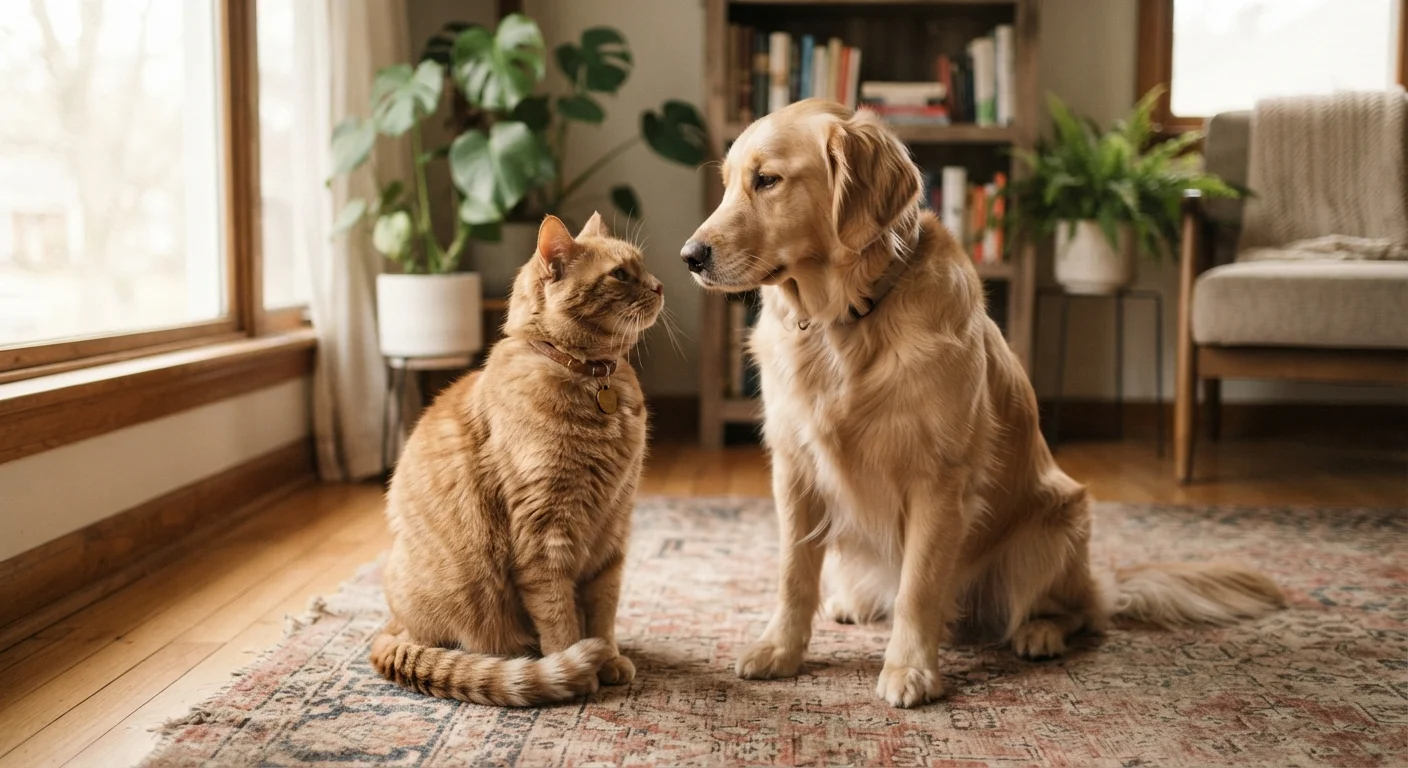
Photo: InsightsVilla.com | Quick Search. Right Info editorial
Key Takeaways
- Cats and dogs often use identical body signals to communicate completely different emotional states.
- A slow blink signals relaxed trust in cats; in dogs it typically indicates uncertainty or mild stress.
- A wagging tail means excitement in dogs but can signal irritation or overstimulation in cats.
- Reading context alongside individual signals produces far more accurate interpretations.
- Misreading these cues is one of the most common causes of conflict in multi-pet households.
Why the Same Signal Means Different Things
Cats and dogs evolved along separate social paths. Dogs descended from pack-living wolves and developed rich, expressive signaling geared toward cooperation with others. Cats, by contrast, are largely solitary hunters whose communication system evolved for brief, critical interactions - not continuous group dialogue. When humans domesticated both species, neither completely rewired its ancestral signaling system. The result is a surprising overlap in physical gestures that carry opposite meanings across species lines.
Understanding these differences isn't just trivia. Misread signals between cats and dogs - or between a pet and its owner - can escalate into avoidance, aggression, or chronic stress. For a deeper look at how animals interpret human emotional cues in return, see how pets read human emotions.
Signal by Signal: The Key Differences
| Signal | What It Means in Cats | What It Means in Dogs | |
|---|---|---|---|
| Slow blink | Relaxed trust, positive affiliation | Uncertainty, calming gesture, mild stress | |
| Rapidly moving tail | Irritation, overstimulation, or predatory focus | Excitement, positive arousal, friendly intent | |
| Upright tail | Friendly greeting, confidence | Alertness or mild arousal - context-dependent | |
| Exposed belly | Relaxed comfort; not an invitation to touch | Submission and trust; often an invitation to pet | |
| Flattened ears | Fear, aggression, or defensive posture | Submission, fear, or appeasement | |
| Avoiding eye contact | Can signal discomfort or disinterest | Appeasement, calming signal, or deference |
Eyes and Blinking
A slow, deliberate blink from a cat is a well-documented affiliative gesture - researchers, including those publishing in Scientific Reports (2020), have demonstrated that cats respond positively to slow blinks from humans and are more likely to approach afterward. It is widely interpreted as a signal of relaxed trust.
In dogs, a slow blink or prolonged eye closure in an unfamiliar or tense situation typically functions as a calming signal - a term ethologist Turid Rugaas used to describe behaviors dogs use to reduce social tension. It communicates uncertainty or deference, not contentment.
Tail Position and Movement
A rapidly wagging dog tail reliably correlates with arousal and positive social engagement, particularly when the whole hindquarters move. But tail position matters too: research published in Current Biology found that dogs wag more to the right when viewing stimuli they approach positively. For a detailed breakdown of feline tail signals, see what your cat's tail is actually telling you.
In cats, a rapidly lashing or thumping tail signals irritation, overstimulation, or predatory focus - essentially the opposite of a dog's happy wag. A gently curled or upright tail with a slight hook at the tip, however, is a cat's equivalent of a friendly greeting.
Exposed Belly
A dog rolling onto its back and exposing its belly is a clear invitation for interaction in most contexts - a submissive and trusting posture. A cat in the same position is a more complex signal. While it does reflect comfort, it is not reliably an invitation to touch the abdomen; many cats will scratch or bite if their belly is approached, because the exposed posture may simply reflect deep relaxation rather than a request for contact.
Watch the Whole Body, Not One Feature
Reading the Full Picture: Context Is Everything
No single signal should be interpreted in isolation. Body language is a system, and skilled observers read the whole animal at once - ear position, muscle tension, weight distribution, vocalizations, and environmental context all contribute to an accurate read.
A cat with flattened ears, dilated pupils, and a lashing tail is clearly distressed regardless of whether it's lying down. A dog with a wagging tail but a stiff body and hard stare may be signaling conflict, not friendliness. Behavioral stress signals - like excessive yawning, lip-licking in dogs, or excessive grooming in cats - can also accompany illness. If behavioral changes arise suddenly without an obvious cause, they may warrant veterinary attention. See signs your pet may be sick for a practical reference on when professional evaluation is appropriate.
In households where cats and dogs share space, recognizing species-specific signals can prevent misunderstandings that escalate into conflict. A dog approaching a cat with enthusiastic body language - tail up and wagging, bouncy posture - may be trying to play, but a cat reading that same approach may interpret it as a threat display and react defensively.
Don't Assume Cross-Species Compatibility
The content on this site is for informational purposes only and is not a substitute for professional advice. Always consult a qualified professional for guidance specific to your situation.