
Widely Held Beliefs About American Culture That Don't Hold Up

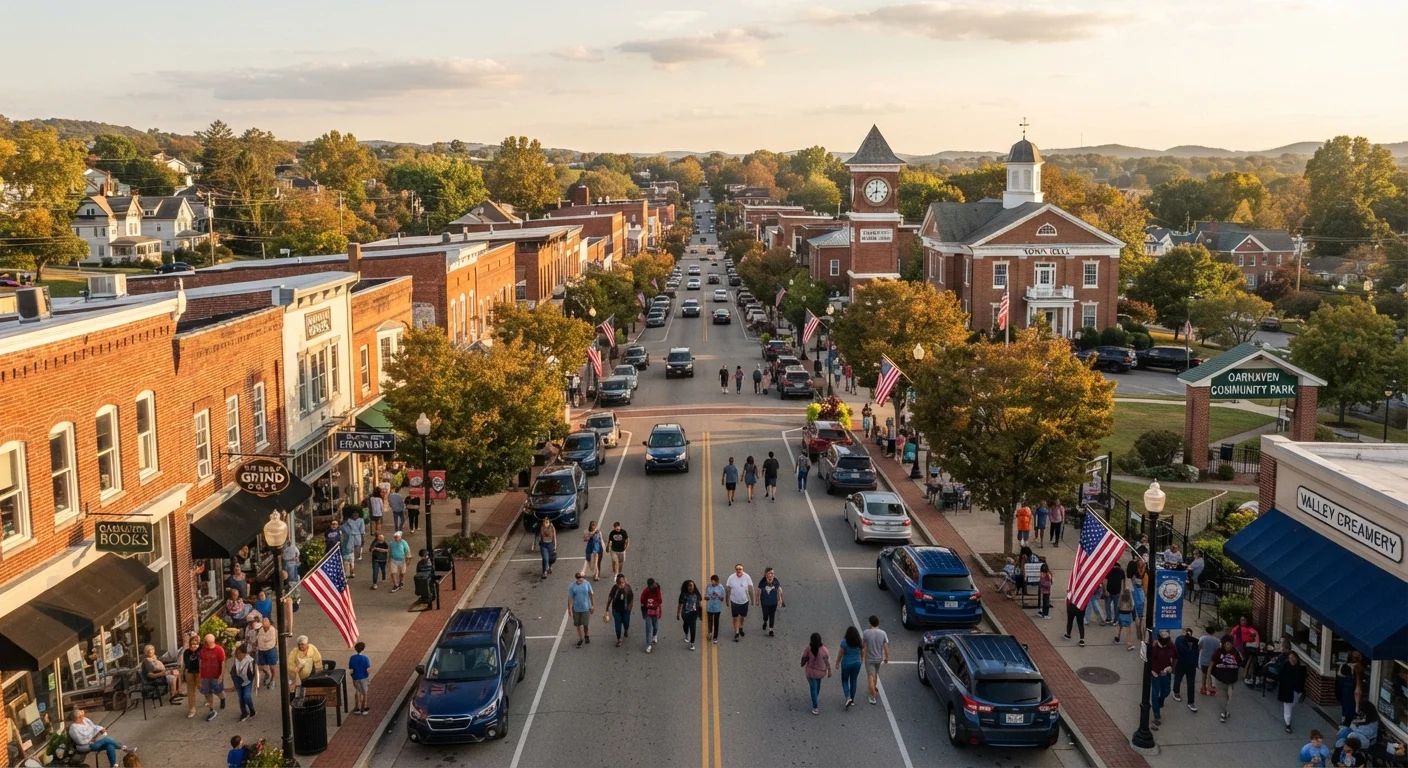
Photo: InsightsVilla.com | Quick Search. Right Info editorial
Key Takeaways
- Many widely repeated beliefs about American culture are oversimplifications or outright myths.
- Americans are far less socially isolated and less uniformly individualistic than common narratives suggest.
- Regional variation means there is rarely one single "American" way of doing anything.
- Economic mobility in the U.S. is more complicated than the classic rags-to-riches story implies.
- Understanding real patterns helps build more honest conversations about shared American life.
Why These Myths Stick
Cultural stereotypes about Americans circulate globally - and many Americans repeat them about themselves. Some originate from genuine patterns that get overgeneralized. Others come from the outsized influence of American media and entertainment, which exports specific images of American life far more than it exports the quieter, more complicated reality. A few are simply inherited assumptions that have never been tested against actual evidence.
Understanding where these beliefs come from doesn't mean dismissing them entirely. It means reading them more carefully - asking what's real, what's exaggerated, and what gets left out entirely. That's a useful habit for thinking about how different generations of Americans see their own culture, too.
Myth
Americans are uniquely obsessed with individualism and don't value community.
Fact
Americans demonstrate strong communal ties through volunteering, civic organizations, religious communities, and informal mutual aid - often in ways that go unnoticed.
The image of the hyper-independent American loner is culturally persistent, but it doesn't capture the full picture. The U.S. consistently ranks among the world's top countries for volunteer rates, and community institutions - from neighborhood associations to local churches to potluck traditions - remain deeply woven into everyday social life. The American potluck is itself a small but telling example: a tradition built entirely around shared effort and collective belonging.
Individualism is a real cultural value, but it coexists - sometimes uneasily - with equally real communitarian impulses. The tension between the two is part of what makes American culture genuinely complex.
Myth
America is a true meritocracy where hard work always leads to upward mobility.
Fact
Research consistently shows that social mobility in the U.S. is more limited than the popular narrative suggests, with birthplace and family income strongly predicting adult outcomes.
The rags-to-riches story is one of America's most enduring myths, and it holds emotional power for good reasons. But economists and sociologists have documented for decades that where you're born - both geographically and in terms of family income - strongly shapes where you end up. Intergenerational mobility in the U.S. is lower than in several comparable wealthy countries.
That doesn't mean effort is irrelevant or that upward movement is impossible - it clearly happens. But the idea that a level playing field automatically rewards hard work obscures the structural factors that make the climb easier for some and far steeper for others. The American Dream takes many forms, and understanding its real shape matters.
Myth
American culture is one big, unified thing - there's a single set of values all Americans share.
Fact
The U.S. is one of the most regionally diverse nations in the world; food, customs, humor, and even core values shift dramatically from state to state and community to community.
Outsiders - and even many Americans themselves - sometimes speak of "American culture" as if it were singular. In practice, regional identity runs deep. The way holidays are observed in rural Louisiana looks nothing like how they're marked in suburban Utah or coastal Massachusetts. Regional holiday traditions alone reveal how varied national life really is.
Immigration history, climate, religious tradition, and local economy all shape distinct regional cultures that can feel almost foreign to one another. This diversity is one of America's defining features - not a flaw in the national fabric, but part of what it actually is.
Myth
Americans are uniquely bad at learning other languages because they just don't care.
Fact
The U.S. is home to tens of millions of multilingual speakers, and monolingualism is largely a product of geography and policy rather than cultural indifference.
It's true that English-only monolingualism is more common in the U.S. than in many European countries. But that comparison tends to ignore scale and context. The U.S. is geographically vast, and for most of its history English has functioned as sufficient for domestic navigation in a way that isn't true for, say, a small European nation bordered by four other language communities.
Meanwhile, Spanish is spoken by tens of millions of Americans as a first or co-equal language, and immigrant communities across the country maintain languages ranging from Mandarin to Tagalog to Arabic. The monolingual American is a real phenomenon - but it's far from the whole story.
Myth
Americans are defined by their fast-food habits and have little real food culture.
Fact
The U.S. has a rich and regionally specific food culture - from Cajun cooking to Appalachian traditions to Indigenous foodways - that rarely gets the same recognition as fast food.
Fast food is genuinely a significant part of the American food landscape. But reducing American eating to drive-throughs misses the richness of regional culinary traditions that have developed over centuries. Low-country cooking in the Carolinas, the barbecue traditions of Texas and Kansas City, the green chile cuisine of New Mexico - these aren't footnotes; they're living food cultures with deep community roots.
Home cooking also persists in ways that stereotypes don't capture. If you're curious about how kitchen myths distort our view of everyday American cooking, the cooking myths home cooks still believe are worth examining on their own terms.
Myth
Americans don't care about history or tradition - they're always focused on the new.
Fact
Americans often have strong, deeply felt attachments to local history, family traditions, and community heritage that simply don't map onto European frameworks for "tradition."
The accusation that Americans lack a sense of history is a frequent criticism - often from observers who equate tradition with old buildings or centuries-old institutions. But tradition in America frequently operates at smaller, more local scales: family reunion rituals, the particular way a community marks a holiday, the oral histories kept alive in immigrant households, or the cultural meaning of the American road trip as a rite of passage.
American attachment to place and memory is real, even when it doesn't look like the European model. Understanding that requires looking past the most visible exports of American culture to what actually happens in living rooms and neighborhood streets.
What the Reality Actually Looks Like
Across each of these myths, a common thread emerges: the real picture of American life is messier, more varied, and ultimately more interesting than the shorthand version. Americans are neither the rugged individualists of frontier mythology nor the passive consumers that critics sometimes describe. The truth lives somewhere in the middle - and differs enormously depending on where in this enormous country you happen to be standing.
63 million
Americans who volunteered formally in a recent year
According to the AmeriCorps agency's research, tens of millions of Americans contribute volunteer hours annually, reflecting strong communal engagement.
~41 million
Spanish speakers in the U.S.
U.S. Census Bureau data estimates over 40 million people speak Spanish at home, making the U.S. one of the largest Spanish-speaking nations in the world.
50%
Chance of exceeding parents' income - varies widely by region
Research by economists Raj Chetty and colleagues found the probability of upward mobility differs dramatically by county, undermining any uniform national narrative.
The same logic that helps us question cultural myths applies to personal ones. If you've ever accepted a belief at face value without checking whether it holds up - whether about fitness or social norms - the habit of asking "is this actually true?" is worth building. American culture, like most complex things, rewards a second look.
Don't Replace One Stereotype With Another
The content on this site is for informational purposes only and is not a substitute for professional advice. Always consult a qualified professional for guidance specific to your situation.