
Everyday Banking From Scratch

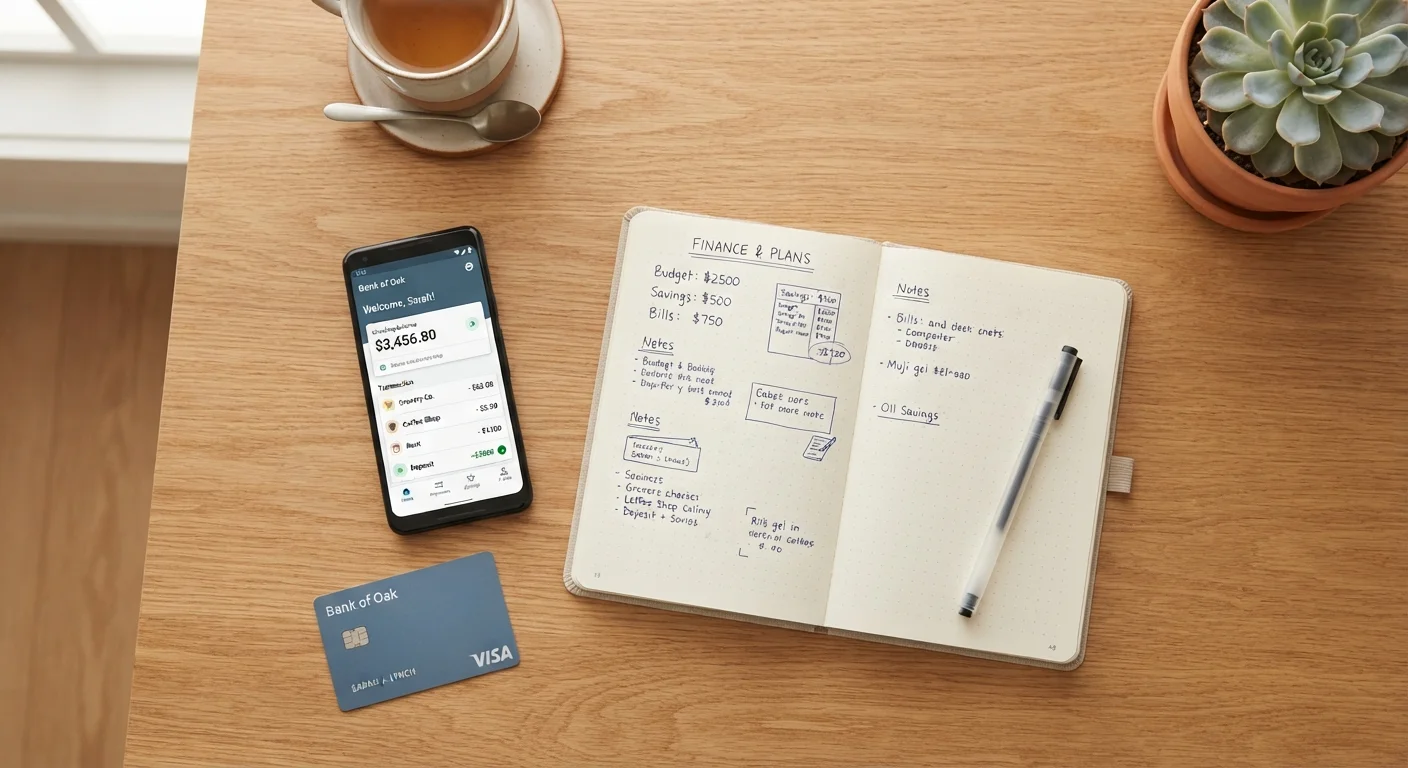
Photo: InsightsVilla.com | Quick Search. Right Info editorial
Key Takeaways
- Checking accounts handle daily spending; savings accounts are for money you're setting aside.
- FDIC insurance protects deposits up to $250,000 per depositor at most U.S. banks.
- Routing and account numbers are the two key identifiers tied to every bank account.
- Monthly statements and transaction histories help you catch errors and track spending.
- Most banks offer mobile apps and direct deposit, making basic banking easier to manage.
Why a Bank Account Matters
Banking isn't just for people with a lot of money - it's a practical tool for anyone who earns or spends money. Without a bank account, everyday tasks like cashing a paycheck, paying bills online, or saving toward a goal become harder and often more expensive.
People without bank accounts frequently rely on check-cashing services and money orders, which charge fees for services that a bank account typically provides for free or at lower cost. A basic account gives you a secure place to hold money, a way to pay others, and a record of your transactions that's useful for budgeting or applying for credit later on.
Checking account
A bank account designed for frequent, everyday transactions like purchases, bill payments, and ATM withdrawals.
Savings account
A bank account intended for money you don't plan to spend right away, usually earning a small amount of interest over time.
Interest
Money the bank pays you for keeping a balance in a savings account, expressed as a percentage of your balance per year.
Direct deposit
An electronic transfer that sends your paycheck or other recurring payment straight into your bank account without a paper check.
FDIC insurance
Federal protection that reimburses depositors up to $250,000 per account category if an insured bank fails.
Overdraft
What happens when you spend more than your available balance - the bank may decline the payment or cover it and charge a fee.
Routing number
A nine-digit number that identifies your specific bank and is used to direct electronic payments to the right institution.
ACH transfer
An electronic bank-to-bank transfer processed through the Automated Clearing House network, typically taking one to three business days.
The Two Accounts Most People Start With
Most people begin with two types of accounts: a checking account for day-to-day spending, and a savings account for money they want to set aside.
- Checking accounts are built for frequent use. You can pay bills, make debit card purchases, and withdraw cash as often as you need. They usually don't pay much interest, but that's not what they're designed for.
- Savings accounts are designed to hold money you don't need right away. They typically earn interest - meaning the bank pays you a small percentage on your balance - and are better suited for an emergency fund or a specific savings goal.
For a closer look at how these two accounts compare, see our article on checking vs. savings accounts.
Start Simple With Two Accounts
How Deposits, Withdrawals, and Transfers Work
Three basic movements of money form the backbone of everyday banking:
- Deposits
- Adding money to your account. This can happen via direct deposit from an employer, a mobile check deposit through your bank's app, an ATM deposit, or an in-person deposit at a branch.
- Withdrawals
- Taking money out. You can withdraw cash at an ATM or teller window. When you pay with a debit card, the money is pulled directly from your checking account - that's also considered a withdrawal.
- Transfers
- Moving money between accounts, either within the same bank or to a different one. Transfers between banks happen through the ACH network - a system that processes electronic payments and usually takes one to three business days.
Banks also issue a routing number and an account number for each account. These two numbers work together to direct money to and from the right place, whether for direct deposit, automatic bill pay, or a wire transfer.
Funds Availability Varies by Deposit Type
Basic Tools Every Account Holder Should Know
Modern banking comes with tools that make managing your money easier once you understand what each one does.
- Debit card: Linked directly to your checking account. Useful for everyday purchases and ATM withdrawals.
- Mobile banking app: Lets you check balances, deposit checks, transfer money, and review transactions from your phone.
- Direct deposit: Allows your employer to send your paycheck straight to your bank account, typically faster than a paper check.
- Online bill pay: Schedule payments to utilities, landlords, or lenders through your bank, often without needing stamps or paper checks.
- Bank statements: A monthly summary of all account activity. Reviewing yours regularly helps you catch errors or unauthorized charges. Learn how to read one with our guide to the anatomy of a bank statement.
For unfamiliar terms you encounter along the way, the banking terms glossary defines common vocabulary in plain English.
Keeping Your Money Safe
Most U.S. banks are insured by the Federal Deposit Insurance Corporation (FDIC). This means if a bank fails, your deposits are protected up to $250,000 per depositor, per institution, per ownership category - at no cost to you. Credit unions offer equivalent protection through the National Credit Union Administration (NCUA).
This federal backing makes keeping money in a bank far safer than storing cash at home. To understand exactly what is and isn't covered, see our article on what FDIC insurance covers.
Beyond deposit insurance, protect your accounts by:
- Using strong, unique passwords for online banking
- Never sharing your PIN or login credentials
- Monitoring your account regularly for unfamiliar transactions
- Reporting lost or stolen cards to your bank immediately
Watch Out for Monthly Maintenance Fees
Next Steps in Your Banking Journey
Once you understand the basics, you can build on them. A well-organized setup typically separates spending from saving, keeps fees low, and grows with your needs over time. Our guide on building a simple banking setup walks through how to structure accounts with a clear purpose.
If you're ready to open your first account, our step-by-step account opening walkthrough explains exactly what to expect, from gathering your ID to making your first deposit.
Banking also connects directly to broader financial habits. Once you have an account, pairing it with a simple budget helps you make the most of what you earn. The Budgeting Basics hub is a good place to start.
Consumer Financial Protection Bureau (CFPB) - Banking Basics
The CFPB offers free, plain-language guides on bank accounts, fees, and your rights as a consumer. A reliable starting point for unbiased information.
FDIC BankFind Suite
A free search tool from the FDIC that lets you verify whether a specific bank is federally insured before you open an account.
MyCreditUnion.gov
Run by the NCUA, this site explains how credit unions work and helps you find federally insured credit unions near you as an alternative to traditional banks.
This article is for general informational purposes only and does not constitute financial advice. Consult a qualified financial professional for guidance specific to your situation.
Frequently Asked Questions
The content on this site is for informational purposes only and is not a substitute for professional advice. Always consult a qualified professional for guidance specific to your situation.