
How Interest Compounds on Credit Card Balances

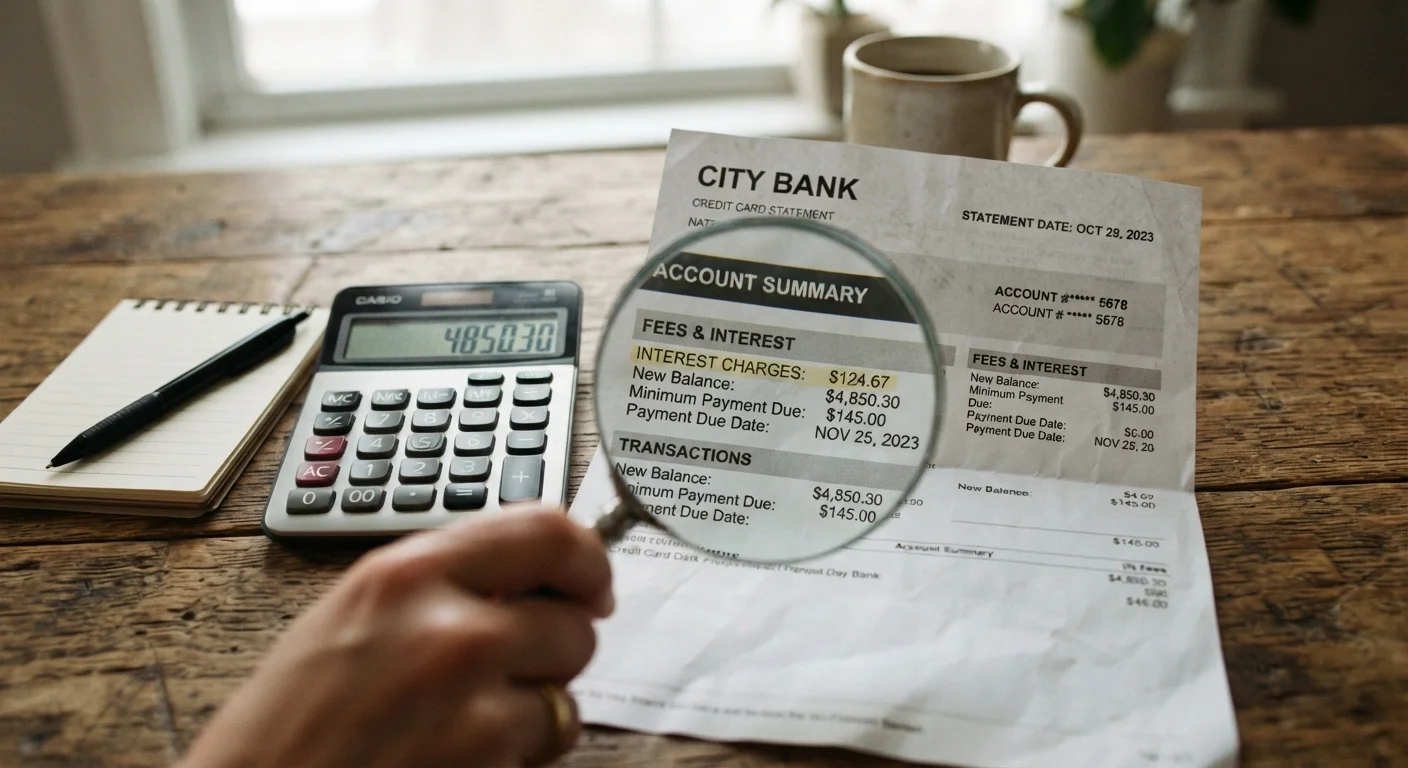
Photo: InsightsVilla.com | Quick Search. Right Info editorial
Key Takeaways
- Credit card interest compounds daily on most U.S. cards, not monthly.
- Your APR divided by 365 gives the daily periodic rate applied to your balance.
- Interest is calculated on your average daily balance over the billing cycle.
- Paying in full each month during the grace period eliminates interest charges entirely.
- Carrying even a small balance forward triggers interest on your entire next cycle's purchases.
Where the Daily Periodic Rate Comes From
Every credit card has an annual percentage rate (APR) - the yearly cost of borrowing expressed as a percentage. But credit card issuers don't apply that rate once a year. They break it down into a daily periodic rate (DPR) by dividing the APR by 365.
For example, a card with an 20% APR has a DPR of roughly 0.0548% per day (20 ÷ 365). That fraction looks tiny, but it's applied to your balance every single day you carry one. If you're new to how APR and other credit terms work, the credit and debt glossary covers the definitions you'll encounter most often.
20%+
Average credit card APR in recent years
Federal Reserve data has shown average credit card interest rates exceeding 20% APR for accounts assessed interest.
365x
How often interest compounds per year
Most U.S. credit cards apply the daily periodic rate every day of the year, meaning compounding occurs 365 times annually.
21-25 days
Typical grace period length
Under the Credit CARD Act of 2009, issuers must provide at least 21 days between statement closing and the payment due date.
How Your Average Daily Balance Is Calculated
Issuers don't just look at your balance on the last day of the cycle. They calculate your average daily balance - your balance on each individual day of the billing period, added together and divided by the number of days in the cycle.
This matters because every purchase you make raises that average, and every payment you make lowers it. Making a large payment early in the cycle can meaningfully reduce the interest you're charged, even if your end-of-cycle balance looks the same as it would have otherwise.
Here's the basic formula issuers use:
- Add up your balance at the end of each day in the billing cycle.
- Divide by the number of days in the cycle to get the average daily balance.
- Multiply the average daily balance by the DPR and by the number of days in the cycle to get the interest charge.
Pay Early to Lower Your Average Daily Balance
The Grace Period: Your Window to Avoid Interest Entirely
Here's the part many cardholders miss: if you pay your full statement balance by the due date, most issuers won't charge any interest on purchases - even though you used the card all month. This window is called the grace period, and it typically runs 21 to 25 days from your statement closing date.
The catch is that grace periods usually disappear the moment you carry a balance. Once you don't pay in full one month, interest often starts accruing on new purchases immediately, not just on the leftover balance. That's a significant shift in how the card works for you.
Cash Advances Often Have No Grace Period
For a broader look at how credit works before you borrow, see our introduction to credit and debt.
Why Compounding Works Against You on Debt
Compounding is powerful when it's building your savings - but on a credit card balance, the same mechanism works in reverse. Unpaid interest gets added to your balance, and tomorrow's interest is calculated on that larger number. The longer a balance sits, the faster the total grows.
This stands in direct contrast to how compounding can benefit you in a savings context. As explained in our piece on compound interest in savings, time is the variable that matters most - and on debt, more time means more cost, not more growth.
Your credit card balance is also part of your overall credit picture. Outstanding balances affect your credit utilization ratio, which lenders watch closely.
This article is for general informational purposes only and does not constitute financial or legal advice. For guidance specific to your situation, consider consulting a qualified financial professional.
Frequently Asked Questions
The content on this site is for informational purposes only and is not a substitute for professional advice. Always consult a qualified professional for guidance specific to your situation.