
Fixed vs. Variable Expenses: What the Difference Means for Your Budget

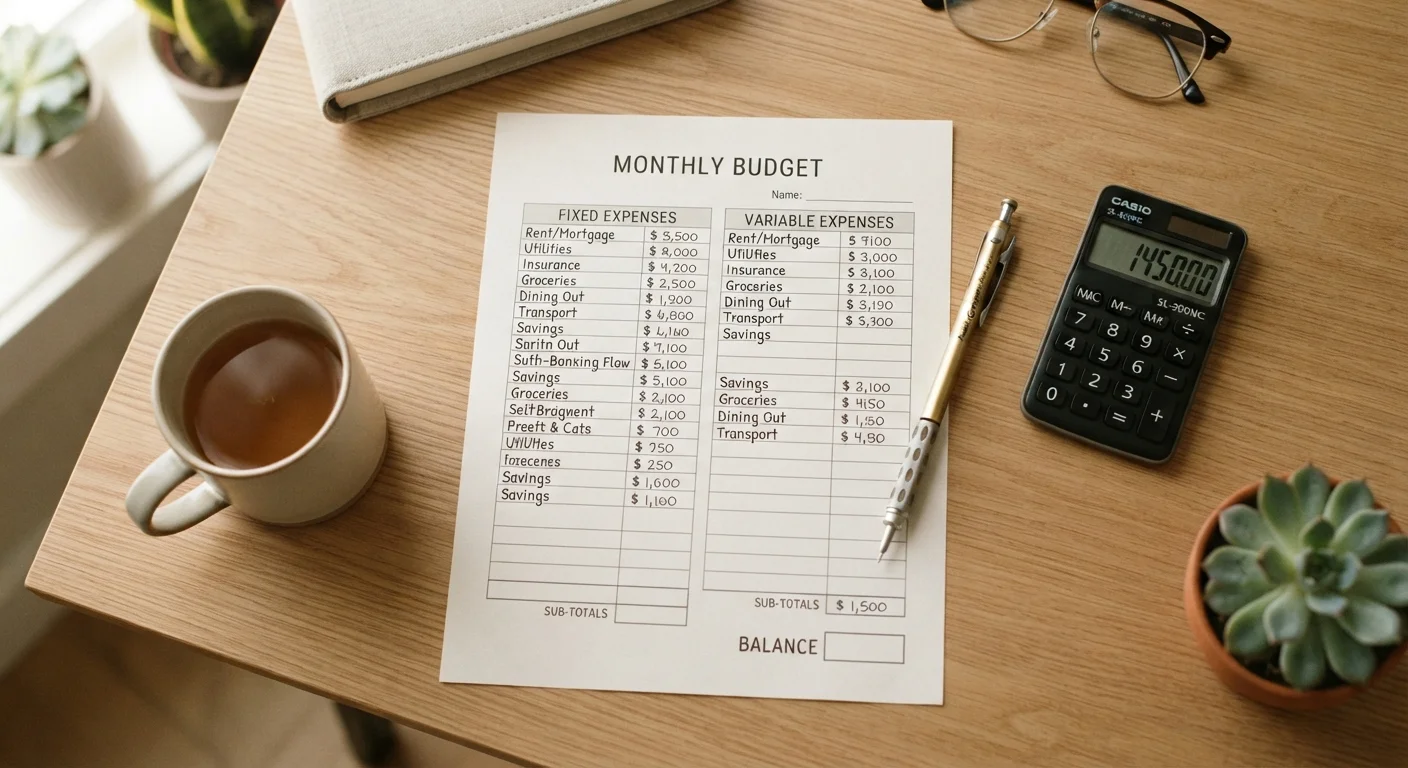
Photo: InsightsVilla.com | Quick Search. Right Info editorial
Key Takeaways
- Fixed expenses stay the same each month and are harder to change on short notice.
- Variable expenses fluctuate and are the most realistic place to find budget savings.
- Knowing which category each cost falls into helps you plan more accurately.
- Some expenses - like utilities - can sit in between, requiring a different tracking approach.
- Cutting variable spending is faster; reducing fixed costs takes planning but delivers lasting relief.
What Makes an Expense 'Fixed'
A fixed expense is any cost that stays the same from month to month, regardless of how much you use a product or service. Rent or mortgage payments, car loan payments, health insurance premiums, and many subscription plans all qualify. You owe the same amount whether you had a great month financially or a rough one.
Fixed expenses tend to be contractual or recurring by design, which is why they're hard to change quickly. You can't decide on Tuesday that you'd like to pay less rent by Friday. Adjusting them usually requires advance planning - renegotiating a lease, refinancing a loan, or switching insurance providers. For more on terms like these, see our plain-English budgeting glossary.
The practical upside of fixed expenses is predictability. Once you've listed them all, you know exactly what you owe each month before you spend a single discretionary dollar.
What Makes an Expense 'Variable'
A variable expense is any cost that changes based on your behavior or circumstances. Groceries, gas, restaurant meals, clothing, entertainment, and utility bills are all variable to some degree. Spend more, pay more. Pull back, and the bill drops.
Variable expenses are where most people have the most day-to-day control over their money. If you're trying to find room in a tight budget, this is where to look first. Reducing takeout meals, consolidating errands to save on gas, or auditing streaming services can produce results within a single billing cycle.
That said, not all variable expenses are truly discretionary. Groceries are variable - the amount fluctuates - but eating is non-negotiable. The goal isn't to eliminate variable spending but to manage it intentionally. For people with unpredictable paychecks, managing variable costs is especially critical. Budgeting on an irregular income requires extra attention to which expenses can flex when earnings fall short.
| Criterion | Fixed Expenses | Variable Expenses |
|---|---|---|
| Amount each month | Stays the same | Changes based on behavior |
| Examples | Rent, loan payments, insurance | Groceries, gas, dining out |
| Ease of cutting quickly | Difficult - usually contractual | Easier - adjust spending habits |
| Budgeting role | Sets the monthly floor | Where flexibility lives |
| Long-term reduction | High impact if achieved | Moderate, cumulative impact |
The Gray Area: Semi-Variable Expenses
Some costs don't fit neatly into either category. Electricity is a common example - you receive a bill every month (fixed timing), but the amount depends on how much power you use (variable amount). Phone bills with overage charges, water bills, and even grocery spending that spikes during the holidays all behave this way.
When a Bill Is Both Fixed and Variable
A useful approach is to treat these as capped variables: estimate a reasonable monthly average based on past bills, budget to that number, and note when you go over. Over time, you'll develop a realistic range rather than being surprised each month.
How This Changes the Way You Budget
Understanding the fixed-versus-variable split fundamentally changes how you approach a budget. Here's the basic workflow most planners recommend:
- List all fixed expenses first. These form your non-negotiable monthly floor. Add them up - this is the minimum income you need to cover every month.
- Estimate your variable expenses. Look at two or three months of bank or credit card statements and average out what you actually spend in each category.
- Compare both totals to your take-home income. Whatever's left after fixed and estimated variable costs is your discretionary buffer - or a gap you need to address.
This structure also helps when budgeting with a partner. Fixed costs are often shared and straightforward to split; variable costs tend to spark more negotiation. Budgeting as a couple or household gets easier once both people agree on which shared costs are locked in and which are flexible.
If you're ready to put a system around this, see a budgeting method matched to your money personality or explore envelope budgeting versus digital spending trackers to find a format that fits how you think.
~33%
Share of income spent on housing for many U.S. renters
U.S. Census Bureau data consistently shows housing - a fixed expense - is the largest single cost for most American households.
$300+
Monthly food spending per person, on average
The Bureau of Labor Statistics Consumer Expenditure Survey estimates average food spending for American consumers, illustrating how large variable costs can be.
This article is for general informational purposes only and does not constitute personalized financial advice. Consider consulting a qualified financial professional for guidance specific to your situation.
The content on this site is for informational purposes only and is not a substitute for professional advice. Always consult a qualified professional for guidance specific to your situation.