
What a Balanced Plate Actually Looks Like

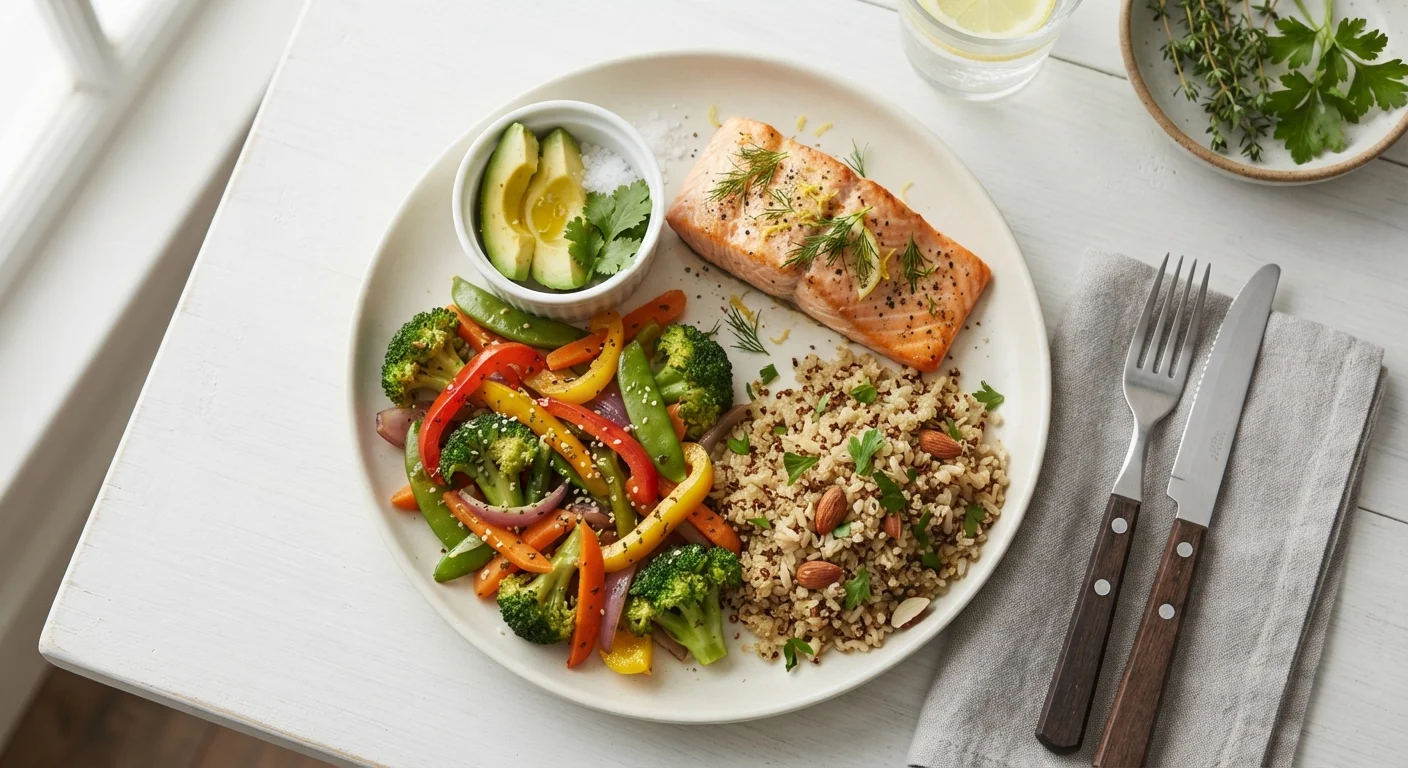
Photo: InsightsVilla.com | Quick Search. Right Info editorial
Key Takeaways
- Half your plate should ideally be vegetables and fruits, with vegetables taking the larger share.
- Quality protein - beans, fish, poultry, eggs, or nuts - supports muscle, immunity, and satiety.
- Whole grains provide fiber and sustained energy compared to refined carbohydrates.
- Healthy fats from sources like olive oil, avocado, and nuts are a beneficial part of most meals.
- Consistent meal patterns matter more than perfection at any single sitting.
- Individual needs vary - consult a registered dietitian for personalized nutrition guidance.
Why Visual Plate Models Work Better Than Rules
Calorie counts, macronutrient grams, and food-group percentages are hard to track at the dinner table. That's why nutrition researchers and public health bodies have leaned into plate-based visual models - they translate complex science into a practical mental template anyone can apply in real time.
The core insight is simple: the proportions of food groups on a plate matter more than any single ingredient. You don't need to weigh food or count servings. Instead, a glance at your plate can tell you a lot about whether a meal is broadly nutritious. For a deeper look at how to interpret the numbers behind your food, reading a Nutrition Facts label is a useful companion skill.
9 in 10
Americans don't eat enough vegetables
According to CDC data, only about 1 in 10 U.S. adults meets federal fruit and vegetable intake recommendations.
~28g
Daily fiber most Americans fall short of
The Dietary Guidelines for Americans note that dietary fiber is a nutrient of public health concern due to widespread underconsumption.
~50%
Of U.S. calories come from ultra-processed foods
Research published in BMJ Open estimated that ultra-processed foods account for roughly half of daily caloric intake among American adults.
The Four Sections of a Genuinely Balanced Plate
Evidence-based plate models generally converge on four main components:
- Vegetables and fruits (about half the plate): Non-starchy vegetables - leafy greens, broccoli, peppers, tomatoes - should make up the largest share, with fruit rounding out the rest. These foods deliver fiber, vitamins, minerals, and phytonutrients that support a wide range of body systems.
- Quality protein (about a quarter of the plate): Fish, poultry, eggs, legumes, tofu, and nuts are protein sources that also bring beneficial fats and micronutrients. Processed meats and very high intakes of red meat appear less favorably in large dietary studies.
- Whole grains (about a quarter of the plate): Brown rice, oats, quinoa, whole-wheat bread, and similar foods provide sustained energy and fiber. Refined grains - white rice, white bread - are less nutrient-dense but not inherently harmful in moderate amounts within an otherwise varied diet.
- Healthy fats (a supporting role): Cooking with olive oil, adding avocado, or including a small handful of nuts contributes unsaturated fats that research links to cardiovascular health. Fat is not a food group to minimize arbitrarily.
Start With One Change at a Time
Water and other low- or no-sugar beverages complete the picture - what you drink alongside a meal affects overall nutritional quality too.
What Gets in the Way - And How to Work Around It
Knowing what a balanced plate looks like doesn't always translate to building one. Cost, time, cooking skills, and food access are real barriers for many Americans. The encouraging finding from nutrition research is that small, consistent shifts outperform dramatic overhauls. Swapping refined grains for whole grains at most meals, adding one extra vegetable serving at dinner, or replacing a processed snack with a handful of nuts are moves that compound meaningfully over months.
Meal planning and grocery habits play a large supporting role. Grocery shopping habits that support better nutrition can quietly reshape what ends up on your plate before you ever start cooking.
It's also worth noting that nutrition science itself has real complexity and ongoing debate. If you've ever felt confused by contradictory headlines, understanding why nutrition research conflicts can help you read those stories more critically.
This article is for general informational and educational purposes only and is not a substitute for personalized medical or dietary advice. Please consult a registered dietitian or qualified healthcare provider for guidance specific to your health needs.
Frequently Asked Questions
The content on this site is for informational purposes only and is not a substitute for professional advice. Always consult a qualified professional for guidance specific to your situation.