
Whole Grains vs. Refined Grains: What Changes When Grain Is Processed

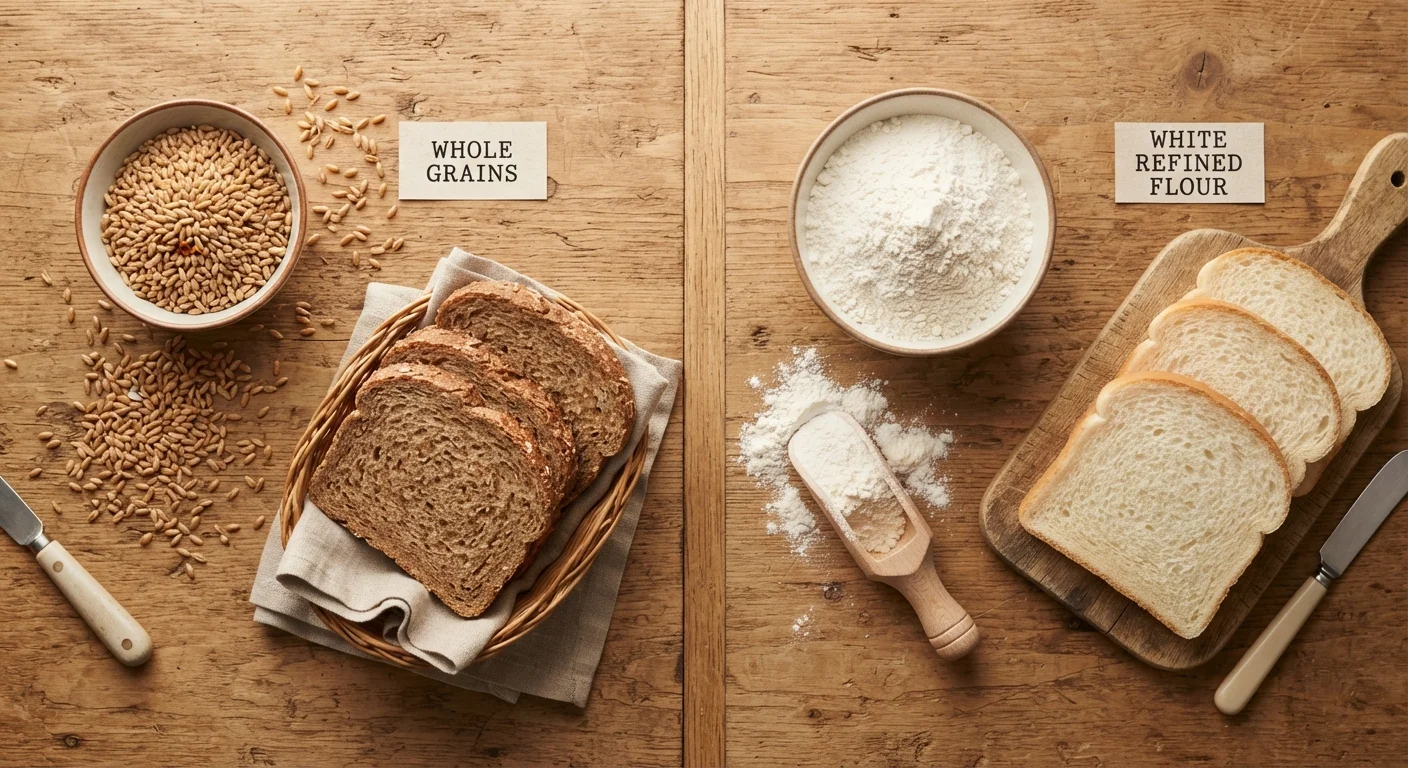
Photo: InsightsVilla.com | Quick Search. Right Info editorial
Key Takeaways
- Refining removes the bran and germ, stripping out fiber, B vitamins, iron, and healthy fats.
- Whole grains retain all three kernel layers - bran, germ, and endosperm - and their associated nutrients.
- Enrichment adds back some B vitamins and iron, but fiber and many phytonutrients are not restored.
- Major health organizations generally recommend making at least half your grains whole grains.
- Both grain types can fit in a balanced diet; the overall pattern of eating matters most.
What Happens Inside the Mill
A grain kernel has three distinct parts: the bran (the outer protective layer), the germ (the nutrient-rich embryo), and the endosperm (the starchy inner core). Whole grains keep all three intact. When grain is refined - think white flour or white rice - the bran and germ are milled away, leaving mostly endosperm.
That processing step isn't arbitrary. Removing the bran and germ extends shelf life significantly, because the oils in the germ can turn rancid over time. It also produces a finer, softer texture that many people prefer. But those benefits come with a real nutritional trade-off.
| Criterion | Whole Grains | Refined Grains |
|---|---|---|
| Kernel parts retained | Bran, germ, and endosperm | Endosperm only |
| Dietary fiber | High | Low (unless added) |
| B vitamins | Naturally present | Mostly removed; some added back via enrichment |
| Minerals (iron, magnesium, zinc) | Higher levels | Lower; iron often added back |
| Phytonutrients | Present | Largely removed, not restored |
| Shelf life | Shorter due to germ oils | Longer |
| Texture | Denser, heartier | Lighter, softer |
What Gets Lost - and What Gets Added Back
The bran is where most of the grain's dietary fiber lives, along with a range of B vitamins and minerals like magnesium and zinc. The germ contributes vitamin E, healthy unsaturated fats, and additional B vitamins. Strip those two layers away and you're left with a grain that's predominantly starch and calories.
To compensate, many refined grain products in the U.S. are enriched - meaning manufacturers add back certain B vitamins (thiamin, riboflavin, niacin, folic acid) and iron after milling. Folic acid enrichment, in particular, has been credited with meaningful public health benefits, including reductions in neural tube defects.
However, enrichment doesn't restore everything. Fiber is generally not added back in standard enriched products, and many phytonutrients - plant compounds associated with long-term health benefits - are also absent. So while enriched refined grains are nutritionally better than unenriched ones, they still don't match the full profile of a whole grain.
~3x
More fiber in whole vs. refined wheat
A slice of 100% whole wheat bread typically contains around 2-3g of fiber, versus under 1g in a comparable white bread slice, per USDA food composition data.
~25%
Of American adults meet whole grain recommendations
Research published in nutrition surveillance data consistently shows that most Americans fall short of the recommended daily whole grain intake.
For a broader look at how processing affects what we eat, our piece on added vs. naturally occurring sugars explores a similar theme in the context of sweeteners.
How Health Authorities Frame the Guidance
The USDA Dietary Guidelines for Americans - the most widely cited federal nutrition framework - recommend that at least half of all grains consumed should be whole grains. The reasoning is grounded in a large body of observational research linking higher whole grain intake to lower risks of cardiovascular disease, type 2 diabetes, and certain digestive issues, though it's worth noting that diet is complex and no single food group tells the whole story.
This framing is intentionally flexible. Neither the USDA nor most major dietetic organizations tell people to eliminate refined grains entirely. The goal is a pattern of eating that tilts toward more fiber and more nutrient density - not rigid food rules. That distinction matters, because it means there's room for white pasta, a bagel, or a flour tortilla without undermining an otherwise nutritious diet.
Enrichment Is Not the Same as Whole Grain
If you're thinking about how grain choices fit into your overall shopping routine, our guide on grocery shopping habits that support better nutrition offers practical, evidence-based suggestions.
Practical Ways to Think About Your Grain Choices
Reading labels is one of the most reliable ways to identify a true whole grain product. Look for "whole wheat," "whole oat," "whole grain corn," or similar language as the first ingredient. Terms like "multigrain," "wheat bread," or "made with whole grain" don't necessarily mean the product is predominantly whole grain.
Common whole grain options that are easy to incorporate include oats, brown rice, whole wheat bread, quinoa, barley, and popcorn (yes, really - corn is a whole grain when eaten in its whole form). Refined grain staples like white rice, white bread, and regular pasta remain widely consumed and are perfectly reasonable in context.
For more on how grains figure into broader nutrition conversations - including interesting parallels in pet nutrition - see our article on grain-free vs. grain-inclusive pet diets.
This article is for general informational purposes only and is not a substitute for personalized nutrition advice from a qualified healthcare professional or registered dietitian.
The content on this site is for informational purposes only and is not a substitute for professional advice. Always consult a qualified professional for guidance specific to your situation.