
Hydration and Food: How Much of Your Water Intake Comes from Eating

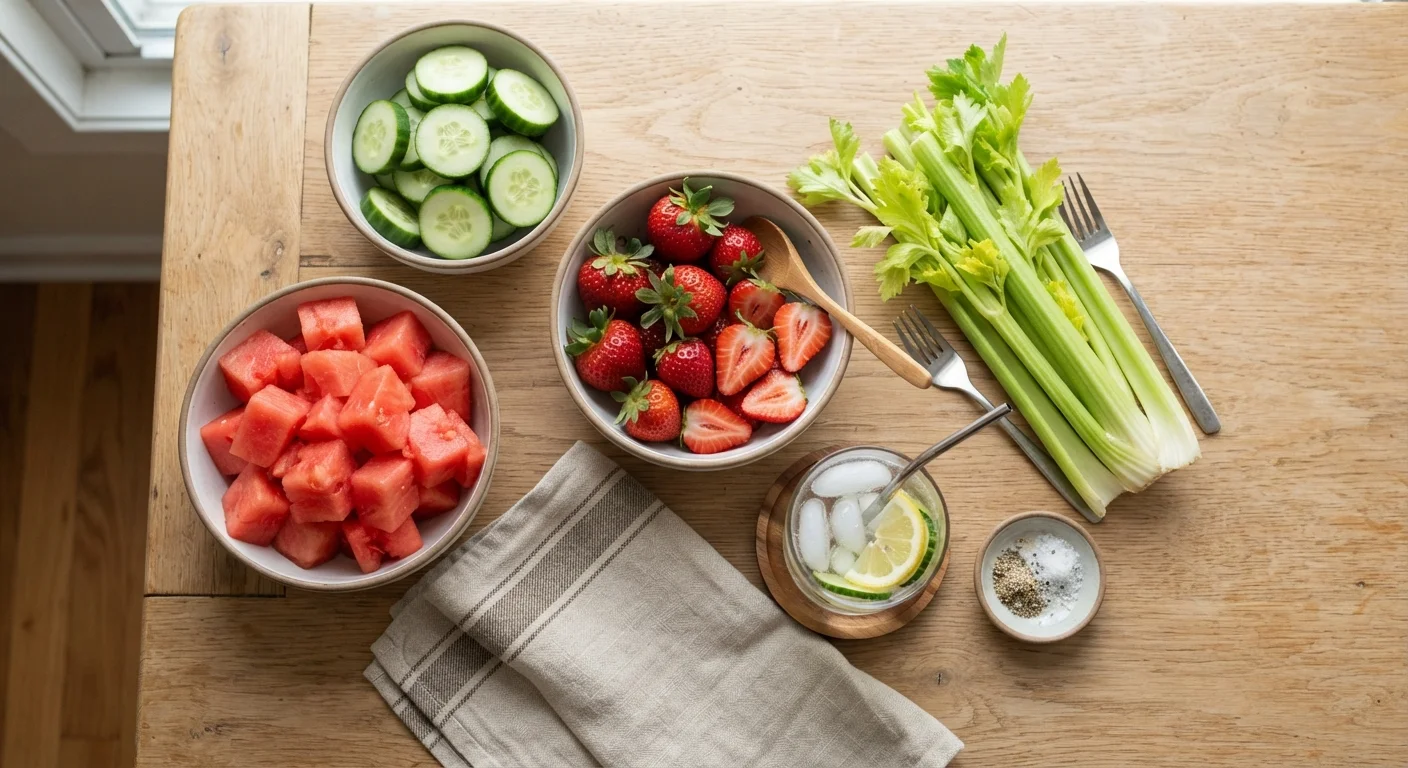
Photo: InsightsVilla.com | Quick Search. Right Info editorial
Key Takeaways
- Roughly 20% of daily fluid intake typically comes from food, not beverages.
- Fruits and vegetables have the highest water content of any food group, often exceeding 90% water by weight.
- Cooked grains, soups, and dairy products also contribute meaningfully to daily hydration.
- Eating a varied diet rich in whole foods can quietly support hydration alongside drinking fluids.
- Individual needs vary based on body size, activity level, and climate - no single number fits everyone.
The Surprisingly Large Hydration Role of Food
Most of us picture hydration as a straightforward task: drink enough water. But your body doesn't actually distinguish between the fluid that arrives in a glass and the fluid tucked inside a slice of watermelon or a bowl of oatmeal. Both count. Research on dietary patterns consistently finds that food contributes around 20% of total daily fluid intake for the average adult - sometimes more, depending on what's on the plate.
This isn't a minor footnote. For someone with a total fluid need of roughly 2.5 liters per day, that 20% represents about half a liter coming from eating alone. Understanding where that moisture comes from can help you make sense of your overall hydration without obsessing over every sip. It's a good reminder that a well-rounded diet does a lot of quiet work behind the scenes. Our Nutrition & Diet hub covers more of those under-the-radar benefits of varied eating.
~20%
Daily fluid intake from food
National dietary research estimates roughly one-fifth of total daily fluid intake comes from moisture in solid foods.
90%+
Water content in top hydrating vegetables
Foods like cucumber, celery, and lettuce are composed of more than 90% water by weight, according to USDA food composition data.
~0.5 L
Fluid contributed by food daily
For many adults, the moisture in food alone can account for roughly half a liter of fluid per day toward total hydration needs.
Which Foods Bring the Most Hydration?
Not all foods are created equal when it comes to water content. Here's a quick way to think about it by category:
- Fruits and vegetables lead the pack. Cucumbers, iceberg lettuce, celery, tomatoes, zucchini, watermelon, strawberries, and cantaloupe are all composed of more than 90% water by weight. Even a modest serving delivers a real hydration contribution.
- Cooked grains and legumes absorb water during cooking, so a cup of oatmeal or a bowl of lentil soup is far more hydrating than the same ingredients in dry form.
- Dairy products like milk and plain yogurt are roughly 85-88% water and contribute both hydration and nutrients.
- Soups and stews are among the most efficient food-based hydration sources - their broth base means they're largely water by volume.
On the other end of the spectrum, dry snacks like crackers, nuts, and chips contain very little moisture. That doesn't make them poor food choices, but it does mean they won't move the needle on hydration the way a piece of fruit will.
How Food Hydration Fits into Overall Nutrition
One of the convenient things about high-water-content foods is that they tend to be nutritionally dense in other ways, too. Cucumbers and celery bring vitamins and minerals alongside their moisture. Fruits pair hydration with natural sugars, antioxidants, and - in many cases - fiber. If you're curious about that last point, our piece on fiber and why most Americans fall short goes deeper on how fruit and vegetable-heavy eating supports digestive health.
It's also worth noting the flip side. Some foods are associated with increased fluid needs. Salty foods, for instance, can prompt the kidneys to work harder to maintain fluid balance - which is part of why sodium sources in the American diet matter when thinking about overall hydration. High-sodium diets don't dehydrate you outright, but they do shift how much water your body holds onto and excretes.
Grocery Shopping for Hydration
The practical upshot: a varied diet loaded with whole fruits and vegetables naturally supports hydration in the background. You don't have to engineer your meals around water content, but knowing the basics helps you see the full picture.
This article is for general informational purposes only and is not a substitute for personalized medical or nutritional advice. Consult a qualified healthcare professional with questions about your specific hydration needs.
Frequently Asked Questions
The content on this site is for informational purposes only and is not a substitute for professional advice. Always consult a qualified professional for guidance specific to your situation.