
Cast Iron vs. Stainless Steel: Which Pan Actually Belongs in Your Kitchen?

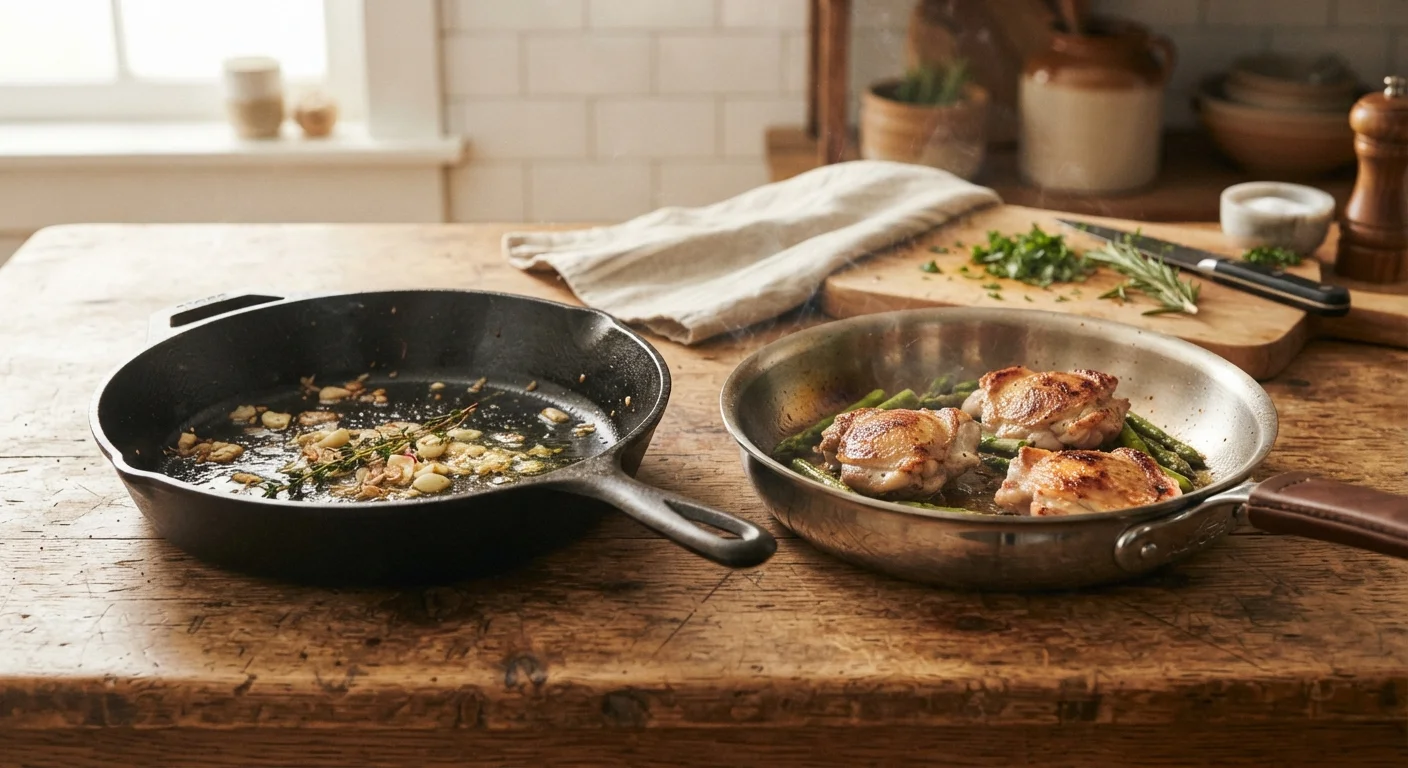
Photo: InsightsVilla.com | Quick Search. Right Info editorial
Key Takeaways
- Cast iron holds heat exceptionally well, making it ideal for searing meats and oven-to-table cooking.
- Stainless steel heats and cools more quickly, giving you better control for delicate or fast-moving dishes.
- Cast iron requires seasoning and careful drying; stainless steel is dishwasher-safe and more forgiving to maintain.
- Acidic foods like tomatoes and citrus can strip cast iron's seasoning - stainless steel handles them without issue.
- Neither pan is universally superior; your cooking habits should guide your choice.
Why This Comparison Matters
Ask any avid home cook which pan they'd take to a desert island and you'll get a strong, probably defensive, answer. Cast iron inspires near-devotional loyalty. Stainless steel earns quiet admiration. But both camps sometimes oversell their favorite. The truth is, these two materials solve different problems - and understanding which problems you actually have in your kitchen is the whole ballgame.
Whether you're stocking a first apartment or reconsidering a cluttered cabinet, the cast iron versus stainless steel question comes down to heat behavior, maintenance tolerance, and what you actually cook. Like reading a recipe the way experienced cooks do, knowing your tools before you start makes everything easier.
| Criterion | Cast Iron | Stainless Steel |
|---|---|---|
| Heat retention | Excellent - holds heat long | Moderate - cools faster |
| Heat responsiveness | Slow to adjust | Quick to adjust |
| Weight | Heavy (5-12 lbs typical) | Lighter and easier to handle |
| Maintenance | Requires seasoning and drying | Dishwasher-safe, low upkeep |
| Acidic foods | Can react, strip seasoning | Fully non-reactive |
| Oven use | Oven-safe at any temperature | Oven-safe (check handle limits) |
| Ideal tasks | Searing, frying, baking | Sautéing, sauces, versatile cooking |
| Durability | Near-indestructible with care | Very durable, less prone to rust |
Heat: Where the Real Differences Live
Cast iron is dense and slow to react - it takes longer to heat up, but once it's hot, it holds that heat with impressive stubbornness. That's a huge advantage when you're searing a pork chop and don't want the pan temperature to plummet the moment cold meat hits the surface. It's also why cast iron is so beloved for cornbread, frittatas, and skillet cookies: consistent, radiating heat from all sides.
Stainless steel, by contrast, responds quickly to temperature changes. Turn down the burner and the pan cools down faster. That responsiveness is exactly what you want when you're sautéing garlic and need to pull back before it burns, or when you're building a pan sauce and need precise timing. It's also the reason you'll see stainless steel dominating professional kitchens - speed and control matter when you're cooking multiple dishes at once.
~5x
Heat capacity difference vs. aluminum
Cast iron holds roughly five times more heat energy per unit volume than aluminum, which explains its superior searing performance according to materials science data.
50+ years
Potential lifespan with proper care
Both cast iron and quality stainless steel cookware can last generations when properly maintained - making upfront cost less meaningful over time.
~500°F
Oven-safe temperature for most stainless pans
Most stainless steel skillets with stainless handles are oven-safe up to around 500°F, though this varies by manufacturer and handle materials.
One thing both pans share: they benefit from proper preheating. Rushing that step with either material is one of the most common reasons food sticks. This connects to the broader principle of prepping everything before you cook - your pan needs to be ready, not just your ingredients.
Care, Maintenance, and the Seasoning Question
Stainless steel asks very little of you. It's generally dishwasher-safe, tolerates metal utensils, and doesn't require any special conditioning. Stubborn stuck-on bits respond well to a soak and a scrub, or a quick deglaze while the pan is still warm. The main caution: avoid drastic temperature changes (like running a screaming-hot pan under cold water), which can cause warping over time.
Cast iron requires a bit more intention. It needs to stay dry - water left sitting on the surface can cause rust. After washing (a quick hand-wash with minimal soap works fine, despite what your grandmother may have told you about zero soap ever), dry it thoroughly and apply a very thin layer of oil before storing. The reward is a naturally non-stick surface - called the seasoning - that actually improves with every use. It's low effort once the habit clicks, but it's still an extra step.
What About Non-Stick Pans?
One important note for acidic cooking: tomatoes, wine, citrus, and vinegar can react with cast iron's seasoning, leaving a metallic taste and stripping the protective layer. For dishes like braised tomatoes or shakshuka, stainless steel is the smarter choice. There are also a few cooking myths worth clearing up around cast iron - like the idea that it's completely nonstick out of the box or that you can never use soap on it.
The content on this site is for informational purposes only and is not a substitute for professional advice. Always consult a qualified professional for guidance specific to your situation.