
The American Coffee Landscape: Drip, Espresso, and Everything Between

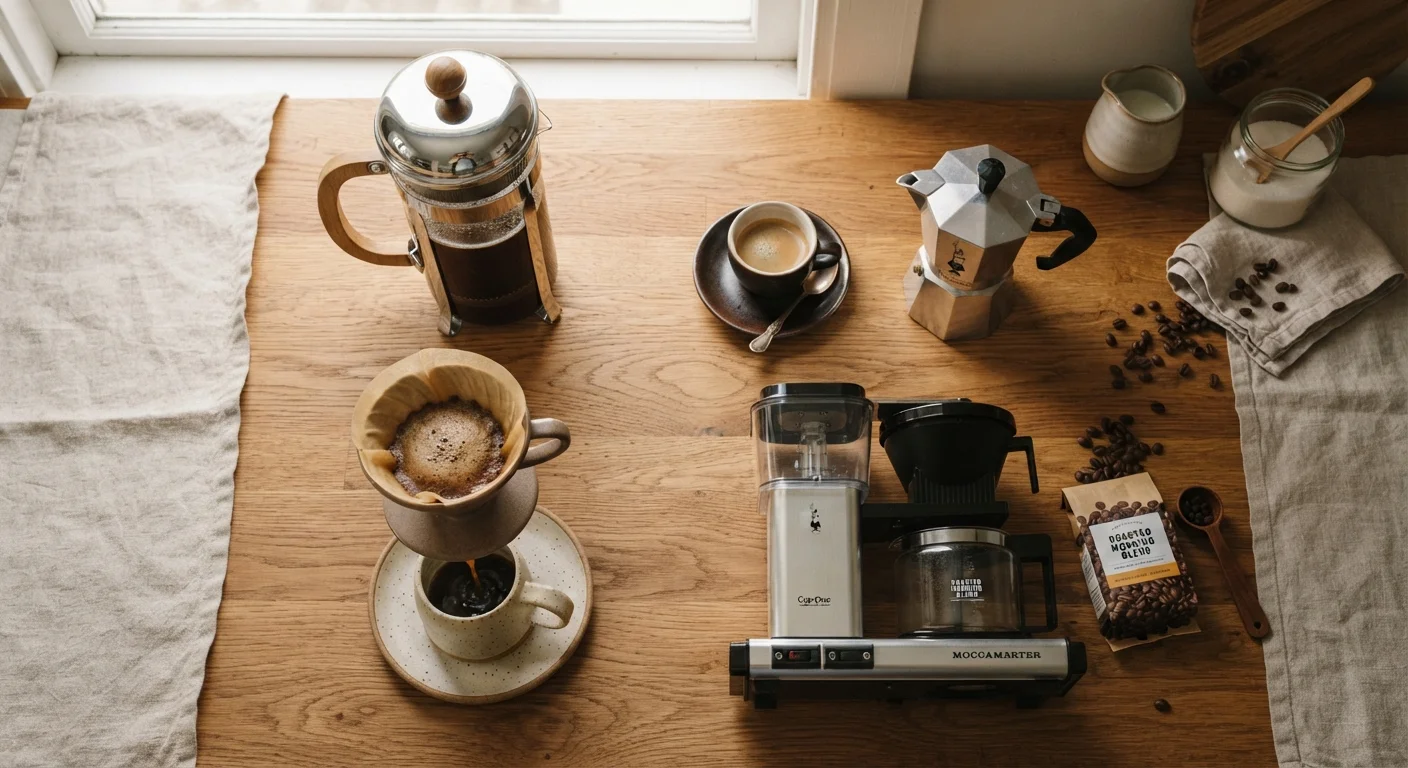
Photo: InsightsVilla.com | Quick Search. Right Info editorial
Key Takeaways
- Drip coffee remains the most widely consumed brewing style in the United States.
- Espresso is a brewing method, not a roast level - any coffee bean can be used.
- Cold brew and iced coffee are made differently and taste distinctly different.
- Third-wave coffee emphasizes bean origin, roasting transparency, and brewing precision.
- Dark roast does not mean higher caffeine - lighter roasts often contain slightly more.
Why Coffee Culture Runs So Deep in America
Americans drink roughly 400 million cups of coffee every day, making the U.S. one of the largest coffee-consuming nations in the world. That number reflects something beyond caffeine dependency - coffee is woven into the social fabric of daily life, from early-morning commutes to late-afternoon meetings to first dates at the corner café.
Interestingly, regional identity plays into coffee preferences in ways that parallel other American quirks. Just as regional slang reveals how differently Americans speak, coffee orders and café culture can vary noticeably from coast to coast - a "regular" coffee means cream and sugar in Boston but simply black coffee in many other places.
Understanding the landscape means knowing the main brewing methods, what they produce, and why people reach for one over another.
Drip Coffee: The Workhorse of American Mornings
Drip brewing - where hot water filters through ground coffee and drips into a carafe - is the dominant coffee format in American homes and diners. It's economical, consistent, and easy to scale up for a full household. Most home drip machines work on the same basic principle: water heats to between 195°F and 205°F, saturates the grounds, and gravity does the rest.
The grind size and coffee-to-water ratio matter more than many people realize. A standard starting point is about one to two tablespoons of ground coffee per six ounces of water, though personal taste adjusts that range significantly. Too fine a grind can produce bitter over-extraction; too coarse leaves the cup thin and sour.
Store whole coffee beans in an airtight container away from light and heat - but skip the freezer for beans you're using regularly, as repeated temperature changes introduce moisture.
If your drip coffee tastes bitter, try a slightly coarser grind or reduce your brew time before adjusting the amount of coffee you use - over-extraction is the more common culprit than using too much coffee.
Drip coffee's flavor profile tends to be mild and approachable, which is part of its enduring appeal. It also holds reasonably well in a thermal carafe - though letting it sit on a hot plate for hours will degrade the flavor noticeably.
Espresso and Its Many Offspring
Espresso is brewed by forcing hot water through finely ground, compacted coffee at high pressure - typically around nine bars. The result is a small, concentrated shot with a layer of crema (the reddish-brown foam) on top. Contrary to a widespread assumption, espresso is a brewing method, not a specific bean or roast. You can pull an espresso shot from a light roast just as easily as a dark one.
That single shot becomes the base for most café menu staples:
- Americano: Espresso diluted with hot water, approximating drip coffee's strength.
- Latte: Espresso with steamed milk and a thin layer of foam - usually a 1:3 or 1:4 espresso-to-milk ratio.
- Cappuccino: Equal parts espresso, steamed milk, and thick foam - smaller and stronger than a latte.
- Macchiato: Espresso "marked" with a small amount of foam or milk.
- Flat white: Similar to a latte but smaller, with a higher espresso-to-milk ratio and microfoam rather than frothy foam.
Getting Espresso Right at Home
These drinks originated largely in Italian café culture but were popularized in the U.S. through specialty chains and independent shops starting in the 1980s and 1990s.
Cold Brew, Iced Coffee, and the Chill Factor
Cold coffee drinks now make up a significant and growing share of café sales. But not all cold coffee is the same. Cold brew and iced coffee are made very differently, and that distinction affects taste, caffeine level, and texture in meaningful ways.
400M+
Cups of coffee consumed daily in the U.S.
Estimates from the National Coffee Association consistently place U.S. daily coffee consumption in this range.
66%
Americans who drink coffee daily
The National Coffee Association's annual survey data has repeatedly shown roughly two-thirds of American adults drink coffee on any given day.
~70%
Share of cold coffee drinks in café growth
Industry analysts have noted cold beverages driving the majority of specialty café revenue growth in recent years.
Cold brew is steeped in room-temperature or cold water for 12 to 24 hours, never exposed to heat, and filtered before serving. The result is smooth, low-acid, and naturally sweet-leaning. Iced coffee, by contrast, is simply hot-brewed coffee cooled down and poured over ice - quicker to make, slightly brighter in flavor, and typically less concentrated.
Nitro cold brew - cold brew infused with nitrogen gas - has also grown popular for its creamy, stout-like texture served straight from a tap.
Third Wave and Specialty Coffee
The term "third wave" describes a movement that treats coffee as an artisanal product rather than a commodity. Where earlier waves focused on accessibility (the diner era) and then branded café experiences, the third wave zeroes in on bean origin, processing method, roasting transparency, and precise brewing.
Pour-over brewing - where hot water is poured slowly and deliberately over grounds in a filter cone - is a hallmark of this approach. It gives the brewer manual control over flow rate, saturation, and extraction time. Single-origin beans (coffee from one specific farm or region) are common, and roasters often publish detailed tasting notes and sourcing information.
This level of attention to craft mirrors what happened in American craft beer culture. Much like craft beer elevated expectations for what a beer could be, specialty coffee has raised the floor for what consumers expect from a cup.
“Coffee is the one beverage that has successfully bridged every class, every generation, and almost every culture in America. It's utilitarian and artisanal at the same time - that's a rare thing.”
— Trish Rothgeb, Coffee industry professional and co-originator of the 'waves of coffee' framework
Roast Levels, Caffeine, and Common Misconceptions
Roast level is one of the most misunderstood aspects of coffee. Many people assume dark roast equals stronger or higher caffeine - neither is quite accurate. Caffeine is relatively heat-stable, but lighter roasts are denser by weight, so a scoop of light roast actually contains slightly more caffeine than the same scoop of dark. The difference is small and varies by bean, but the dark-roast-equals-more-caffeine idea is a persistent myth. Our look at caffeine myths that keep circulating online goes deeper on this and other widespread misunderstandings.
What roast level does significantly affect is flavor. Light roasts tend to preserve more of the bean's original character - fruity, floral, or acidic notes. Medium roasts balance brightness with body. Dark roasts develop bolder, more bitter, sometimes chocolaty or smoky flavors as the roasting process transforms the bean's sugars.
For those who want to explore coffee without the caffeine, decaf coffee still contains small amounts of caffeine - the decaffeination process removes most but not all of it, something worth knowing if you're sensitive to caffeine's effects.
Whether you're a drip-machine loyalist or a pour-over devotee, the American coffee landscape offers something for every palate and every morning routine. The best cup is usually the one you actually enjoy drinking.
The content on this site is for informational purposes only and is not a substitute for professional advice. Always consult a qualified professional for guidance specific to your situation.