
Making a Simple Syrup That Actually Works for Cocktails and Coffee

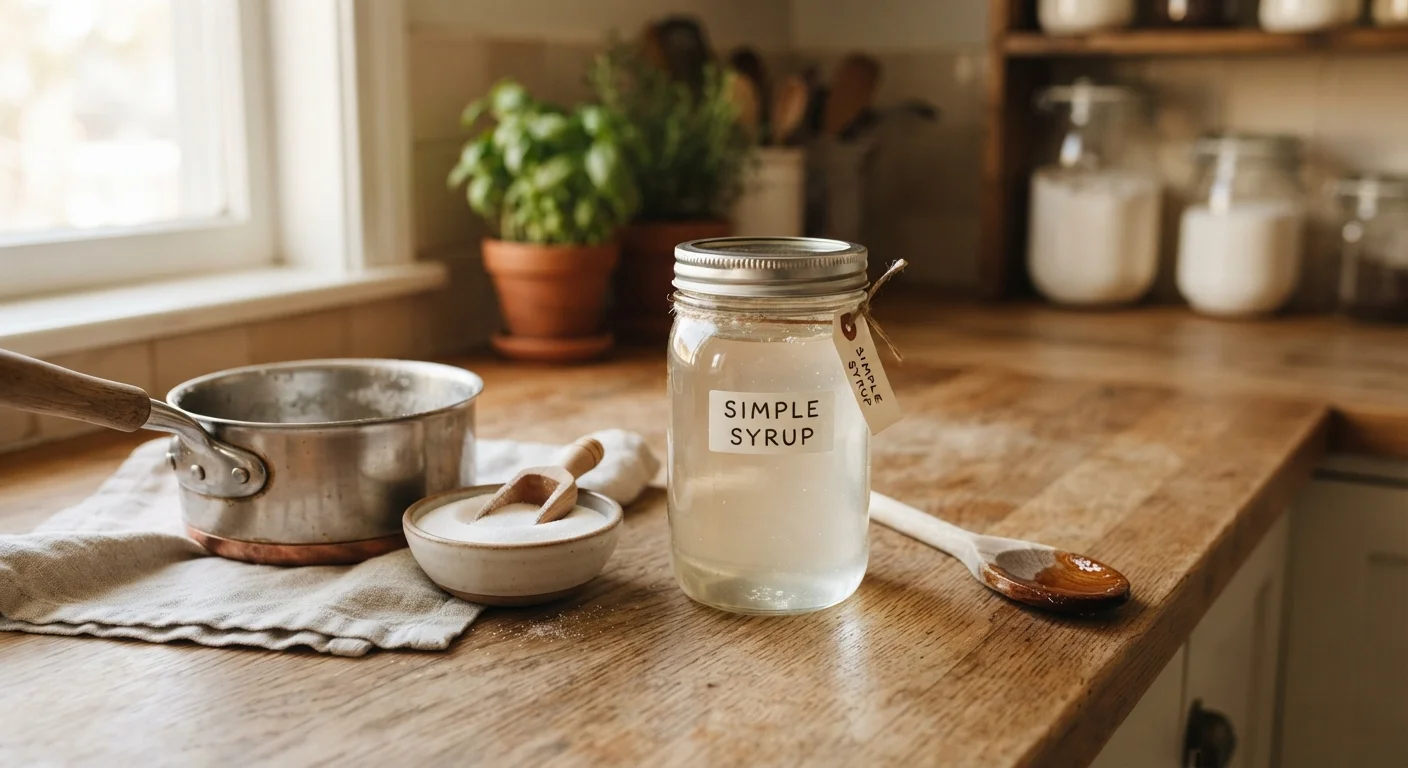
Photo: InsightsVilla.com | Quick Search. Right Info editorial
Key Takeaways
- A 1:1 sugar-to-water ratio works for most cocktails and coffee drinks.
- Rich simple syrup uses a 2:1 ratio and adds more sweetness per drop.
- Stirring - not boiling - is all it takes; high heat can cause crystallization.
- Properly stored syrup lasts up to four weeks refrigerated.
- Flavored syrups open up a huge range of drink possibilities with minimal effort.
Why Simple Syrup Belongs in Every Home Bar and Kitchen
Granulated sugar doesn't dissolve easily in cold liquids - stir it into an iced coffee or a shaken cocktail and you'll end up with gritty sweetness pooling at the bottom. Simple syrup solves that problem completely. Because the sugar is already dissolved into water, it blends instantly and evenly into any drink, hot or cold.
It's one of those fundamentals that bartenders and baristas quietly rely on, and it's genuinely easy to make at home. Whether you're sweetening a zero-proof cocktail, a classic Old Fashioned, or an iced latte, having a jar of simple syrup ready to go makes a real difference. It also works beautifully in homemade lemonade - in fact, undissolved sugar is one of the key reasons homemade lemonade falls flat.
What you will need
The Ratios and Variations Worth Knowing
The standard ratio is 1 part sugar to 1 part water by volume - this is your everyday workhorse syrup. It's light, pourable, and integrates well without dominating a drink's flavor. For a more concentrated result, a 2:1 ratio (two parts sugar to one part water) produces what's often called rich simple syrup. It's thicker, sweeter per teaspoon, and useful when you want to add sweetness without diluting the drink.
Beyond the base recipe, flavored syrups are where things get fun. Steep fresh herbs, spices, citrus zest, or even dried flowers in the hot syrup and strain before bottling. Lavender, ginger, cinnamon, and mint are all common starting points. Keep in mind that adding sugar - whether in syrup form or otherwise - does contribute to overall sugar intake. If that's something you're mindful of, our breakdown of how common beverages compare on sugar is worth a look, as is the broader question of added sugar versus natural sugar.
Try Brown Sugar or Honey for Depth
How to Make It: Step by Step
Small saucepan
Used to gently heat and dissolve the sugar into the water.
Measuring cups
Ensures the correct sugar-to-water ratio for consistent results.
Wooden spoon or silicone spatula
Used to stir the mixture continuously while it heats.
Fine mesh sieve or strainer
Strains out any steeping ingredients when making flavored syrups.
Clean glass jar or bottle with lid
Stores the finished syrup in the refrigerator.
Measure your ingredients
For a standard batch, combine 1 cup of granulated white sugar with 1 cup of water in a small saucepan. This yields roughly 1.5 cups of finished syrup - a good amount for a week or two of regular use. For rich syrup, use 2 cups of sugar to 1 cup of water.
Warm and stir over medium-low heat
Place the saucepan over medium-low heat. Stir continuously as the mixture warms. You're looking for the sugar to dissolve completely - the liquid will shift from cloudy to clear. This usually takes 3 to 5 minutes. You do not need to bring it to a full boil.
Add flavorings (optional)
If you're making a flavored syrup, add your chosen ingredient - a few sprigs of fresh herbs, a cinnamon stick, a strip of citrus zest, or a tablespoon of fresh grated ginger - right after removing the pan from the heat. Let it steep for 10 to 20 minutes, tasting occasionally, then strain out the solids through a fine mesh sieve.
Cool and transfer to a container
Remove from heat and allow the syrup to cool to room temperature before pouring it into a clean, airtight glass jar or bottle. Pouring into a container while still very hot can cause condensation that shortens shelf life. Label it with the date so you know when to use it by.
Refrigerate and use within the recommended window
Store the sealed jar in the refrigerator. Use a 1:1 syrup within three to four weeks, and a 2:1 rich syrup within about four weeks. For flavored syrups, aim to use them within two weeks, since added ingredients can promote faster spoilage.
Storage and Common Pitfalls
Pour your finished syrup into a clean glass jar or bottle and refrigerate it. A standard 1:1 syrup keeps well for up to three to four weeks; the richer 2:1 version lasts a bit longer - closer to a month - because the higher sugar concentration acts as a mild preservative. If you notice cloudiness, an off smell, or any mold, discard it and start fresh.
Watch for Crystallization in the Jar
The most common mistakes are easy to avoid once you know them: boiling too aggressively (which can cause the sugar to re-crystallize as it cools), not stirring enough early on (leaving undissolved sugar on the bottom), and storing syrup in a container that wasn't fully clean. Stick to the gentle heat approach in the steps above and you'll avoid nearly all of them.
The content on this site is for informational purposes only and is not a substitute for professional advice. Always consult a qualified professional for guidance specific to your situation.