
What Your Following Distance Actually Means at Highway Speeds

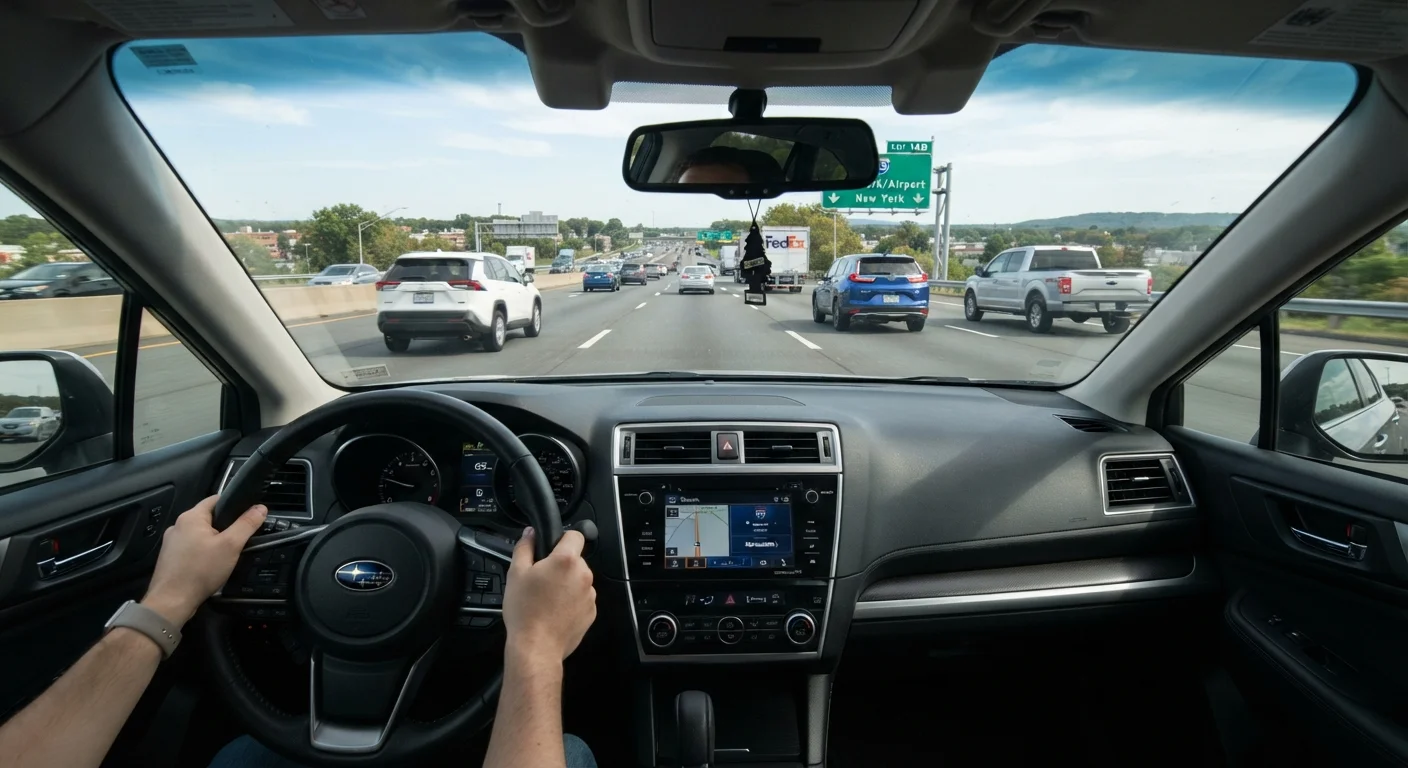
Photo: InsightsVilla.com | Quick Search. Right Info editorial
Key Takeaways
- The 3-second rule is the widely recommended minimum for following distance at highway speeds.
- At 70 mph, a car travels over 100 feet per second - reaction time alone eats up more than 150 feet.
- Wet, icy, or foggy conditions require extending your following distance to at least 4-6 seconds.
- Tailgating is a leading factor in rear-end collisions, which account for a large share of highway crashes.
- Following distance should increase when driving a heavier vehicle, such as a truck or SUV with a trailer.
Why Seconds - Not Feet - Are What Count
Most drivers think about space in terms of car lengths. In reality, distance becomes almost meaningless without time. A 4-car-length gap means something very different at 30 mph than at 70 mph. Measuring following distance in seconds accounts for speed automatically - it tells you how much time you actually have to respond before impact.
The method is simple: watch for a fixed reference point on the road ahead - a lane marking, a sign, a bridge. When the vehicle in front of you passes that point, start counting. If you reach that same point before you reach "three Mississippi," you're following too closely.
This is widely known as the 3-second rule, and it's endorsed by the National Highway Traffic Safety Administration (NHTSA) and driver safety programs across the country. It's the floor, not the target - treat 3 seconds as the bare minimum under ideal conditions.
The 3-Second Rule Works at Any Legal Speed
What Speed Actually Does to Stopping Distance
Speed has a compounding effect on how far your car travels before it stops. Stopping distance has two components: reaction distance (how far you travel before your foot even hits the brake) and braking distance (how far you travel while braking).
The average driver takes about 1.5 seconds to perceive a hazard and react. At 60 mph, that reaction alone eats up roughly 132 feet before you even begin to slow down. Add the braking distance - which increases with the square of your speed, not linearly - and you're looking at total stopping distances of 240 feet or more in good conditions.
~240 ft
Total stopping distance at 60 mph on dry pavement
This figure accounts for both average reaction time and braking distance under typical conditions, per driver safety education standards.
4x
Increase in braking distance when speed doubles
Because braking distance scales with the square of velocity, doubling speed roughly quadruples the distance needed to stop - a physics relationship, not an estimate.
1 in 3
Highway crashes involving rear-end impact
Rear-end collisions represent a substantial share of all highway incidents reported by NHTSA, with following distance identified as a key contributing factor.
This is why doubling your speed does not simply double your stopping distance - it roughly quadruples it. The physics make tailgating at highway speeds not just reckless, but statistically predictable as a crash risk.
When Conditions Demand More Than 3 Seconds
Three seconds assumes dry pavement, alert driving, and a vehicle in good mechanical condition. Conditions rarely stay that clean. Rain, fog, snow, and ice all dramatically reduce tire traction and extend braking distances - sometimes by two or three times the dry-road figure.
Here's a practical adjustment framework:
- Rain or wet roads: Extend to at least 4 seconds
- Fog or low visibility: Extend to 5-6 seconds, or more if visibility is severely limited
- Snow or ice: Extend to 8-10 seconds - stopping distances on ice can be 10 times longer than dry pavement
- Towing a trailer or hauling a load: Add at least 1-2 seconds; heavier vehicles brake more slowly
- Fatigued or distracted driving: Your reaction time increases - add buffer accordingly
See our breakdown of night driving hazards for how visibility loss compounds the need for greater spacing after dark.
Adjusting Distance After a Lane Change
How Following Distance Connects to the Bigger Safety Picture
Following distance doesn't exist in isolation. It interacts directly with your ability to spot hazards early, manage lane changes, and maintain situational awareness. A driver with a full 4-second cushion has more visual range, more time to process what's happening ahead of the vehicle in front of them, and more options to respond without emergency braking.
Rear-end collisions are among the most common highway crash types in the U.S. - and following too closely is a consistent contributing factor. Closing the gap to save a few seconds of travel time carries a disproportionate risk that most drivers don't consciously register.
For related context, understanding where your mirrors actually cover - and where they don't - is equally important to maintaining situational control. Our guide to blind spots and mirror coverage explains how visibility gaps affect highway safety.
These habits - distance, visibility, and timing - are part of the consistent toolkit that low-risk drivers apply on every drive, as detailed in safe driving habits that hold up in any condition.
Frequently Asked Questions
The content on this site is for informational purposes only and is not a substitute for professional advice. Always consult a qualified professional for guidance specific to your situation.