
Reading Your Owner's Manual: The Maintenance Schedule That Already Exists for Your Car

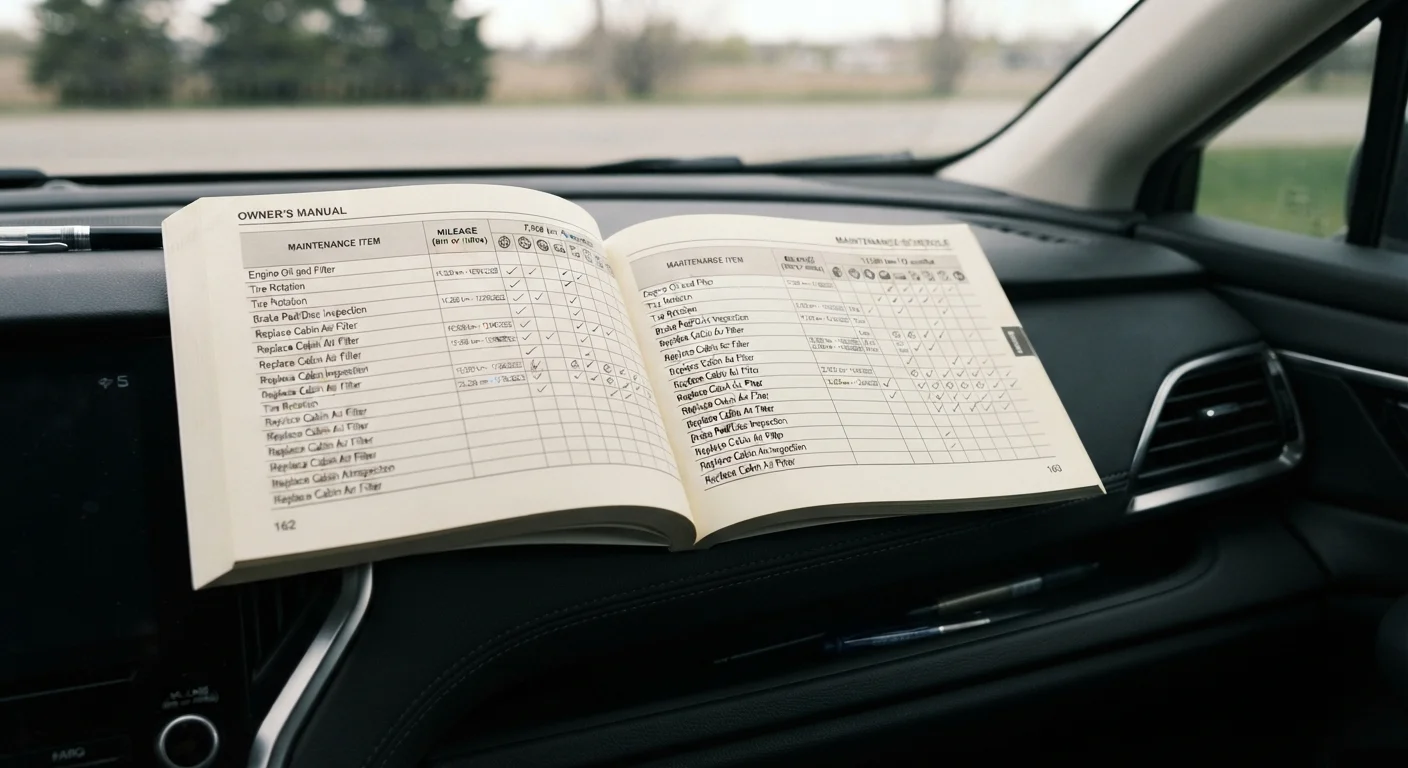
Photo: InsightsVilla.com | Quick Search. Right Info editorial
Key Takeaways
- Every vehicle comes with a factory maintenance schedule built into the owner's manual.
- Following the manufacturer's schedule - not a generic one - protects your warranty and your engine.
- Most manuals distinguish between normal and severe driving conditions, which affects service intervals.
- A digital copy of your manual is available free from most manufacturer websites if you've lost the physical one.
- Tracking completed services helps you avoid double-paying and spot overdue items before they cause damage.
Why the Owner's Manual Is the Only Maintenance Schedule You Need
Walk into any quick-lube shop and you'll likely be told your oil needs changing every 3,000 miles. That interval was standard decades ago - but most modern vehicles are engineered for 5,000 to 10,000 miles or more between oil changes, depending on the engine and oil type. The only source that knows your car's actual requirements is the manufacturer that built it.
Your owner's manual contains a maintenance schedule designed specifically for your vehicle's engine, transmission, cooling system, and drivetrain. Following it - rather than a generic third-party recommendation - keeps you from over-servicing (wasting money) or under-servicing (causing real damage). It also matters for warranty coverage: if a component fails and you can't show you maintained it per the manufacturer's guidelines, a warranty claim can be denied.
For a broader view of how maintenance fits into your total vehicle budget, see our annual car ownership cost checklist.
What you will need
How to Find and Read the Maintenance Schedule
The maintenance schedule is typically found in a dedicated chapter near the back of the manual, often labeled "Scheduled Maintenance," "Maintenance Schedule," or "Service Intervals." Some manufacturers also include a quick-reference card tucked into the manual's front pocket.
Locate your owner's manual
Check your glove compartment first. If the manual isn't there, visit your vehicle manufacturer's official website and search by year, make, and model - most automakers offer free PDF downloads of owner's manuals. You can also contact a dealership's service department, who can often point you to the correct document.
Find the maintenance schedule chapter
Use the table of contents to navigate to the scheduled maintenance section. Look for terms like "Maintenance Schedule," "Service Intervals," or "Periodic Maintenance." In many manuals this section is color-coded or tabbed for quick access.
Note your current mileage and find your position on the schedule
Check your odometer and identify where you currently fall on the mileage intervals in the table. Mark or note any services that are overdue - those are your priority. Then identify what's coming due within the next 5,000 miles so you can plan ahead rather than react.
Determine which driving condition schedule applies to you
Review the manual's description of normal vs. severe driving conditions. Honestly assess your typical driving patterns and choose the schedule that fits. If you split time between highway commuting and short city trips, err toward the severe-condition intervals for critical items like oil and transmission fluid.
Create a simple tracking log
Start a running record of all services performed. Include the date, odometer reading, service completed, and shop or method used. This log becomes valuable when selling the vehicle and gives you a clear picture of what's been done - and what hasn't.
Once you've located the schedule, you'll usually see a table organized by mileage intervals (such as 5,000 / 15,000 / 30,000 / 60,000 miles) and sometimes by months. Each row lists a specific service - oil and filter change, tire rotation, brake inspection, air filter replacement, spark plugs, transmission fluid, coolant flush, and others. Columns indicate whether the action is "Inspect," "Replace," or "Adjust."
Can't Find Your Manual? Go Digital
If you drive significantly fewer miles than average, pay attention to the time-based intervals too. A car driven only 5,000 miles per year still needs an oil change at least once annually, because oil degrades with time as well as use.
Normal vs. Severe Driving Conditions
Most owner's manuals include two schedules: one for normal driving and one for severe or special operating conditions. "Severe" doesn't mean off-roading through a desert - it often applies to very common patterns, including:
- Frequent short trips under five miles
- Stop-and-go city driving
- Towing or hauling heavy loads
- Driving in extreme heat, cold, or dusty environments
- Extended idling (delivery routes, rideshare driving)
If any of these describe your regular driving, the severe-condition schedule likely applies - meaning shorter intervals on key services. Using the wrong schedule can lead to accelerated wear that isn't obvious until it becomes expensive. Our guide on keeping car ownership costs manageable covers how maintenance timing connects to long-term savings.
Don't Assume One Schedule Fits All
Putting the Schedule to Work
Reading the manual is only useful if you act on it. Keep a simple log - a notebook in the glove box, a note on your phone, or a free spreadsheet - that records every service: the date, mileage, what was done, and where. This protects you at resale, helps you communicate clearly with mechanics, and makes it easy to spot what's coming due.
Pair the manufacturer schedule with a seasonal check-in habit. Our seasonal car maintenance checklist covers what to inspect before summer heat and winter cold, complementing the mileage-based schedule in your manual.
For new vehicle owners just establishing these habits, our maintenance primer for new drivers offers a strong foundation. And when you're deciding which services to handle yourself versus bringing to a shop, our DIY vs. shop guide can help you make that call confidently.
The content on this site is for informational purposes only and is not a substitute for professional advice. Always consult a qualified professional for guidance specific to your situation.