
What Your Cat's Tail Is Actually Telling You

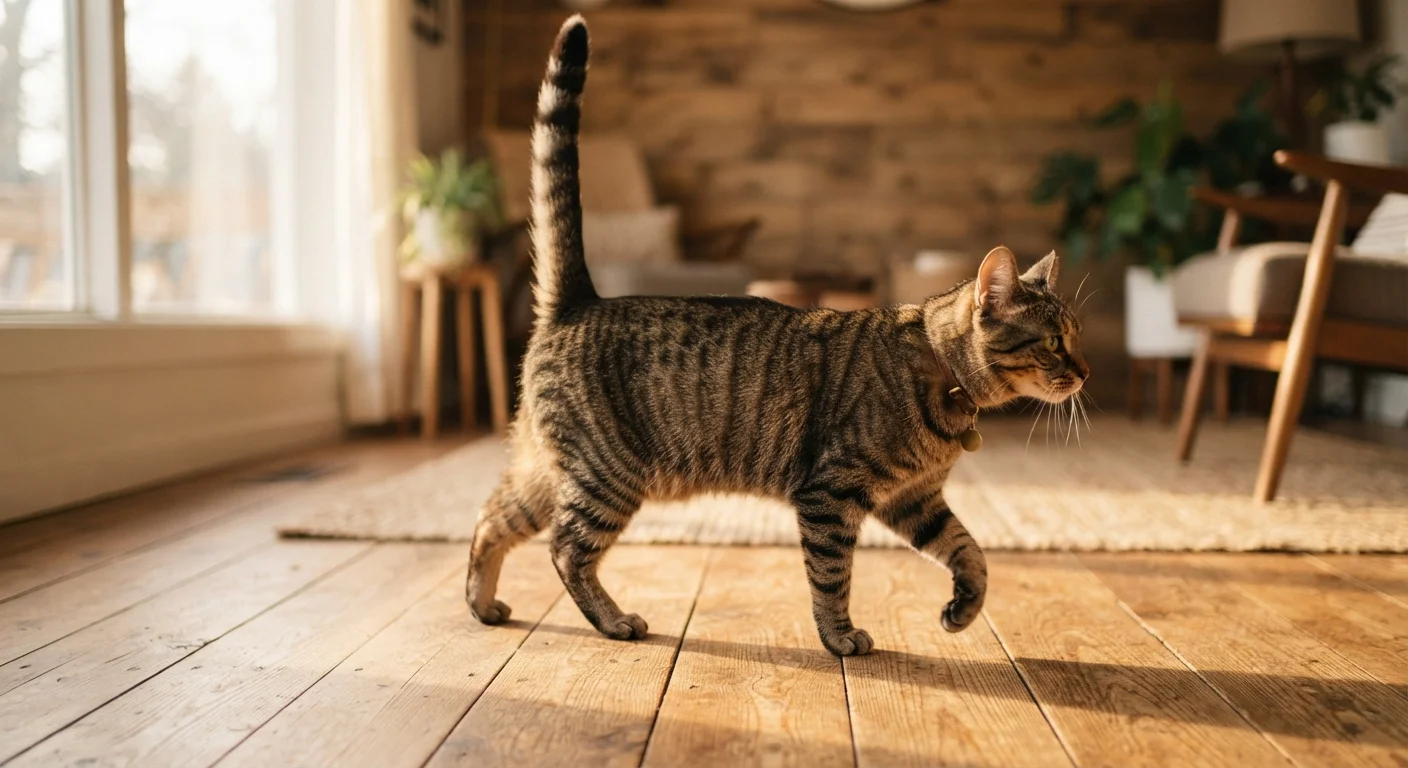
Photo: InsightsVilla.com | Quick Search. Right Info editorial
Why Cat Tails Are a Language All Their Own
Cats can't tell you how they're feeling with words, but they're constantly broadcasting their emotional state through body language - and the tail is arguably their most expressive tool. Unlike dogs, who evolved as pack animals with strong social signaling needs, cats developed their tail communication largely for one-on-one interactions. Understanding what each position and movement means gives you a genuine window into your cat's inner life.
Tail communication doesn't work in isolation. Researchers in animal behavior consistently emphasize reading the tail alongside ear position, whisker angle, and overall body posture. That said, the tail alone carries a surprising amount of precise information once you know what to look for. See our side-by-side body language guide for how cats and dogs compare on these signals.
| Primary function of tail signaling | Social and emotional communication |
| Friendliest tail position | Upright tail with curved or quivering tip |
| Warning sign to stop petting | Rapid, lashing side-to-side flick |
| Piloerection indicates | Fear or high arousal - involuntary nervous system response |
| Tail wrapped around another | Social bonding / affiliation signal |
Tail Positions and What They Mean
Each major tail position maps reliably to a distinct emotional state. Here's a practical reference:
- Tail held high, tip slightly curved: Your cat is content, confident, and open to interaction. This is the feline equivalent of a friendly wave.
- Tail high with a quivering tip: Intense excitement or affection - often seen when greeting a favorite person. Cats also use this quiver during scent-marking.
- Tail held low or tucked: Anxiety, fear, or submission. A tail tucked close to the body signals your cat feels threatened or uncomfortable.
- Tail puffed out (piloerection): The cat is either frightened or aggressively aroused. The puffed base alone, without full piloerection, often indicates the cat is startled but not fully defensive.
- Tail wrapped around the body while sitting: A neutral resting state - your cat is calm but not necessarily seeking interaction.
- Tail wrapped around another cat or around your leg: A clear affiliative signal - your cat is expressing social bonding.
Piloerection
The involuntary raising of fur along the tail or spine, caused by muscle contractions triggered by the nervous system. In cats, it signals fear or high arousal and is not under voluntary control.
Affiliative behavior
Actions that promote social bonding between individuals. In cats, tail-wrapping, allogrooming (mutual grooming), and slow blinking are considered affiliative signals.
Predatory sequence
The instinctive chain of behaviors - stalking, pouncing, catching - that cats perform during hunting or play. Tail twitching is often part of the stalking phase.
Displacement behavior
An out-of-context action performed when a cat is conflicted or uncertain, such as grooming mid-play. Slow tail-lashing can accompany displacement behaviors.
If your cat's tail posture changes suddenly and is paired with other signs of distress - such as hiding, vocalization changes, or appetite loss - these can be signals worth discussing with your veterinarian. Our article on signs your pet may be sick outlines what to watch for.
Tail Movements: Speed and Pattern Matter
Position is only half the picture. How the tail moves - and how quickly - adds another layer of meaning.
276+
Distinct facial and body positions cats use to communicate
A 2023 study published in Behavioural Processes catalogued over 276 distinct cat facial expressions, underscoring how multi-layered feline communication is beyond the tail alone.
~10 sec
Typical lag before a lashing tail escalates to swatting
Animal behaviorists note that cats typically signal discomfort for several seconds before escalating - making early tail-reading a practical way to avoid scratches.
- Slow, sweeping side-to-side wag: Often misread as friendliness (a dog signal), this in cats usually means focused attention or mild irritation. Watch for it during play or when your cat is conflicted about something.
- Rapid, lashing flick: Agitation or frustration. If you see this while petting your cat, it's a polite warning to stop before a scratch follows.
- Gentle, low-amplitude wag while resting: Your cat is acknowledging your presence without fully waking up - something like a drowsy wave.
- Twitching tip while the body is still: Heightened focus, usually on prey or a toy. This is predatory concentration, not emotion directed at you.
Cats communicate in ways that researchers are still exploring - our piece on how pets read human emotions offers more context on the science of interspecies communication.
Putting It All Together
Reading tail signals accurately comes with practice and context. A puffed tail during play is very different from a puffed tail when a stranger enters the room. Over time, you'll learn your individual cat's baseline - how they typically hold their tail when relaxed - which makes deviations much easier to spot.
Two practical tips: First, avoid reaching toward a cat displaying a low, tucked, or lashing tail. Give them space to decompress. Second, when you want to invite interaction, try lowering your hand near floor level rather than reaching overhead - this mirrors the low-threat posture cats use with each other. Building this kind of literacy strengthens the bond between you and your cat and helps you respond to their needs before stress escalates.
This article provides general information about feline behavior for educational purposes only. If you have concerns about your cat's health or behavior, consult a qualified veterinarian or certified animal behaviorist.
The content on this site is for informational purposes only and is not a substitute for professional advice. Always consult a qualified professional for guidance specific to your situation.