
Popular Beliefs About Animal Intelligence That Scientists Have Largely Debunked

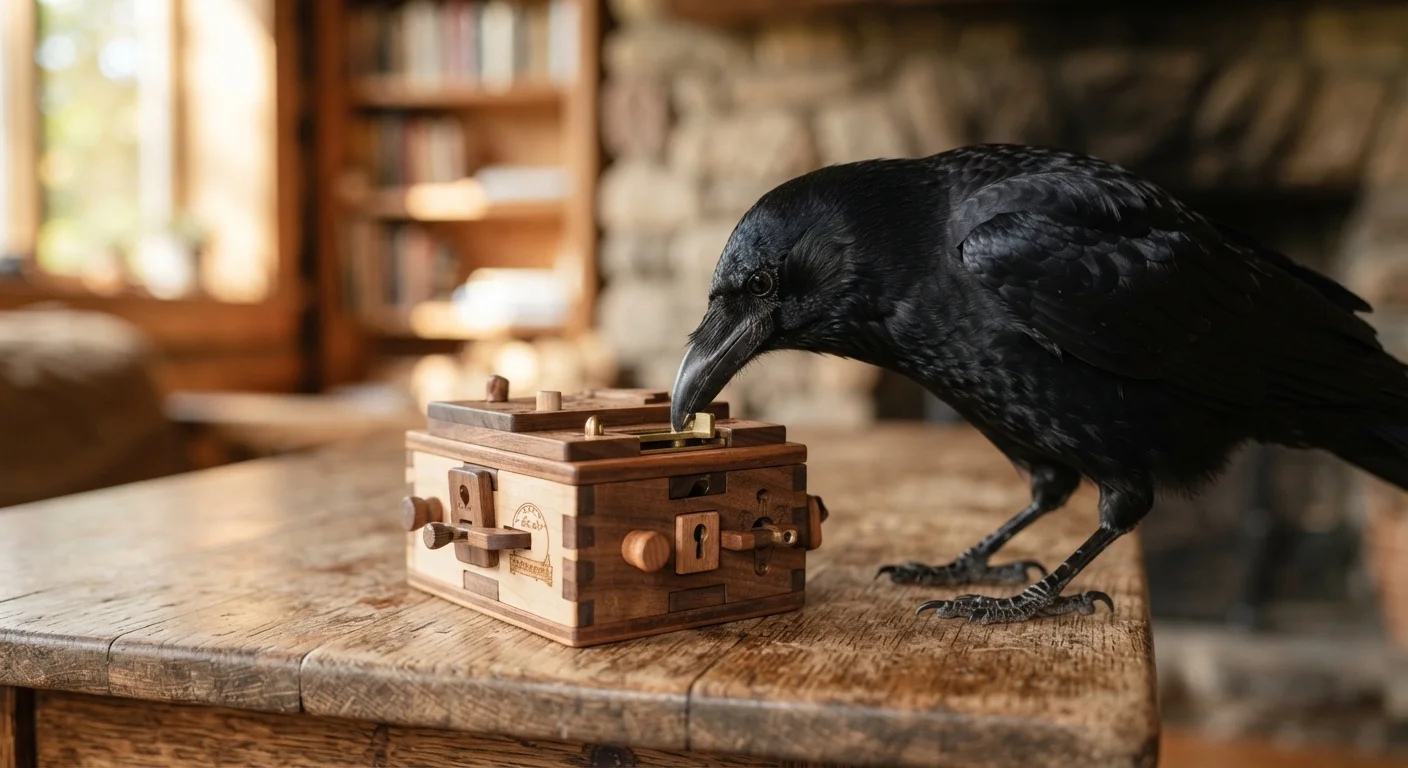
Photo: InsightsVilla.com | Quick Search. Right Info editorial
Key Takeaways
- Goldfish have memory spans measured in months, not three seconds.
- The 'alpha wolf' dominance model was based on captive wolves and doesn't reflect wild behavior.
- Dogs understand dozens to hundreds of human words through genuine referential learning.
- Elephants, crows, and even fish demonstrate problem-solving abilities that challenge old intelligence hierarchies.
- Intelligence in animals is multi-dimensional - no single species is simply 'smart' or 'dumb.'
Why These Myths Persist
Many popular beliefs about animal cognition originate from early, poorly designed studies, observations of animals in unnatural conditions, or simple cultural repetition. Once a vivid claim - like the three-second goldfish memory - enters everyday speech, it becomes very hard to dislodge regardless of what research shows. Outdated ideas also tend to serve a convenient purpose: they make human intelligence seem uniquely exceptional. Modern animal behavior science has increasingly dismantled that comfort. For a broader look at how myths can outlive the evidence that contradicts them, see common pet care myths veterinarians wish would go away.
Myth
Goldfish have a three-second memory and can't remember anything from moment to moment.
Fact
Goldfish have demonstrated memory retention lasting several months in controlled research settings.
This myth is so widespread it has found its way into casual conversation and advertising, but it crumbles under scientific scrutiny. Researchers at Plymouth University trained goldfish to press a lever to receive food at a specific time of day. The fish returned to the lever at the correct time - demonstrating that they retained time-specific associations over extended periods. Goldfish also show spatial memory, learning to navigate mazes. Their brains are far simpler than mammalian brains, but that doesn't mean they lack meaningful memory.
Myth
Wolves live in strict hierarchies led by a dominant 'alpha' who earns that position through fighting.
Fact
In the wild, wolf packs are typically family units led by a breeding pair - not dominance-contest winners.
The alpha-wolf concept originated from studies of unrelated captive wolves forced together in artificial conditions - a setup that naturally produced more conflict. Researcher L. David Mech, who helped popularize the alpha model, has since actively worked to correct it, noting that wild wolf packs behave more like cooperative family groups than rigid dominance hierarchies. The breeding pair leads not through intimidation but through experience and parental roles. This distinction matters significantly for how we train domestic dogs, which descended from wolves but live in very different social contexts.
Myth
Only humans and a few great apes use tools - most animals simply react to their environment instinctively.
Fact
Tool use has been documented across dozens of species, including crows, dolphins, sea otters, octopuses, and certain fish.
New Caledonian crows craft hooked tools from leaves to extract insects - and pass those techniques across generations, a hallmark of culture. Bottlenose dolphins in Shark Bay, Australia, have been observed using marine sponges to protect their snouts while foraging. Even the tusk fish, a wrasse species, uses rocks to crack open clam shells. These behaviors involve planning, flexibility, and in some cases social learning - challenging the assumption that sophisticated tool use is uniquely human or restricted to primates. To explore how learning shapes these behaviors beyond instinct, see our guide to instinct vs. learned behavior.
Myth
Animals communicate only through simple, fixed signals - they cannot convey nuanced meaning.
Fact
Many species use context-dependent, referential signals that convey specific information about the world around them.
Vervet monkeys produce distinct alarm calls for different predator types - one for eagles, one for snakes, one for leopards - and other vervets respond appropriately to each without seeing the threat. Prairie dogs, according to research by Con Slobodikoff, appear to encode information about an intruder's size, color, and speed in their calls. Domestic dogs are also more linguistically aware than many owners realize - research suggests they process words and tone in separate brain hemispheres, similarly to how humans do. How pets read human emotions explores this remarkable perceptiveness in greater depth.
Myth
Bigger brains always mean smarter animals - brain size is the best measure of intelligence.
Fact
Relative brain size, neural density, and brain organization are all more predictive of cognitive ability than absolute size alone.
Sperm whales have the largest brains on Earth by mass, yet corvids (the crow family) - with brains the size of a walnut - solve problems, plan for the future, and recognize individual human faces. The prefrontal-equivalent regions of bird brains pack neurons with remarkable density. Researchers now prefer to study cognitive flexibility, problem-solving, and social learning rather than relying on brain size as a proxy. Intelligence is better understood as a suite of evolved abilities shaped by ecological demands - not a single, rankable trait. The science behind why animals play illustrates how play itself reflects this cognitive complexity across species.
What the Science Actually Tells Us
The emerging picture from comparative cognition research is that intelligence is not a ladder with humans at the top - it's a web of specialized abilities, each shaped by the evolutionary pressures a species faced. A dog's sensitivity to human social cues exceeds that of chimpanzees in many experimental tasks, not because dogs are generally smarter, but because thousands of years of domestication selected intensely for that specific skill. Understanding this helps pet owners set more realistic expectations and provide genuinely enriching environments for their animals.
Misreading Intelligence Can Harm Pets
Dominance-Based Training Is Largely Outdated
300+
Words a border collie can learn
Researcher John Pilley documented a border collie named Chaser learning over 300 object names, published in the journal Behavioural Processes (2011).
Several months
Goldfish memory duration
Studies at Plymouth University demonstrated that goldfish can be trained to remember feeding-lever tasks over periods of months, not seconds.
As researchers continue refining their methods - using brain imaging, long-term field studies, and carefully controlled experiments - the list of uniquely human cognitive traits keeps shrinking. That is not a diminishment of human intelligence; it is an invitation to appreciate the remarkable minds sharing our planet and, in many cases, our homes.
The content on this site is for informational purposes only and is not a substitute for professional advice. Always consult a qualified professional for guidance specific to your situation.