
Tea Types and What Sets Them Apart: Green, Black, White, and Oolong

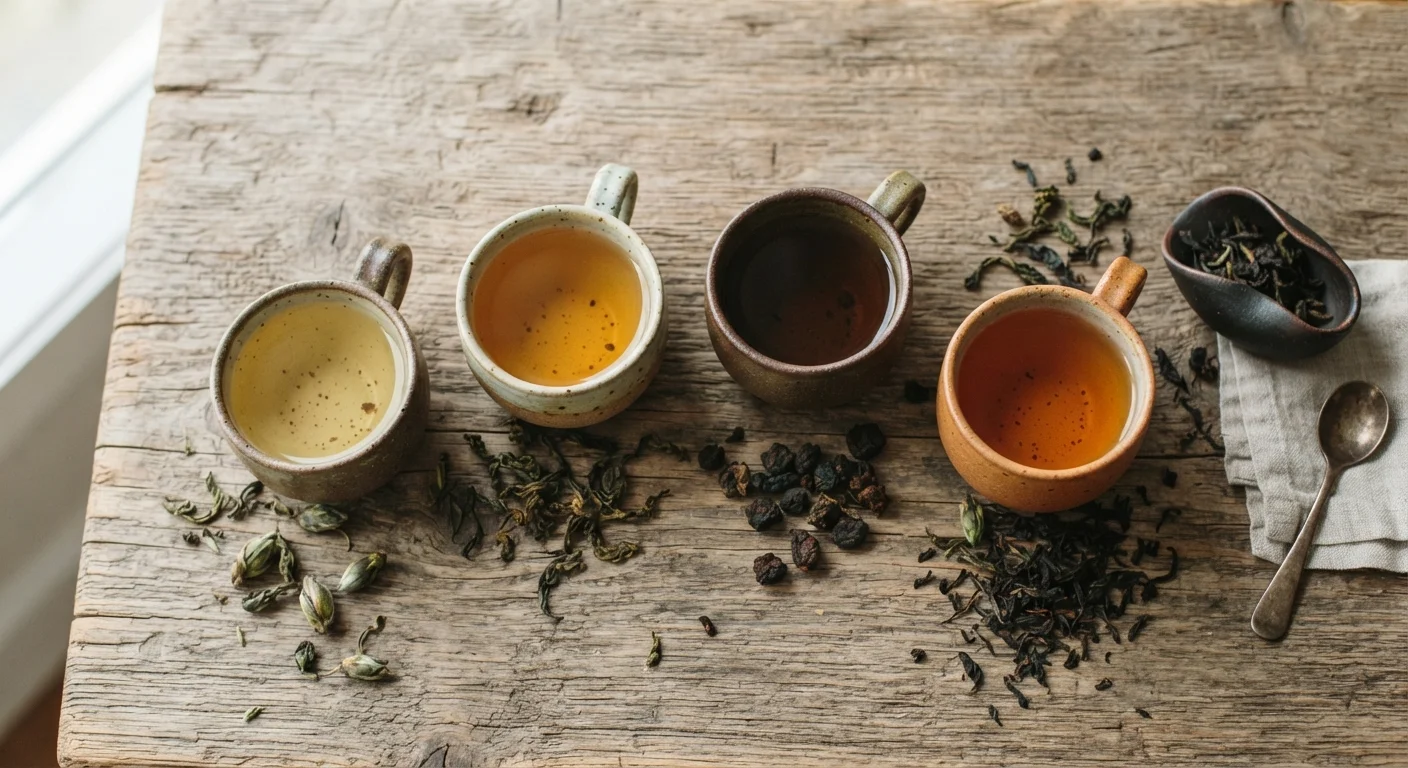
Photo: InsightsVilla.com | Quick Search. Right Info editorial
One Plant, Four Very Different Drinks
Here's something that surprises a lot of people: green tea, black tea, white tea, and oolong all come from the exact same plant - Camellia sinensis. What you're tasting in the cup isn't a different species; it's the result of how the harvested leaves are handled after picking. Oxidation, drying methods, and timing do all the heavy lifting when it comes to flavor, color, and aroma.
Think of it a little like what happens to an apple slice left on the counter. Exposure to air triggers a chemical reaction that changes color and taste. Tea producers control that same process - called oxidation - with precision to coax out vastly different results from an identical starting point.
| Plant source | All four types come from Camellia sinensis |
| Key differentiator | Level of oxidation during processing |
| Most oxidized type | Black tea (fully oxidized) |
| Least oxidized type | White tea (minimally processed) |
| Most variable type | Oolong (15%-85% oxidized depending on style) |
| Ideal brewing temp for green tea | Approximately 160-180°F |
Green Tea: Fresh and Grassy
Green tea is the least oxidized of the four main types. After the leaves are picked, producers quickly apply heat - either by steaming (common in Japan) or pan-firing (common in China) - to stop oxidation almost immediately. The result is a tea that retains a lot of its natural chlorophyll, which explains the greenish color and the fresh, sometimes grassy or vegetal flavor profile.
Flavor can range from mellow and sweet to slightly astringent depending on the variety and brew temperature. Steeping green tea in water that's too hot is one of the most common mistakes; water around 160-180°F tends to bring out its best qualities without bitterness.
Oxidation
A chemical reaction that occurs when tea leaves are exposed to oxygen after being harvested. The degree of oxidation is the primary factor that distinguishes tea types from one another.
Camellia sinensis
The plant species from which all true tea (green, black, white, and oolong) is produced. Herbal infusions are not made from this plant and are technically not tea.
Withering
An early step in tea processing where freshly picked leaves are spread out and allowed to lose moisture, making them pliable and beginning to concentrate flavor compounds.
Pan-firing
A method of halting oxidation in green tea by briefly heating the leaves in a hot wok or pan. Common in Chinese green tea production, it contributes a slightly toasty character.
Black Tea: Bold and Fully Oxidized
Black tea sits at the opposite end of the oxidation spectrum - the leaves are fully oxidized, which transforms them from green to dark brown or black and produces those robust, malty, sometimes earthy flavors most Americans associate with a breakfast cup. The higher oxidation also makes black tea naturally higher in certain compounds that contribute to its stronger taste and deeper color.
Black tea generally holds up well to additions like milk or sugar, which is partly why it became the default in many Western tea traditions. It also tends to have a somewhat higher caffeine content than its less-oxidized counterparts, though exact levels vary quite a bit depending on the leaf and brewing time.
White Tea: Minimal Fuss, Delicate Flavor
White tea is the most lightly processed of the four. Young leaves and buds are simply picked and dried - either in the sun or with gentle heat - with very little oxidation allowed to occur. The name comes from the fine white hairs (called trichomes) visible on the young buds of the plant.
The flavor tends to be delicate, slightly sweet, and floral, with none of the grassy edge you sometimes get in green tea. Because it's so lightly handled, white tea is often considered among the most nuanced - and it's typically steeped at lower temperatures to protect that subtlety.
~3,000+
Recognized varieties of tea worldwide
The wide range of tea varieties reflects differences in origin, cultivar, processing method, and harvest season - all from one species.
2nd
Most consumed beverage globally after water
Tea's global popularity is well-documented across international trade and agricultural reports, with billions of cups consumed daily worldwide.
15-85%
Oxidation range for oolong teas
This wide range accounts for the dramatic flavor variation between lighter, floral oolongs and darker, roasted styles.
Oolong: The Middle Ground
Oolong tea is partially oxidized, landing somewhere between green and black on the spectrum - anywhere from about 15% to 85% oxidized depending on the style. That wide range means oolong is arguably the most varied category: some styles taste closer to a light, floral green tea, while others lean toward the toasty richness of black tea.
Traditional oolong production is considered one of the most labor-intensive in the tea world, involving repeated rolling and drying cycles that shape both the leaf and the flavor. If you're curious about other drinks where process defines everything in the cup, our look at cold brew vs. iced coffee covers similar ground for coffee lovers.
Oolong is a great entry point for anyone who finds green tea too light and black tea too heavy - it covers a lot of territory in between. And if fermentation-based drinks interest you, fermented drinks like kombucha and jun tea offer another angle on how processing transforms a raw ingredient into something completely different.
The content on this site is for informational purposes only and is not a substitute for professional advice. Always consult a qualified professional for guidance specific to your situation.