
Vehicle Registration and Title: What Each Document Is For

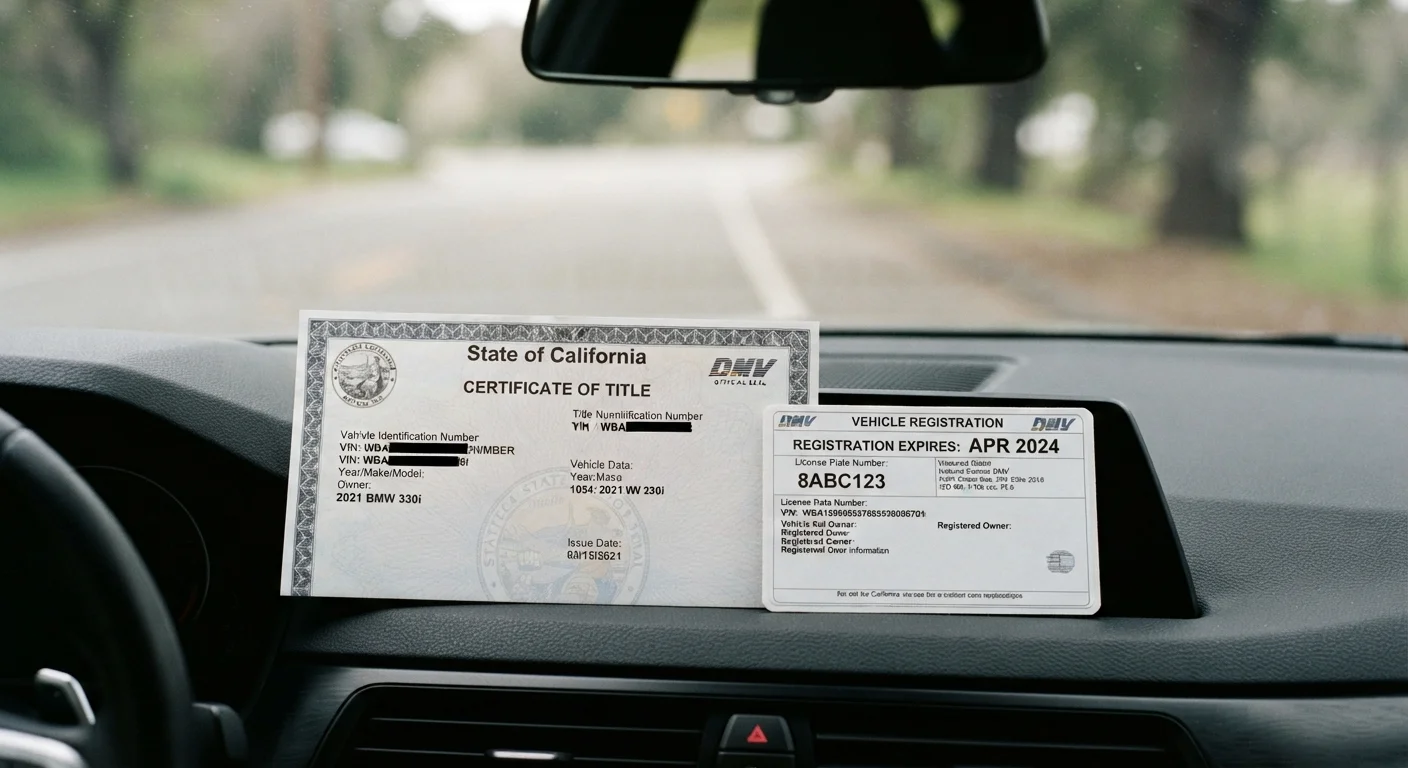
Photo: InsightsVilla.com | Quick Search. Right Info editorial
Two Documents, Two Different Jobs
Most vehicle owners carry both a registration card and a title, yet many aren't entirely sure what each one actually proves. Confusing them is understandable - both relate to your car and both come from your state's motor vehicle agency. But they serve distinct legal functions, and mixing them up can cause real problems when buying, selling, or insuring a vehicle.
| Who Issues Both Documents | Your state's DMV or motor vehicle agency |
| What a Title Proves | Legal ownership of the vehicle |
| What Registration Proves | Authorization to operate on public roads |
| Registration Renewal Frequency | Typically annual (varies by state) |
| When Title Changes Hands | Only when ownership transfers (sale, gift, inheritance) |
| Who May Hold Your Title | Your lender, until a car loan is fully paid off |
Think of it this way: the title answers the question who owns this vehicle? The registration answers the question is this vehicle legally allowed on public roads? One is a permanent ownership record; the other is an annual operating permit.
What a Vehicle Title Is
A vehicle title - sometimes called a certificate of title - is a legal document issued by your state that establishes who holds ownership of a vehicle. It lists the owner's name and address, the vehicle identification number (VIN), the make, model, year, and odometer reading at the time of transfer.
Certificate of Title
A state-issued legal document that identifies the rightful owner of a vehicle. It includes the VIN, owner information, and any recorded liens against the vehicle.
Lienholder
A financial institution or lender that holds a legal claim against a vehicle because money is still owed on it. The lien is released when the loan is fully repaid.
Vehicle Registration
A state permit authorizing a specific vehicle to be operated on public roads for a set period. It must be renewed regularly and typically requires proof of insurance.
Clear Title
A vehicle title that has no liens or legal claims against it, meaning the owner has full, unencumbered ownership of the vehicle.
VIN (Vehicle Identification Number)
A unique 17-character code assigned to every motor vehicle. It appears on the title, registration, and the vehicle itself, and is used to track ownership and history.
When you buy a car outright with cash, the title is issued in your name. When you finance a purchase, the lender typically holds the title - or is listed as a lienholder - until you pay off the loan in full. Once the loan is satisfied, the lien is released and you receive a clear title.
You'll need the title whenever ownership changes hands: selling a private-party vehicle, donating it, or transferring it to a family member. Without a clean title, completing a legal sale is extremely difficult, and buyers have every reason to walk away.
What Vehicle Registration Is
Registration is the state's permission for a specific vehicle to operate on public roads during a defined period - usually one year. When you register a vehicle, your state issues a registration card (kept in the vehicle) and a license plate or registration sticker (affixed to the plate).
Registration must be renewed periodically, and most states require proof of valid auto insurance before they'll approve it. If you're curious how insurance requirements interact with registration, our article on auto insurance coverage types explains what each policy type covers and when it applies.
Lost Your Title? Here's What To Do
Registration fees vary considerably by state and are often based on factors like the vehicle's weight, age, or value. Driving with an expired registration can result in a fine, even if your title is perfectly valid. Officers can verify registration status through your plate number alone.
When You Need Each Document
Understanding which document is required in a given situation saves time and prevents avoidable setbacks.
- Buying or selling a vehicle: The title must be signed over by the seller and submitted to your state DMV to transfer ownership. Registration does not transfer ownership.
- Traffic stop: Law enforcement will ask for your registration card (plus insurance and driver's license). Your title generally stays at home or with your lender.
- Getting a car loan: Lenders will request the title and record themselves as lienholders. Registration is less relevant to this process.
- Renewing annual tags: You'll renew registration each year. Titles only change when ownership changes.
- Resolving a total-loss insurance claim: Insurers require the title to take ownership of a totaled vehicle once they pay your claim.
50
States that require vehicle registration
Every U.S. state mandates registration for vehicles operated on public roads; requirements and fees differ by state.
~$150
Average annual registration fee nationwide
Registration costs vary widely - some states charge under $50, others several hundred dollars, often based on vehicle value or weight.
The content on this site is for informational purposes only and is not a substitute for professional advice. Always consult a qualified professional for guidance specific to your situation.