
Synthetic vs. Conventional Motor Oil: What Everyday Drivers Should Know

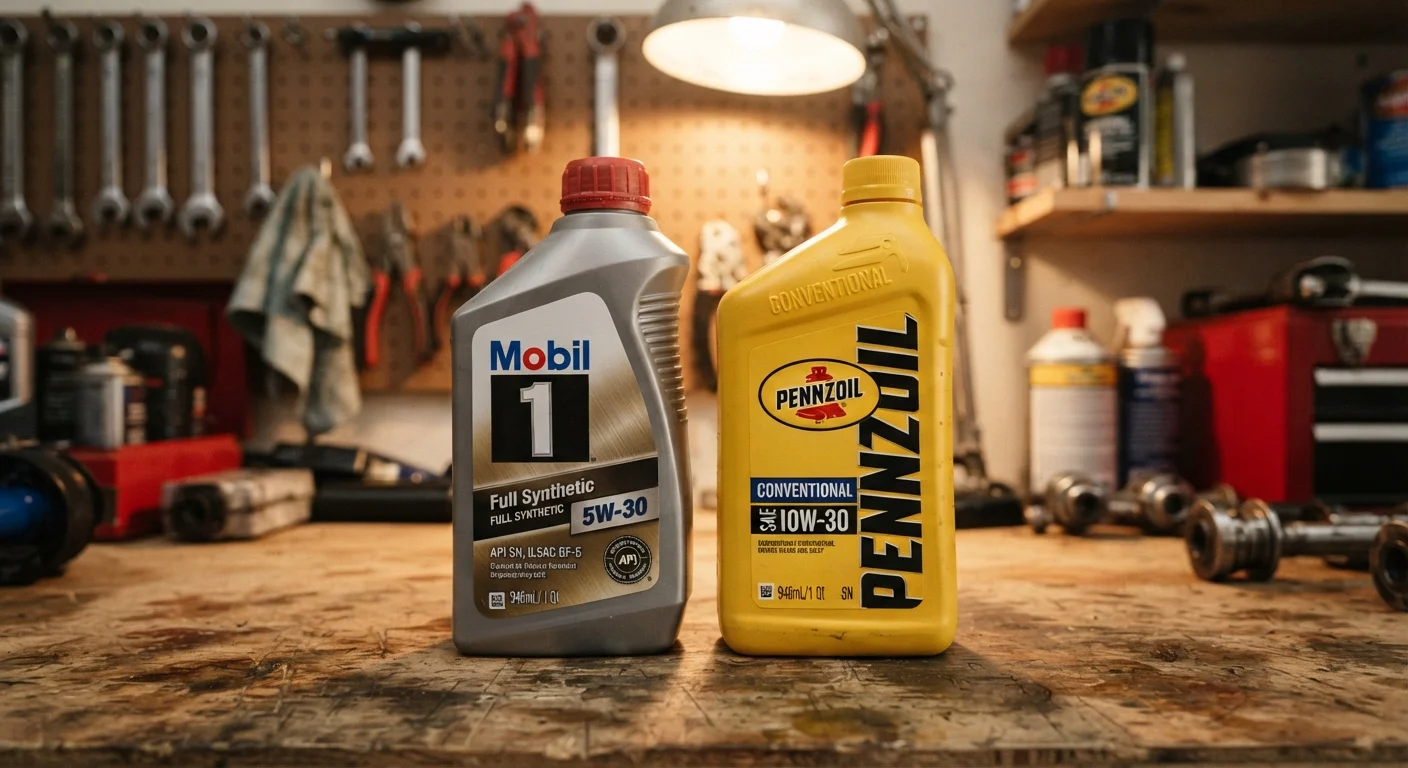
Photo: InsightsVilla.com | Quick Search. Right Info editorial
Key Takeaways
- Synthetic oil is chemically engineered for greater consistency and performs better in extreme temperatures.
- Conventional oil is refined from crude oil and suits many older, lower-mileage engines adequately.
- Your vehicle's owner's manual specifies which oil type and viscosity grade the manufacturer requires.
- Synthetic oil typically costs more per change but can last significantly longer between intervals.
- Using the wrong oil type can void your warranty or reduce engine protection over time.
- A high-mileage blend is a middle-ground option worth considering for vehicles over 75,000 miles.
What Makes These Two Oils Different
At their core, synthetic and conventional motor oils do the same job: lubricate your engine's moving parts, reduce friction, carry away heat, and suspend contaminants until the next oil change. The difference lies in how each is made and how consistently it performs under pressure.
Conventional motor oil is refined directly from crude petroleum. During refining, impurities are removed, but the molecules that remain vary in size and shape. This inconsistency means the oil can behave less predictably when temperatures drop sharply or climb very high.
Synthetic motor oil is chemically engineered - either built from scratch or heavily processed - so its molecules are uniform in size and structure. That uniformity translates to more stable viscosity (how thick or thin the oil is) across a wider temperature range, reduced evaporation at high heat, and better flow when the engine is cold and needs lubrication most. For a deeper look at how viscosity ratings like 5W-30 affect your oil choice, see our guide to oil viscosity ratings.
| Criterion | Synthetic Motor Oil | Conventional Motor Oil |
|---|---|---|
| Base composition | Chemically engineered molecules | Refined crude petroleum |
| Temperature performance | Stable in extreme heat and cold | Less consistent at extremes |
| Typical change interval | 7,500-15,000 miles (per manual) | 5,000-7,500 miles (per manual) |
| Upfront cost per change | Higher | Lower |
| Best engine fit | Turbocharged, high-performance, newer | Older, simpler, lower-output engines |
| Cold-start protection | Flows faster at low temperatures | Slower to circulate in deep cold |
| High-mileage options | Available with seal conditioners | Available with additive blends |
Performance, Cost, and Change Intervals
One of the most practical differences between synthetic and conventional oil is how long each lasts between changes. Conventional oil is generally recommended to be changed every 5,000 to 7,500 miles under normal driving conditions. Synthetic oil, thanks to its more stable molecular makeup, can often go 7,500 to 15,000 miles - though your owner's manual always takes precedence over general guidelines.
44%
of U.S. passenger cars now require full synthetic oil
Industry analysts estimate that nearly half of current U.S. passenger vehicles are factory-specified for full synthetic motor oil, reflecting how broadly engine design has shifted.
2x
Longer average interval for synthetic vs. conventional
Synthetic oil's extended change intervals - often twice as long as conventional - are a key reason many drivers find the higher per-quart cost offsets over a full year of driving.
That longer interval helps offset synthetic oil's higher upfront cost. While a conventional oil change may run less out of pocket, drivers using synthetic may pay for fewer changes per year. Neither option is universally cheaper - it depends on your vehicle, driving habits, and local service pricing.
It's worth noting that the old "change your oil every 3,000 miles" rule is widely considered outdated for most modern vehicles. Our article on car maintenance myths covers this and other common misconceptions that cost drivers money.
What Your Owner's Manual Actually Says
No comparison article, mechanic, or quick-lube technician should override what your vehicle manufacturer specifies. The owner's manual lists the exact oil type and viscosity grade your engine was designed and tested with. Using a different specification - even a seemingly better one - can affect your warranty coverage and, in some cases, reduce engine protection.
Many vehicles manufactured after 2010 require full synthetic oil by design, particularly those with turbocharged engines or extended oil-change monitoring systems. Some older or simpler engines may specify conventional oil or allow either type. If your manual says "5W-20 synthetic," that's what the engine expects.
Switching Between Oil Types
If you're unsure where to find this information, the oil cap, the inside of your hood, or a call to your dealership's service department are all reliable starting points. If you'd like broader guidance on building smart maintenance habits from the start, our car ownership maintenance primer lays out the essentials for new and returning drivers alike.
The content on this site is for informational purposes only and is not a substitute for professional advice. Always consult a qualified professional for guidance specific to your situation.